Anti-frizz on curls is four product types, not one product
Curly hair frizzes for a structural reason. The cuticle — the overlapping outer scale layer of each strand — sits more open on a curl than it does on a straight hair, because the strand is bending and the scales lift at every bend. Open scales mean water vapor moves in and out freely, so the strand takes up moisture from the air, swells unevenly along its length, and stops lying against its neighbors. That is frizz.
Which means there are only four useful things a product can do about it, and almost every anti-frizz product on the shelf does exactly one of them:
- Put water into the hair and give it enough slip that you can handle it wet without snapping it. That is a leave-in conditioner.
- Soften and weigh the strand down so individual hairs clump into a curl instead of flying off on their own. That is a curl cream.
- Hold the curl shape while it dries. Hair sets in whatever shape it is in when the last of the water leaves it, and a film-forming polymer is what keeps that shape from collapsing on the way. That is a gel or a styling jelly.
- Seal the finished strand with something hydrophobic, so the damp air you walk out into has a harder time getting back in. That is an oil or a silicone serum.
A dermatology review of hair cosmetics describes this division of labor plainly: conditioning agents give slip and reduce the friction between strands, film formers hold a set, and oils and silicones smooth the cuticle and slow moisture exchange (hair cosmetics overview, Int J Trichology). Nothing in the category does two of those jobs well, which is why "best anti-frizz product" is the wrong question and "which type am I missing" is the right one.
The American Academy of Dermatology's curly hair guidance makes the same point from the other direction: the things that matter most for curls are gentle washing, proper conditioning, and minimizing heat and tension (AAD, curly hair tips from dermatologists). Products are the last 20% of the result. The order you use them in is most of that 20%.
How we picked these five
1. One pick per job, not five versions of the same job. The most common failure in a curly bathroom cabinet is four creams and no hold product. This list is built as a ladder — leave-in, cream, gel, seal — so you can see which rung you are missing rather than buying another bottle of what you already own.
2. The gel step gets two options, because it is the one that varies. How much hold you need depends entirely on the weather and how tight your curl pattern is. A soft styling jelly is right most of the time; a strong gel is right when the air is damp. Both are here, and curl cream versus gel works through which one is doing the work on a given day.
3. Weight is treated as the main variable. Fine curls and coarse coils need the same four types in wildly different amounts. Every pick below says who it is too heavy for, and the fine-curl shortlist exists because "use less of something too heavy" is not a real answer.
4. Silicones are treated as a trade, not a sin. A silicone film is thinner and more water-repellent than a plant oil film, so it genuinely performs better against humidity. It also builds up and needs clarifying. Both of those facts are on the card, and the silicone-free guide lays out what you gain and give up either way.
5. No scores. There is no testing panel behind this site and a number would imply a measurement nobody took. Each pick carries an editorial role and a specific disqualifier instead.
We have not used these products ourselves. They are chosen from what is in the formula, what those ingredients are documented to do, and whether that matches the problem this page is about — and every product below links to the manufacturer's own page so you can check the formulation claims yourself. The full method is here.
The pick in each type, and what it is doing
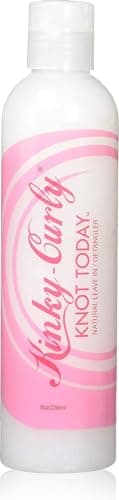
The leave-in puts water in. This is the step people skip, and skipping it is why the rest of the routine underperforms. Curly hair is frizzing because it is short of water and taking it from the air instead; a leave-in on soaking-wet hair is how you get ahead of that. It also gives you the slip to detangle, which the AAD recommends doing with a wide-tooth comb from the ends upward (AAD, everyday hair care). Kinky-Curly Knot Today is the pick because it has enough slip for genuinely thick, tangle-prone hair at a price that lets you use a generous amount — and using a generous amount is the point. The full leave-in shortlist covers the lighter options.
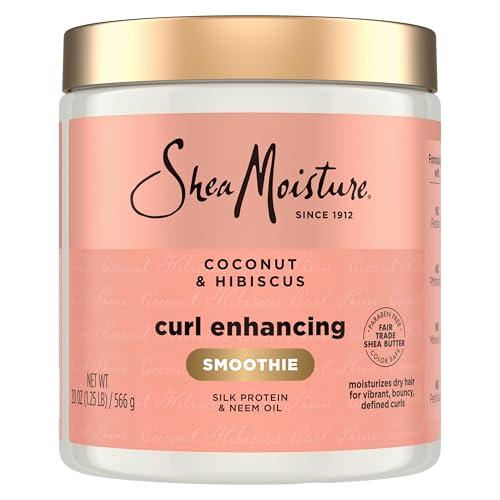
The cream softens and clumps. A curl cream is emollients plus a little weight. The weight is what makes neighboring strands gather into a defined curl instead of separating into frizz, and it is also what flattens fine hair if you use the wrong one. SheaMoisture's Curl Smoothie is the straightforward answer for thick, dry curls and coils that want both moisture and weight. If your curls are fine or loose, this is the rung to go light on — the fine-hair curl cream picks are formulated for exactly that problem.
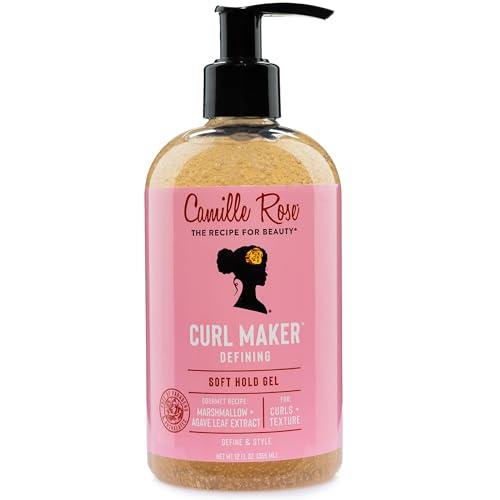
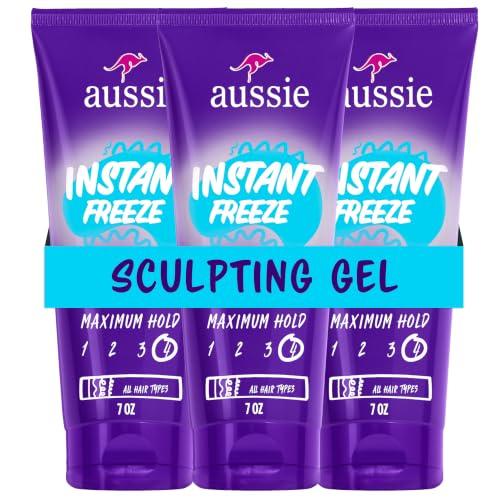
The gel holds the shape while it dries. This is the step that most changes how much frizz you end up with, and the one most often missing. Hair sets as the water leaves it; if nothing is holding the curl in place during that window, it dries loose and fuzzy no matter how much cream you put on. Camille Rose Curl Maker is a styling jelly — real hold without the hard cast — and it suits low-porosity curls that reject heavier products. Aussie Instant Freeze is the stronger, cheaper option for damp days when you need the hold to survive the walk to work.
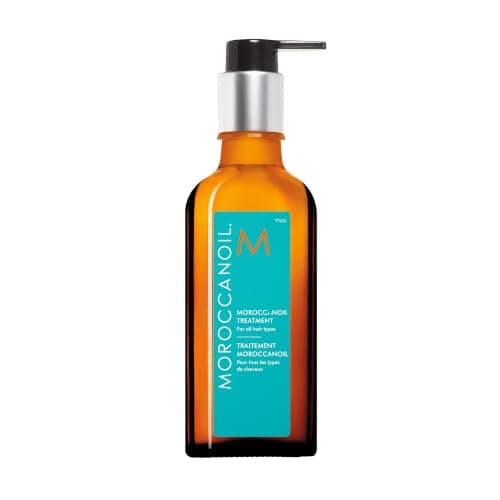
The oil seals the finished result. Last, in tiny quantity, on hair that is already dry. Moroccanoil Treatment Original is argan oil in a silicone base, and the silicone is why it resists humidity rather than simply adding shine. Two or three drops on medium-to-thick hair; one on fine. If you are on a silicone-free routine, a pure cold-pressed argan oil does the smoothing without the humidity resistance — the argan oil comparison sets the blends against the single-ingredient bottles, and the frizz oil shortlist goes deeper on this one rung.
The order, which decides the result more than the products do
Four types, one sequence, and it is not optional. Each layer needs the one underneath it to be in place.
| Step | Type | Hair state | What goes wrong if you skip it |
|---|
| 1 | Leave-in conditioner | Soaking wet, straight out of the shower | Nothing to seal; the oil seals dryness in |
|---|
| 2 | Curl cream | Still wet | Strands separate instead of clumping |
|---|
| 3 | Gel or styling jelly | Still wet — this is the last wet step | The curl dries loose and fuzzy |
|---|
| 4 | Oil or serum | Bone dry, after the cast is scrunched out | Frizz returns within an hour in damp air |
|---|
Two rules inside that sequence matter more than the rest. Everything up to and including the gel goes on wet. Water is the active ingredient in a curly routine, and a product applied to half-dry hair cannot distribute evenly. The oil goes on dry, and only at the end. Put oil on first and you have sealed thirsty hair, which is the single most common way a curly routine stalls — the product order guide covers the whole sequence including the wash.
Then leave it alone. Touching a drying curl breaks the clumps apart and the cast you are trying to form, and most of what people blame on a product is actually hands. Diffuse on low, or air dry, and scrunch the cast out only when the hair is completely dry — why curls fall flat goes through the handling mistakes in detail.
What changes on a humid day
Humidity frizz has a different mechanism from everyday frizz. In damp air the strand takes up water vapor, swells, and the hydrogen bonds holding your set reshuffle into a new shape. Anything humectant in your products — glycerin above all, which sits high in a lot of curl creams — pulls that moisture in faster.
So the humid-day version of this routine is: less humectant, more hold, more seal, and nothing damp left in the hair when you walk out of the house. Practically, that means swapping the soft jelly for the strong gel, going lighter on the cream, and making sure the hair is genuinely dry before the oil goes on. An oil film over a fully dry style resists far more than the same oil over a style that is still slightly damp. The humidity shortlist is the full routine for that case.
The opposite season needs the opposite adjustment. In dry winter air there is no moisture for a humectant to pull in, so glycerin-heavy products can draw water out of the hair instead of into it, and the weak point moves from hold to moisture — winter hair care covers that swap.
Matching the four types to your actual hair
Two properties decide how much of each type you need: how thick each individual strand is, and how readily it takes water in. Neither is the same thing as how tight your curl pattern is, and both are easy to establish — the porosity test takes a few minutes.
- Fine strands, loose curls or waves. Full leave-in, a light hand on the cream or none at all, the soft jelly, and one drop of oil on the ends only. Weight is your enemy here — the wavy-hair picks are built around that.
- Coarse strands, tight curls or coils. All four rungs, generously, and the cream matters more than it does for anyone else — leave-ins for 4c hair is the right starting point.
- Low porosity. Products sit on the surface rather than absorbing, so layers go on thin and warm water helps them in. Heavy butters are the usual mistake — low-porosity picks here.
- High porosity. Water goes in fast and leaves faster, so the seal step is the one that earns its place — high-porosity picks here.
- Greasy roots with frizzy, dry ends. A real and common combination, and none of the four types above belongs anywhere near your scalp — the two-zone routine is here.
The four ways this routine fails
Buying a fifth cream instead of the type you are missing. If your curls are soft and defined when wet and fuzzy when dry, you do not need more moisture — you need the hold step. If they are crunchy and defined but rough and dull, you have hold and no moisture. Diagnose by which stage looks wrong.
Applying to damp rather than wet hair. Everything up to the gel wants hair that is dripping. Most "this product did nothing" reports are a timing problem rather than a formula problem.
Letting the silicone picks build up. A silicone film that has layered for two months stops the water in your leave-in getting in at all, and the routine quietly stops working. One clarifying wash a month resets it — the clarifying shortlist has the gentlest options, and what buildup actually is explains why it creeps up on you.
Expecting products to fix damage. If your hair is frizzing because it is bleached or heat-damaged, these four types will manage the symptom and nothing more. The cuticle that lifted is not coming back down permanently — the causes of frizz separates the ones a product can address from the ones it cannot, and a weekly mask is the step that does more for damaged curls than any styling product will.