What argan oil does, and what it does not
Argan oil is an emollient. It is dominated by oleic and linoleic acids, which are bulky enough that the oil stays on the surface of the strand rather than moving into it, and that surface film is the entire mechanism: it lies over the cuticle, lays the scales flat, reduces friction between strands, and reflects light more evenly so hair looks glossier.
That matters more than it sounds. A dermatology review of hair cosmetics describes the role of oils and conditioning agents as smoothing the cuticle and limiting the mechanical damage that combing and styling cause (hair cosmetics overview, Int J Trichology). Most of what makes hair look dry and rough is mechanical, and a thin film of oil prevents a measurable share of it.
What argan oil does not do is enter the strand. The one plant oil with published evidence of reducing protein loss from hair is coconut, whose lauric-acid structure is small and straight enough to move into the fiber; argan was not the oil in that study and no comparable trial exists for it (Rele & Mohile, J Cosmet Sci 2003). So the honest positioning is this: argan oil is the best daily surface oil, coconut oil is the better weekly treatment, and the head-to-head is worth reading if you are only buying one.
How we picked these four
1. One pick per format. "Argan oil" is sold as a pure oil, as a silicone blend, as a luxury blend and as a shampoo, and those behave differently enough that comparing them on a single axis would be useless. One of each, with the trade-off written on the card.
2. Certification over price. For the pure oil we require cold-pressed and certified organic, stated on the manufacturer's page, for the reason in the next section.
3. Honest about silicones. Two of the four are silicone blends. That is not a flaw — silicone spreads more evenly and feels lighter than any plant oil — but it means periodic clarifying, and we say so.
4. No scores or star ratings. Each pick carries an editorial role and a disqualifier instead.
We have not used these products ourselves. They are chosen from what is in the formula, what those ingredients are documented to do, and whether that matches the problem this page is about — and every product below links to the manufacturer's own page so you can check the formulation claims yourself. The full method is here.
Pure oil, blend or wash
| Pick | What it is | Silicone? | Dose |
|---|
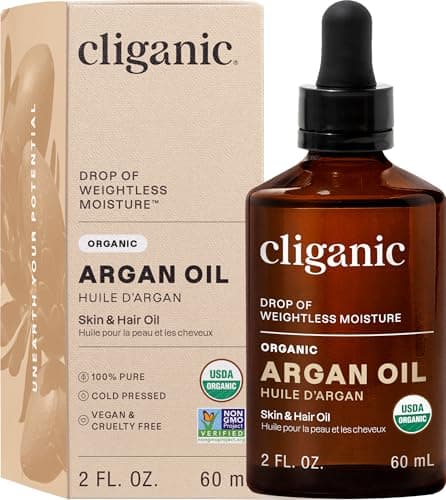
| Cliganic Organic Argan Oil | 100% cold-pressed argan oil | No | Two to four drops on damp ends |
|---|
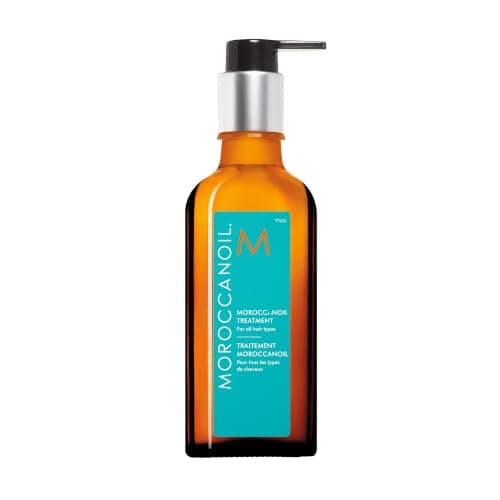
| Moroccanoil Treatment Original | Argan oil in a silicone base | Yes | Two or three drops, damp or dry |
|---|
| Oribe Gold Lust Hair Oil | Plant-extract and silicone finishing blend | Yes | Two drops, or before a blow-dry |
|---|
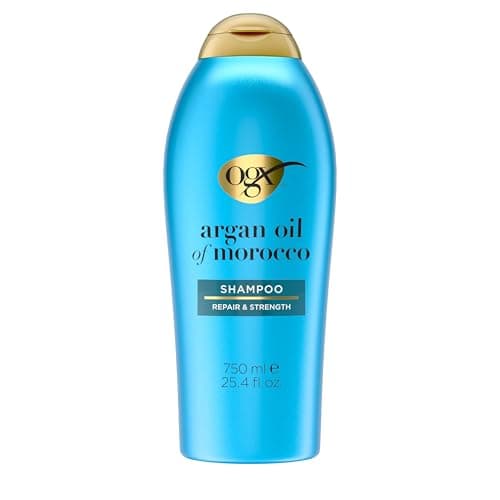
| OGX Renewing + Argan Oil of Morocco Shampoo | Shampoo with argan oil | Conditioning agents, per OGX | As your normal wash |
|---|
If your hair is fine, start with the smallest dose of the lightest option — the fine-hair oil shortlist is sorted on exactly that axis. If frizz rather than dryness is the complaint, the frizz oil picks are the better list.
The adulteration problem, which is why certification matters
Argan oil is among the most commonly adulterated products in beauty. Genuine argan is slow and expensive to produce, and cutting it with a cheap neutral oil is invisible on a shelf and nearly invisible on your hair. There is no way to tell by eye, and a low price on a large bottle is a signal rather than a bargain.
The practical defense is to buy on third-party certification rather than on marketing: cold-pressed, USDA Organic, and a maker that states both on its own product page. That is the reason the pure-oil pick here is the one it is, and the reason we link every manufacturer page on every card rather than asking you to take our word for it.
The dose is what decides whether argan oil works for you
Nearly every complaint that argan oil made hair greasy is a dose problem.
- Two to four drops. Not a palmful. That is the manufacturer's own instruction for the pure oil and the right order of magnitude for all four picks.
- Damp hair, bottom third only. Oil spreads on a wet surface and lands in patches on a dry one. Nothing goes near the roots.
- Warm it between your palms first. Press it through the ends rather than raking it down from the top.
- After your leave-in, never instead of it. The leave-in brings water; the oil holds it in. Oil and leave-in are different jobs, and doing them in the wrong order is why oiled hair can still feel dry.
- Clarify monthly if you use a silicone blend. A clarifying wash resets the buildup that makes blends stop working after a few weeks.
What argan oil cannot fix
It does not repair damage. Bleach breaks bonds inside the strand and lifts the cuticle; electron microscopy of over-bleached hair shows cuticle cells separating and peeling away in severe cases (effects of excessive bleaching, PMC). An oil lubricates that surface — it does not rebuild it. If bleach caused your problem, bond repair is the category that addresses it.
It does not moisturize. Water moisturizes hair; oil slows water leaving. Argan oil on dry, thirsty hair seals the dryness in, which is why it belongs after a conditioner rather than in place of one.
It does not grow hair. No oil on this site does, with the single partial exception covered in the rosemary oil evidence.
Within those limits, a certified pure argan oil is one of the best-value purchases in hair care: a few dollars an ounce, one ingredient, visibly smoother ends the first time you use it correctly.