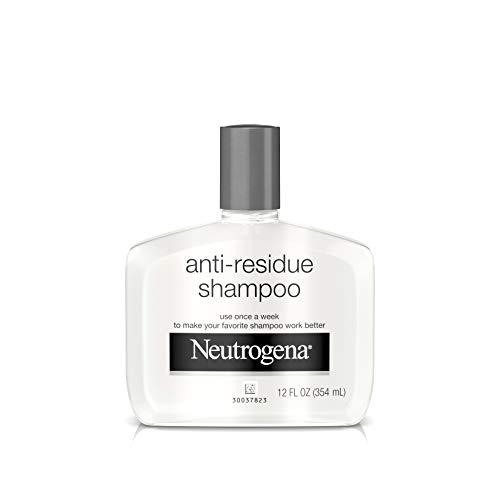
Best value clarifier
Neutrogena Anti-Residue Shampoo
The clarifying shampoo almost every stylist names, and it costs very little. Neutrogena states it removes up to 90% of dulling residue, and the instruction that matters is once a week, not daily.
Oily Roots & Scalp · Guide
Scalp buildup is a mix of sebum, dead skin, product residue and hard-water minerals sitting at the root. It clears with one clarifying wash or a scrub, and it is not dandruff — the difference is whether the flakes come off the scalp in sheets or fall from the hair as dust.
We earn a commission if you buy through our links, at no extra cost to you. It never decides the ranking — the method is published · Affiliate disclosure
Four things, in varying proportions depending on your routine. Sebum, the oil your scalp produces. Dead skin cells, which the scalp sheds continuously like any other skin. Product residue — silicones, styling polymers, dry shampoo starch, conditioner left too close to the root. And mineral deposits, if you live with hard water.
On its own, none of that is a problem. Buildup becomes one when it accumulates faster than washing removes it, and the signs are consistent: a scalp that feels coated or waxy, itching that improves immediately after a wash, roots that look dull and lifeless, and a whitish or yellowish film you can scrape off with a fingernail. Hair often stops responding to styling products at the same time, because the products are landing on residue rather than on hair.
This is the most important distinction on the page, because the two need opposite products.
| Scalp buildup | Dandruff | |
|---|---|---|
| The flakes | Come off the scalp in soft sheets or waxy clumps | Fall from the hair as loose, often greasy flakes |
| After washing | Gone, and the scalp feels clean for days | Back within a day or two |
| Redness | None, unless you have been scratching | Often, and sometimes a persistent itch |
| What fixes it | A clarifying wash or a physical scrub | A named antifungal or keratolytic active |
If a single clarifying wash clears it and it stays clear, it was buildup. If it returns within a day or two, it is more likely dandruff or seborrheic dermatitis, which involve a yeast living on scalp sebum rather than a cleaning failure. The American Academy of Dermatology is clear that persistent flaking and itching need an active ingredient, and a dermatologist if it does not settle (AAD, how to treat dandruff). The dandruff shortlist is sorted by named active if that is where you have landed.
1. Under-washing an oily scalp. The most common cause by a wide margin. Stretching washes is good advice for dry hair and bad advice for a scalp that produces oil quickly — how often to wash is a scalp question, not a hair question.
2. Dry shampoo used as a substitute for washing. Dry shampoo absorbs oil; it does not remove it, and the starch or clay stays on your scalp until you wash. Several days stacked is a measurable layer — which is the real answer to whether dry shampoo is bad for you.
3. Silicone and polymer buildup from styling products. Gels, creams, texture sprays and silicone serums are designed to stay on hair. A gentle sulfate-free shampoo does not always shift them.
4. Conditioner applied too high. Conditioner belongs on mid-lengths and ends. At the root it is a coating with no job to do.
5. Hard water. Calcium and magnesium leave a film on hair and scalp that plain shampoo struggles with. The hard-water guide covers how to tell and what helps.
From the picks
A cheap clarifying shampoo for the one-wash reset, a physical scrub for residue a liquid washes over, and a sulfate-free clarifier if your hair is colored and you cannot afford to lose tone.
Best value clarifier
The clarifying shampoo almost every stylist names, and it costs very little. Neutrogena states it removes up to 90% of dulling residue, and the instruction that matters is once a week, not daily.
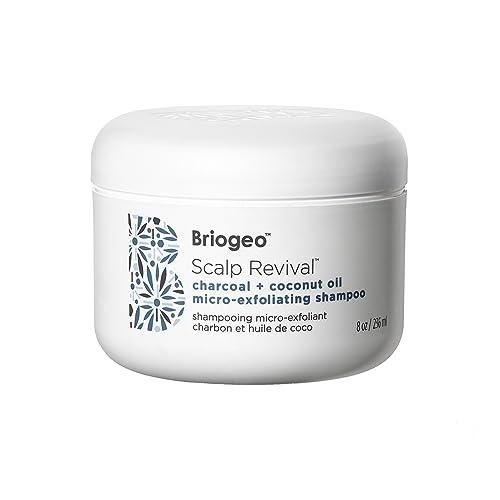
Best scalp scrub
A physical scrub built into a shampoo, so it is one step rather than two. It reaches residue that a liquid clarifier washes straight over, which is the point of a scrub.
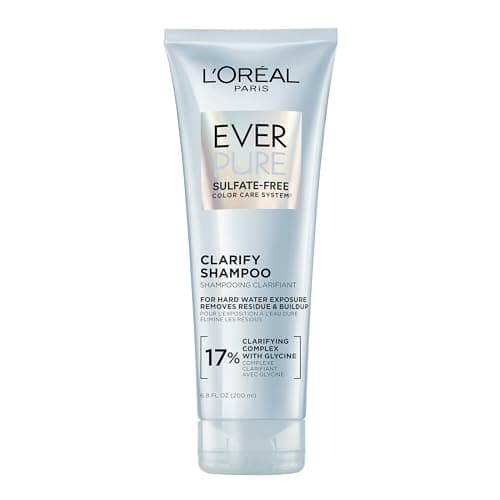
Best clarifier for colored hair
A clarifying shampoo that is also sulfate-free, which sounds contradictory and is the reason to buy it: you can remove buildup without taking the color with it.
Start with a clarifying shampoo. One wash, lathered into the scalp with your fingertips, left for a minute, rinsed thoroughly. For most buildup this is the whole treatment. Note the instruction on the cheap one: weekly, not daily — the clarifying shortlist goes through the options.
Use a scrub if it feels waxy rather than coated. A physical exfoliant reaches residue that a liquid cleanser washes straight over. The scrub picks cover what to look for, and once every week or two is enough.
If your hair is colored, clarify with a sulfate-free formula. A conventional clarifier takes toner and dye with the buildup, and that is exactly what it is designed to do.
Follow with conditioner on the ends only. Clarifying is drying by design. Condition the lengths, keep it off the scalp you have just cleaned.
Buildup is a routine problem, so the fix is a routine rather than a product.
And if your roots are greasy while your ends are dry — which is the usual shape of this problem — treat the two halves separately: clarify at the scalp, condition and oil the ends, and stop looking for one bottle that does both. Why hair goes greasy covers the sebum side if the oil itself is the complaint.
Questions
Next
Receipts
Claims about what an ingredient does are cited to dermatology bodies or published research. Claims about what a product contains are cited to the manufacturer's own page and labeled as the manufacturer's claim. Where the evidence is thin, we say so on the page rather than rounding it up. Read the full method.