The short answer, before the detail
A shampoo is a cleanser that is on your head for ninety seconds and then goes down the drain. Surfactant chemistry is mature, well understood and cheap to do well, which is why a supermarket shampoo and a salon shampoo both clean hair competently.
What a salon price can buy is a specification — sulfate-free cleansing, a patented active, a stated concentration of a medical ingredient, a high pigment load. Specifications are worth paying for when you need them. The problem is that the premium is charged on everything in the range, including the products where the specification is identical to the cheap one.
So the useful question is not salon versus drugstore. It is: for this specific product, is there a named thing in the expensive one that the cheap one does not have?
What you are actually paying for
Six things, in roughly descending order of how often they justify the price.
1. A patented or proprietary active. Genuinely exclusive. If a molecule is under patent, the cheap version cannot contain it, and no amount of label-reading finds a substitute. This is the one category where expensive means unavailable elsewhere.
2. Active concentration. A stated percentage of salicylic acid, or a heavy violet pigment load, is a measurable difference in what the bottle does.
3. Cleanser choice. Sulfate-free versus sulfate is a real formulation decision with a real consequence for colored hair. It used to be a premium feature. It is now widely available at drugstore prices, which is exactly why this is no longer a good reason to trade up.
4. Conditioning agent quality. Some silicones and cationic polymers are better at depositing evenly and are more expensive. The hair-care chemistry literature treats these as engineered molecules with meaningfully different behaviors (hair care physicochemistry review, PMC), so this is a real difference — just a smaller one than the price gap implies.
5. Fragrance and sensory experience. Expensive fragrance is genuinely nicer and genuinely more expensive to make. It does nothing for your hair. If you enjoy it, that is a legitimate purchase; it is just not a performance purchase.
6. Packaging, distribution and marketing. A large share of the gap, and none of it reaches your scalp.
From the picks
The argument in four bottles
Two drugstore products that give you the specification that matters, one premium shampoo where the active is genuinely exclusive, and the category where paying more reliably shows up. Tap through for the current price on each.
The drugstore option
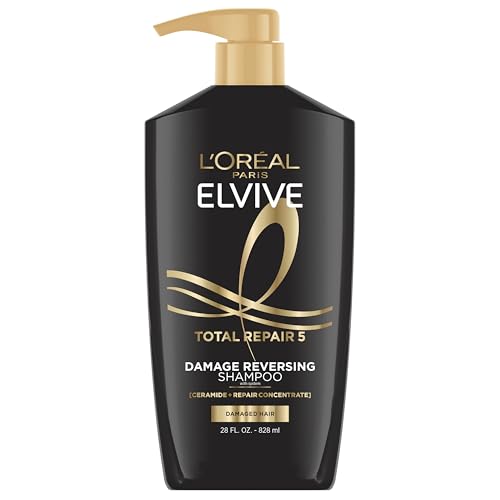
L'Oréal Paris Elvive Total Repair 5 Repairing Shampoo
The drugstore shampoo we would actually buy for damaged hair. It is not a bond treatment and does not claim to be, but it does the ordinary work of cleaning without stripping at a fraction of salon prices.
L'L'Oréal ParisNo product photograph available for the L'Oréal Paris EverPure Sulfate-Free Moisturizing Shampoo
Best drugstore color-safe
L'Oréal Paris EverPure Sulfate-Free Moisturizing Shampoo
The cheapest sulfate-free color-safe shampoo we would actually recommend. If you color your hair and wash it often, switching to this is the single highest-value change available.
Best repair shampoo
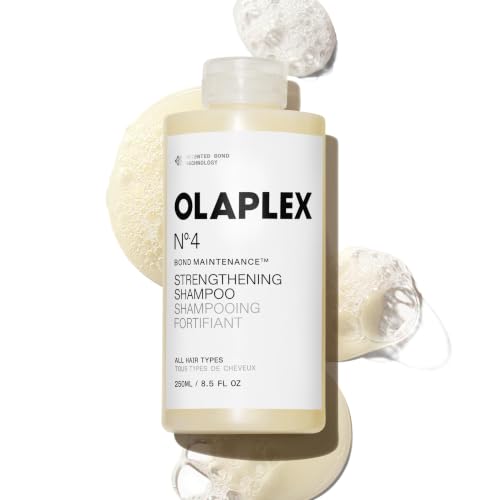
Olaplex Nº.4 Bond Maintenance Shampoo
A concentrated shampoo carrying the same bond active as the Nº.3 treatment. It will not repair hair on its own, but it stops the wash step undoing what the treatment did.
Best weekly mask
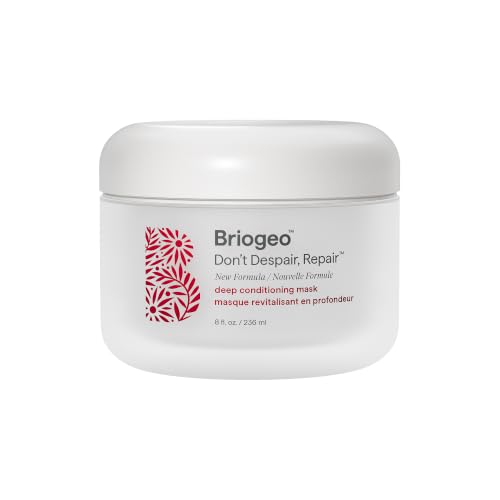
Briogeo Don't Despair, Repair! Deep Conditioning Mask
The straightforward weekly deep conditioner, built on oils and B-vitamins rather than a patented bond active. When hair is thirsty rather than structurally broken, this is the honest answer.
Four places where paying more genuinely changes the result
1. Bond repair. The actives here are patented and there is no cheap equivalent, because the molecule itself is the product. If your hair has been bleached, relaxed or permed, this is the category where the premium is buying chemistry rather than presentation — what bond repair does sets out the difference from conditioning, and the head-to-head compares the two best-known options.
2. Toning pigment strength. Purple and blue shampoos differ enormously in how much pigment they carry, and that difference is visible on your head within one wash. On heavily lifted blonde, a strong professional formula does in one wash what a weak one does not do in five — the purple shampoo shortlist sorts them by strength rather than price.
3. A named active at a stated concentration. Salicylic acid, selenium sulfide, pyrithione zinc. Here you are buying a specific percentage of a specific molecule, which is a checkable fact rather than a claim. Note that this one cuts both ways: some of the cheapest shampoos on the shelf are medicated ones with excellent actives, so expensive is not the rule — the dandruff shortlist has examples at both ends.
4. Masks and treatments. The most concentrated products in a routine, used the least often. A premium mask at once a week lasts months, so the cost per use is small and the formulation difference is real. If you upgrade one thing, upgrade this — masks are here.
Five places the premium is buying you very little
1. Basic shampoo. Contact time is short, the product is rinsed, and sulfate-free is now available cheaply. This is the biggest overspend in hair care by volume — the drugstore shortlist covers the sensible end.
2. Everyday rinse-out conditioner. You will get through it fast and the formulation differences are modest. Buy a large bottle of something decent and use more of it, which beats a small bottle of something expensive used sparingly.
3. Clarifying shampoo. A once-a-month product whose job is to strip. Some of the best in the category are among the cheapest — shortlist here.
4. Dry shampoo. Starch and alcohol with fragrance. Premium versions leave less visible residue, which is a convenience difference rather than a care difference — the dry shampoo picks include both ends.
5. Anything whose claim is a vague botanical blend. No named active, no stated concentration, nothing checkable. You are paying for a story.
Think in cost per use, not cost per bottle
The bottle price is the wrong unit, and switching units changes most of these decisions.
Shampoo and conditioner are used two or three times a week in meaningful quantities, so a premium bottle is a recurring cost. A mask is used once a week in a small amount and lasts months. A clarifier is used monthly and lasts the best part of a year. A bond treatment is used weekly in a very small amount.
Run that logic and a consistent pattern falls out: the cheapest products in a routine should be the ones you use most, and the expensive ones should be the ones you use least. Most people do the opposite, because the shampoo is the product you stand in the aisle and choose.
One practical consequence: using too little of a cheap product is a worse outcome than using enough of it. On coarse or long hair in particular, doubling the conditioner you already own beats trading up — the coarse-hair page goes into why.
The one aisle where this logic bites hardest is oil, because the correct dose is two to four drops and a small bottle lasts months either way — whether an expensive hair oil is worth it runs the same test on that shelf and reaches a different answer.
A spending strategy that holds up
- Cheap: shampoo, everyday conditioner, clarifier, dry shampoo. Buy the specification you need — sulfate-free if you color — and ignore the rest.
- Mid: leave-in and styling products. Enough difference to matter, not enough to justify a salon price.
- Spend: weekly mask, bond treatment if your hair is chemically damaged, toning shampoo if you are blonde or gray.
- Spend nothing: handling. Lukewarm water, fewer washes, a wide-tooth comb from the ends up and less heat. The American Academy of Dermatology's healthy hair guidance is overwhelmingly about these rather than purchases (AAD, tips for healthy hair), and they are free.
The honest summary: expensive shampoo is usually not worth it, expensive treatments often are, and the biggest available improvement for most people is not a price tier at all — it is owning the five categories that matter rather than four bottles from the same one.
Two brands make the clearest worked examples of this argument. Olaplex is the case where the premium buys a specific chemistry with a narrow target, and Briogeo is the case where it buys formulation transparency on some products and very little on others.
We have not used these products ourselves. They are chosen from what is in the formula, what those ingredients are documented to do, and whether that matches the problem this page is about — and every product below links to the manufacturer's own page so you can check the formulation claims yourself. The full method is here.