First: is it dandruff, or is your scalp just dry?
This decides which half of the shelf you should be standing in front of, and getting it wrong is why people spend months on products that cannot help them.
Dandruff is associated with Malassezia, a yeast that lives on almost everybody's scalp and feeds on the lipids in sebum. The American Academy of Dermatology describes its flakes as yellowish and oily rather than dry and powdery, often with redness and persistent itch, and is explicit that treatment means a medicated shampoo (AAD, how to treat dandruff). It tends to be worse when the scalp is oilier.
A dry scalp is short of moisture, like dry skin anywhere. It feels tight, itches mildly and diffusely, and sheds small, white, powdery flakes that fall loose. It is worse in winter and worse after hot showers, and your hair is usually dry too.
The quick discriminator: dandruff flakes are larger, yellowish, slightly greasy and cling; dry flakes are small, white and fall away. If it is dryness, a medicated antifungal shampoo is the wrong tool and will make the dryness worse — the dry-scalp shampoo shortlist is the right list, and a scalp oil may be more use than any wash.
The uncomfortable corollary, worth stating because the oil-for-everything advice is everywhere: oiling a dandruff-prone scalp can feed the organism driving the flaking. If you have oiled diligently and the flaking got worse, that is a diagnosis, not a reason to try a different oil.
The actives that actually work, and what each is for
A dandruff shampoo is a medicated product. The thing that matters on the label is the active ingredient and its concentration — everything else is the delivery system.
Selenium sulfide is an antifungal that reduces the yeast population. It is one of the standard actives in the category and it is strong. The trade-off is that it can dry the lengths and, on light or color-treated hair, subtly affect tone.
Pyrithione zinc is the other mainstream antifungal, generally gentler and the most common active in everyday anti-dandruff shampoos. A reasonable first choice if your scalp is reactive.
Salicylic acid is a keratolytic rather than an antifungal: it loosens and lifts scale off the scalp surface. It is the right active when the visible flaking is the main complaint, and it pairs well with an antifungal rather than replacing one.
Ketoconazole is a stronger antifungal, available over the counter in some shampoos and by prescription at higher strength. If the actives above have genuinely failed, this is the conversation to have with a doctor rather than a product to stack on top.
Coal tar slows skin cell turnover and is mainly used where scalp psoriasis is in the picture. Effective, messy, and can affect light hair color.
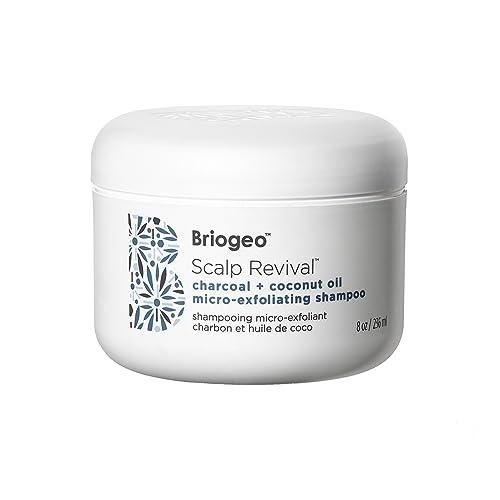
What is not an active: tea tree, charcoal, apple cider vinegar, peppermint and "scalp detox" blends. Some of them feel pleasant and tea tree has limited supporting evidence, but none of them belongs in the same category as the five above. If a bottle will not tell you its active and its percentage, that is the answer.
How we picked these four
1. A named active at a stated strength. Non-negotiable. Three of the four carry one, and the fourth is explicitly included as an addition rather than a treatment.
2. One pick per scalp type, not four versions of the same thing. A sensitive scalp, a dry flaking scalp and a greasy flaking scalp want different products, and the greasy-and-flaking combination in particular is handled badly by most of the category.
3. The cheap one goes first where it deserves to. Medicated shampoo is one of the few categories where the drugstore product is the clinically serious one. There is no premium to pay here, which is unusual enough to be worth saying — where price does and does not buy anything puts it in context.
4. Honest about the lengths. Every medicated shampoo on this page can dry out mid-lengths and ends, and each write-up says so. The fix is conditioning the lengths separately, not a gentler active.
What we did not use: scores, star ratings or review counts. Each pick carries its editorial role and a specific disqualifier instead.
We have not used these products ourselves. They are chosen from what is in the formula, what those ingredients are documented to do, and whether that matches the problem this page is about — and every product below links to the manufacturer's own page so you can check the formulation claims yourself. The full method is here.
Why a dandruff shampoo stops working, and what to do
A very common story: a medicated shampoo works beautifully for two months and then seems to stop. Two things are usually going on, and neither means you need a stronger product.
You stopped when it worked. Dandruff is managed rather than cured. The yeast is still there; the active was keeping the population down. Stop using it and the flaking returns on its own schedule. The sustainable pattern is to keep using it at a reduced frequency — once or twice a week — indefinitely.
You used one active continuously. Many dermatologists suggest alternating between shampoos with different actives, which is cheap to do and means you are not relying on one mechanism. Keeping two bottles in rotation is the single most useful habit in this category.
A third possibility worth ruling out: buildup. If you use a lot of leave-on product or dry shampoo, residue on the scalp both mimics and worsens flaking, and an antifungal cannot do anything about it. One clarifying wash tells you quickly — clarifying shortlist — and the dry shampoo question is worth reading if you use it often.
Using it properly, which most people do not
- Leave it on for five minutes. This is the biggest single error. An active ingredient needs contact time; thirty seconds and a rinse does almost nothing. Lather, leave it while you do everything else in the shower, then rinse.
- It goes on the scalp, not the hair. Fingertips, in sections, over the whole scalp rather than just where you can see flakes.
- Two or three times a week while it is active, dropping to once or twice a week as maintenance.
- Condition the lengths separately, every time. Medicated shampoos are formulated for skin, not for hair ends. Keep a normal conditioner for mid-lengths and ends and the dryness problem disappears.
- Do not scratch, and do not pick the scale off. It makes the inflammation worse and can break the skin.
- Give it four weeks before judging it. And if your hair is blonde, gray or color-treated, watch the tone — selenium sulfide and coal tar can both affect it, and a toning shampoo in the rotation offsets that.
When to stop buying shampoo and see a dermatologist
Dandruff is common and usually manageable at home. Several things on the same list are not dandruff at all, and they present identically to anyone looking in a mirror.
Get it looked at if: four weeks of correct use of a medicated shampoo has changed nothing; the scalp is red, sore, weeping or scabbed; the scale is thick, silvery and sharply bordered, which points toward scalp psoriasis; the itch is severe or waking you up; you are losing hair as well as flaking; or the flaking extends onto your face, eyebrows or behind your ears, which is a common pattern in seborrheic dermatitis. If shedding is part of the picture, why hair thins sets out which causes need a doctor rather than a product.
A prescription-strength antifungal or a short course of a topical steroid resolves in weeks what an over-the-counter shampoo has failed to shift in months. That is not a failure of this page, it is the correct next step.