Why price has a low ceiling in this one category
A finishing oil has one job: lie on the outside of the strand, lay the cuticle flat, reduce friction and reflect light evenly. A dermatology review of hair cosmetics describes exactly that role for oils and conditioning agents — smoothing the cuticle and limiting the mechanical damage of combing and styling (hair cosmetics overview, Int J Trichology). It is a surface-physics job, and surface physics is cheap.
Compare that with the categories where price does buy something. A bond repair treatment contains a patented active doing chemistry inside the strand. A medicated shampoo contains a named antifungal at a stated concentration. Those are not interchangeable with a cheaper bottle. An oil largely is, because the active ingredient — a plant triglyceride or a silicone — costs very little and is not proprietary.
So the right question is not whether the expensive bottle is better. It is which of the three things price actually buys you matters enough to pay for.
The three things the money genuinely buys
1. Spreadability, which is a silicone. This is the real difference you can feel. Pure plant oil is viscous and uneven; a silicone-based blend spreads in a thinner, more uniform film, so it feels lighter at the same level of shine. If your complaint about cheap oil is that it goes greasy, you are describing a spread problem and a blend will fix it.
2. A stated heat rating, occasionally. Most oils imply thermal protection; a few state a temperature. That number is worth money if you use an iron, because it is a claim the brand has to stand behind rather than a vibe. Whether you need a protectant at all depends entirely on which tools you use.
3. The experience. Fragrance, a dropper that does not over-pour, a bottle you do not hide. This is not nothing — a product you enjoy is a product you actually use, and consistency beats formulation in hair care most of the time.
From the picks
One of each, so you can see the gap
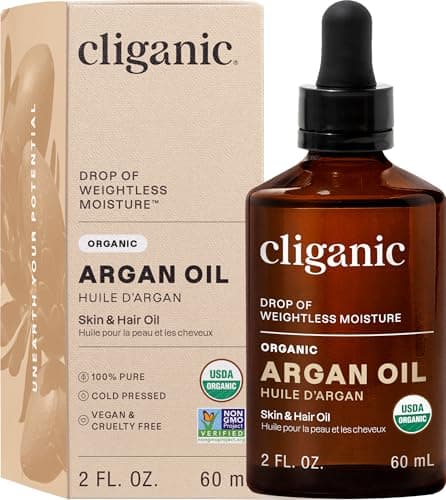
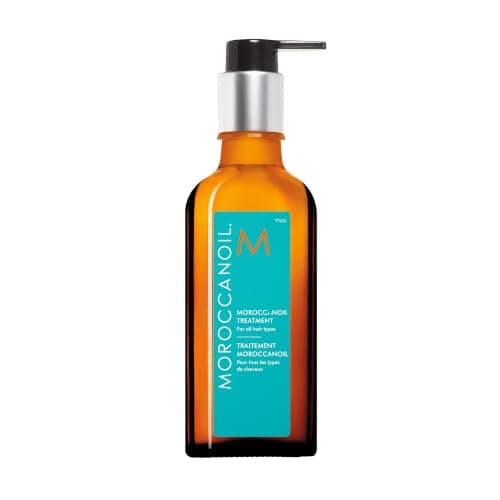
A certified single-ingredient argan oil, the silicone blend that created the category, and a luxury finishing oil. The first costs a fraction of the third and does the same surface job; the difference you are paying for is how evenly it spreads.
Best finishing oil
Cliganic Organic Argan Oil
A single-ingredient argan oil that does the job most people actually want an oil for: two or three drops on damp ends, cuticle laid flat, frizz down, shine up. It does not enter the strand the way coconut oil does, and for this job it does not need to.
Best finishing oil
Moroccanoil Treatment Original
The product that started the argan-oil category and still the most useful version of it: a few drops through damp lengths smooths the cuticle and cuts drying time.
OROribeNo product photograph available for the Oribe Gold Lust Hair Oil
The best product in the range
Oribe Gold Lust Hair Oil
If you buy one Oribe product, buy this one. A light finishing oil that absorbs fast, cuts dry time and smooths the surface, with heat protection claimed on top. It is where the brand's styling pedigree shows most clearly.
What it does not buy
Repair. No oil at any price rebuilds a broken bond or re-forms a cuticle. Microscopy of over-bleached hair shows cuticle cells separating and lifting away from the cortex (effects of excessive bleaching, PMC), and an oil lubricates that surface rather than restoring it. If that is your problem, bond repair treatments are the category where spending more is defensible.
Penetration. The one plant oil with published evidence of entering the strand and reducing protein loss is coconut, which costs a few dollars a jar (Rele & Mohile, J Cosmet Sci 2003). No luxury blend has an equivalent study, and several of them are mostly silicone.
Growth or thickness. Nothing in a finishing oil affects the number of hairs on your head.
Purity by default. Price is not a certification. Argan oil is one of the most commonly adulterated oils in beauty, and the defense is a stated cold-pressed organic certification on the maker's page — which a four-dollar bottle can have and a forty-dollar one can lack.
Cost per use, which is the number that matters
Headline prices mislead here, because the correct dose of every oil on this site is two to four drops. A small luxury bottle used correctly lasts months; a large cheap bottle used incorrectly is gone in weeks and made your hair greasy on the way.
| Tier | What you are buying | Worth it when |
|---|
| Pure single-ingredient oil | One certified cold-pressed plant oil, no fragrance | Almost always — this is the default recommendation |
|---|
| Mid-price silicone blend | Even spread, lighter feel, faster blow-dry | Thick or frizz-prone hair, or if pure oil reads greasy on you |
|---|
| Luxury finishing oil | Fast absorption, fragrance, sometimes a heat claim | You iron often, or you will genuinely use it more because you like it |
|---|
The same logic runs through the rest of the aisle, and the shampoo version of this question has a different answer — shampoo has a shorter contact time but a more consequential surfactant choice.
When we would spend the money anyway
Three honest cases. If you use a flat iron several times a week, a product with a stated temperature rating is worth the premium over one that implies protection. If your hair is thick, coarse and frizz-prone, a blend genuinely outperforms pure oil on evenness and the frizz shortlist reflects that. And if the expensive bottle is the one you will actually reach for, buy it — consistency is worth more than formulation.
Everywhere else, our recommendation is unglamorous: a certified pure argan oil for daily ends, coconut oil as a weekly pre-wash, and the money you saved spent on a better mask, which is the step where spending more changes the result.