The short answer, sorted by what you actually use
Flat iron or curling tongs: yes, every time. These are the only tools that put metal plates directly against the strand at temperatures well above the point where keratin starts changing. This is where protectant earns its place and where skipping it has a visible cost within months.
Hot blow-dry, close to the head: yes. Less severe than an iron because the heat is moving and indirect, but a daily high-heat dry with a concentrator nozzle an inch from the hair accumulates real damage.
Cool or warm blow-dry, held back from the head: barely. Any leave-in with conditioning agents in it is enough. Buying a dedicated product for this is optional.
Air drying, diffusing on cool, overnight styles: no. There is nothing to protect against. If you are buying one anyway, buy a leave-in for the detangling benefit instead and get the protection as a bonus.
Already-bleached hair, any heat at all: yes, and reconsider the heat. Chemically processed hair has less structure left to lose, and heat on top of bleach is the combination that produces hair that will not hold any style at all.
What heat actually does to a strand
Three things, and only one of them is reversible.
It drives water out. Hair normally holds a meaningful amount of water, and that water is what makes it flexible. Heat removes it fast. This part comes back as the hair rehydrates from the air, which is why hair feels brittle straight after straightening and a little better the next day.
It damages the cuticle. Rapid water loss and direct contact lift and crack the overlapping scales that form the strand's surface. A damaged cuticle means a rougher strand, more tangling, more friction and faster moisture loss afterwards. This does not come back.
Past a threshold, it alters the keratin itself. The protein structure inside the cortex changes state, and the strand permanently loses some of its ability to hold a shape or resist tension. The comparative work on chemically and thermally stressed hair shows these changes at the level of internal structure rather than surface appearance (acid straightening and bleaching damage, PMC). Also permanent.
The practical consequence: heat damage does not accumulate gracefully. It accumulates invisibly for a while and then becomes obvious all at once, usually as mid-length breakage and ends that will not hold a curl. By then the only remedy is cutting it off — the same conclusion the split ends page reaches from the other direction.
How a heat protectant works, and what it cannot do
A protectant is a thin film that sits between the heat source and the strand. The ingredients that do the work are usually silicones and film-forming polymers, sometimes with hydrolyzed protein alongside. The film spreads the heat out rather than letting it concentrate at the point of contact, and it slows the rate at which water escapes.
Two honest limits worth being clear about.
It reduces damage, it does not eliminate it. A protectant buys you a margin. It does not make 450°F safe, and no product converts a daily flat iron into a neutral habit.
It does nothing for damage already done. Protection is preventive by definition. If your hair is already heat-damaged, you are looking at a repair treatment and a trim, not a protectant — though you should start using one at the same time to stop the next round.
From the picks
What we would use
The two products on this site whose makers state thermal protection — a spray leave-in for general use and a silicone serum for straight hair — plus a repair treatment for heat damage already done. The first two prevent; the third addresses what prevention cannot.
Best all-rounder leave-in
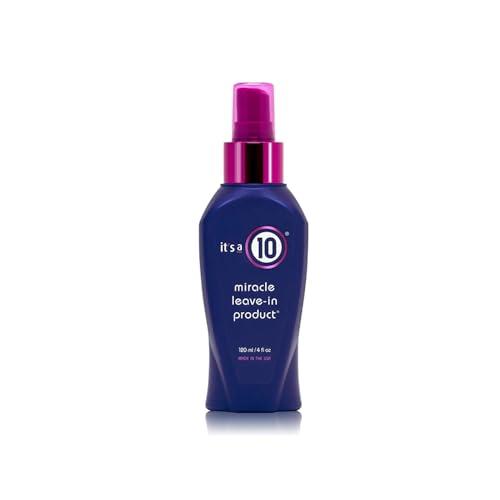
It's a 10 Miracle Leave-In Product
A spray leave-in that covers several jobs at once. The brand lists ten claimed benefits including detangling, frizz control and thermal protection, and the practical value is that it replaces two or three bottles.
JOJohn FriedaNo product photograph available for the John Frieda Frizz Ease Original Hair Serum
Best for straight hair frizz
John Frieda Frizz Ease Original Hair Serum
The anti-frizz product for people who do not have curls. A few drops through the lengths seals the cuticle down, which is the whole job when frizz is the only symptom.
Best fast repair
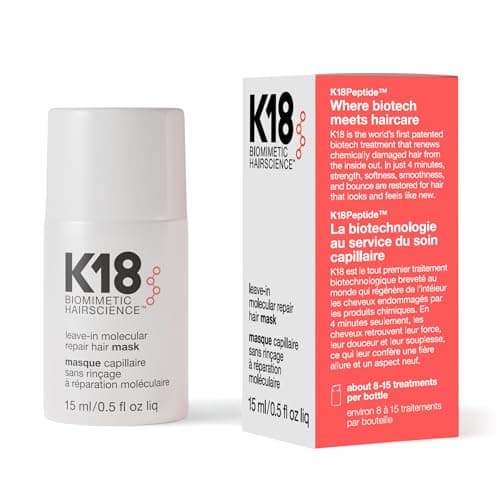
K18 Leave-In Molecular Repair Hair Mask
A four-minute leave-in rather than a rinse-out. K18 states its peptide reconnects polypeptide chains broken by bleach, color and heat, and the format means no extra shower time.
You may already own one without knowing it
This is the part that saves most people a purchase. A large share of leave-in conditioners, smoothing creams and anti-frizz serums already include thermal protection, because the ingredients that give slip and smooth the cuticle are the same ones that form a protective film.
Check the bottle for any of: thermal protection, heat protection, protects up to a stated temperature, or heat defense. If it says any of those, you are covered for ordinary blow-drying and you do not need a second product. The brand's own page is the place to check, which is why every pick on this site links to it.
When a dedicated product is still worth it: if you use an iron several times a week, if your hair is bleached, or if your current leave-in makes no thermal claim at all. A dedicated spray will be thinner, spread more evenly and tend to make a specific temperature claim, and a dedicated product does the job better than an all-rounder — the all-rounder's own trade-off, which its write-up on this site says plainly.
How to choose one
- Spray for fine hair, cream for coarse, serum for straight and smooth. Format matters more than ingredient list here, because even coverage is the whole point.
- Look for a stated temperature. A product that names a limit is making a checkable claim. One that says heat protection with no figure is making a vaguer one.
- Expect silicones, and plan to clarify. They are the most effective film-formers available and there is no good reason to avoid them, but they build up. Once a month — clarifying shortlist.
- Avoid alcohol-heavy sprays on already-dry hair. They flash-dry the strand, which is the thing you were trying to prevent.
- Watch the protein. Many heat protectants contain hydrolyzed protein. If you are also using a repair shampoo and a repair mask, that is a stack, and protein overload is the result.
- If you follow a silicone-free curly routine, you need a protectant built for it, or you need to use less heat. Most conventional protectants are exactly what that routine excludes — the curly routine guide sets out why.
Using it properly, which is where most of the benefit is
- Apply to damp hair, before drying, not to dry hair before the iron. Spraying a protectant onto bone-dry hair and then ironing it leaves wet patches that flash to steam against the plates, and steam does more damage than dry heat.
- Make sure the hair is genuinely dry before the iron touches it. Same reason. The single worst thing you can do to a strand is iron it while it is still wet.
- Comb it through. Patchy coverage means unprotected sections, and you will not know which ones they are.
- Mid-lengths and ends first, roots last or not at all. The ends are older, more damaged and get the most heat.
- Turn the temperature down. Most hair straightens perfectly well well below the maximum setting, and fine or damaged hair needs considerably less than coarse virgin hair. This is free and does more than any product.
- One pass per section. Going over the same section four times at a lower temperature is not gentler than one pass at a slightly higher one.
The most useful thing on this page is not a product at all: heat damage is cumulative and permanent, so frequency and temperature matter more than which bottle you buy. The American Academy of Dermatology's healthy hair guidance says much the same, and it puts limiting heat styling ahead of anything you can purchase (AAD, tips for healthy hair).
We have not used these products ourselves. They are chosen from what is in the formula, what those ingredients are documented to do, and whether that matches the problem this page is about — and every product below links to the manufacturer's own page so you can check the formulation claims yourself. The full method is here.