The term, honestly
"Dry oil" is a marketing description, not a chemical category. No oil is dry. What the phrase means in practice is an oil with low viscosity that absorbs quickly and leaves little or no greasy film behind — the opposite end of the spectrum from castor oil, which sits on hair like syrup.
Two things make an oil behave that way. The first is the fatty-acid profile: oils high in lighter unsaturated acids spread thinner and feel less occlusive than heavy saturated ones. The second, and more common in a bottle labeled dry oil, is dilution — the plant oil is carried in a silicone or a volatile solvent that evaporates, leaving a very thin film and the impression of fast absorption.
Neither of those makes it better or worse. It makes it lighter, which is a real and useful property if weight is the problem you keep running into. What it does not do is change the underlying mechanism: every oil on this page works on the surface of the strand, smoothing the cuticle and reducing the friction that causes mechanical damage (hair cosmetics overview, Int J Trichology).
Which oils genuinely behave like a dry oil
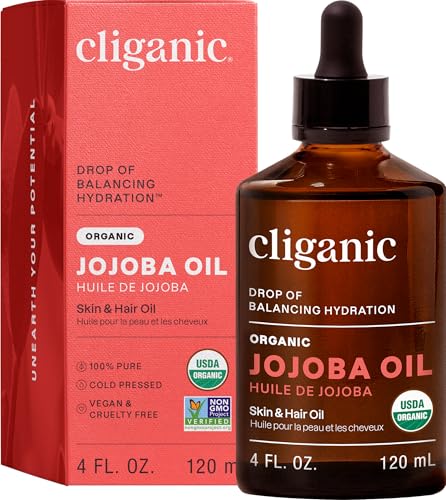
Jojoba. The clearest example, and the only one on this site that is technically not an oil at all — jojoba is a liquid wax. That structure is why it sits lighter than a triglyceride oil, rinses out easily and suits a scalp as well as ends.
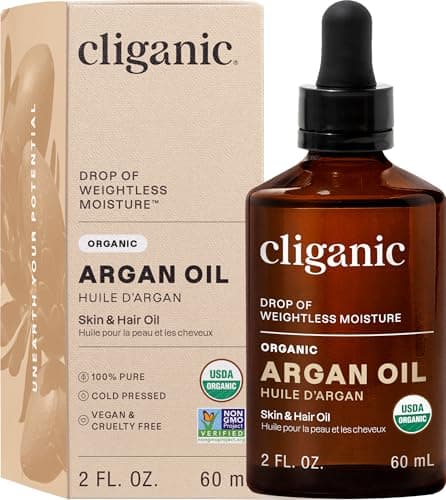
Argan. Dominated by oleic and linoleic acid, it spreads thin and sinks in fast at the correct dose of two to four drops. Most "dry oil" blends on the shelf are argan-based.
Grapeseed and squalane. Common in formulated dry oils for the same low-viscosity reason, usually as a supporting ingredient rather than the headline.
Not coconut, and not castor. Coconut oil is solid below roughly 76°F and is a pre-wash treatment, not a finishing oil — which is a different and genuinely evidence-backed job (Rele & Mohile, J Cosmet Sci 2003). Castor oil is the heaviest thing in the aisle. The single-ingredient comparison sorts all four by behavior.
From the picks
Three that behave like dry oils
Two single-ingredient oils that are naturally light — argan for ends, jojoba for fine hair and scalps — plus a formulated luxury oil that absorbs fast because it is blended to.
Best finishing oil
Cliganic Organic Argan Oil
A single-ingredient argan oil that does the job most people actually want an oil for: two or three drops on damp ends, cuticle laid flat, frizz down, shine up. It does not enter the strand the way coconut oil does, and for this job it does not need to.
The cheapest thing that works
Cliganic Organic Jojoba Oil
One ingredient, cold-pressed, USDA-certified organic. Jojoba is a liquid wax rather than a triglyceride oil, which is why it sits lighter on a scalp than coconut or castor and rinses out without a fight.
OROribeNo product photograph available for the Oribe Gold Lust Hair Oil
The best product in the range
Oribe Gold Lust Hair Oil
If you buy one Oribe product, buy this one. A light finishing oil that absorbs fast, cuts dry time and smooths the surface, with heat protection claimed on top. It is where the brand's styling pedigree shows most clearly.
One practical way to read a label: look at which oil is named first and what carries it. If the first plant oil is argan, jojoba, grapeseed or squalane, the product will behave light. If it is coconut, castor or shea, it will not, whatever the front of the bottle says. And if a silicone — anything ending in -cone or -conol — appears high in the list, you are buying spreadability, which is the single property that makes an oil feel dry.
A note on dry oil sprays
Most products sold explicitly as "dry oil" are sprays, and the format changes two things. It makes the dose almost impossible to get wrong, which is the single most common failure with oils — and it adds propellant and solvent, so you are applying less oil than the bottle size suggests.
That trade favors fine hair. If every oil you have tried has read as greasy, a spray at arm's length over the bottom third of your hair is the version most likely to work for you. If your hair is coarse and very dry, a spray will underdeliver and you want drops.
Who a dry oil suits
- Fine or easily weighed-down hair. The main audience. The fine-hair oil shortlist is effectively a dry-oil list.
- Low-porosity hair. Hair that resists everything and shows residue fast does better with less, applied thinner — and the low-porosity picks follow the same principle.
- Oily roots with dry ends. A light oil on the bottom third only is the safe version of oiling when your scalp and ends disagree.
- Anyone using oil daily. Daily application wants the lightest thing that works, with the heavy treatment saved for once a week.
Who it does not suit: coarse, high-porosity, bleached hair that drinks product. That hair needs weight, and a dry oil will feel like you applied nothing. The high-porosity picks are the right direction.
Using one properly
The rules are the same as for any oil, which is the point worth taking away — the label changes the feel, not the method.
- Two to four drops, or two spray passes. Warm drops between your palms first.
- Damp hair, bottom third, never the roots.
- After a leave-in rather than instead of one — the two do different jobs.
- Clarify every few weeks if the product is silicone-based, which most formulated dry oils are.
And the honest summary: if a bottle says dry oil, read the ingredient list for which plant oil is actually in it and what it is diluted with. A certified single-ingredient argan oil is a dry oil by behavior, costs a fraction of most bottles carrying the phrase, and the price premium above it buys spread and fragrance rather than performance.