Why the ends are the dry part, and why that changes the product
The hair at your ends is the oldest hair on your head. On shoulder-length hair it has been growing for roughly two years, which means two years of washing, brushing, drying, sun and friction against collars and pillows, all of it concentrated on the part of the strand furthest from the only source of natural conditioning you have.
Sebum comes from the scalp and travels down the strand. The AAD guidance on everyday hair care reflects this in the simplest possible way: shampoo the scalp, condition the ends (AAD, everyday hair care). By the time hair is past your shoulders, very little of that oil reaches the last few inches, and on curly or coily hair the bends in the strand mean it never really did.
So dry ends are usually not a sign that your whole head is dry. They are a sign that one specific section of hair is older and less protected than the rest. That matters for buying, because the general-purpose answer is a different product: our best hair oil for dry hair shortlist ranks oils for use over the whole length, where penetration and shine across the body of the hair is what counts. This page ranks them for the last three inches, where the job is sealing a porous, weathered surface without greasing up hair that sits on your shoulders all day.
If your ends are not just dry but visibly splitting, an oil is the wrong tool and no oil will mend them — the honest version of that is in best products for split ends.
Weight is the whole decision
Every oil above will make dry ends feel better. The only question that decides which one you should buy is how heavy it is relative to how fine your hair is, which is why the list is ordered that way rather than by price or brand.
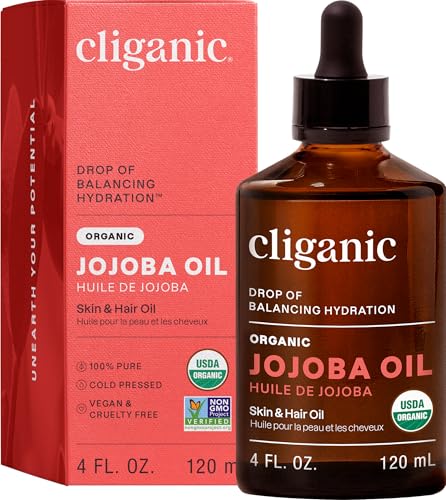
Light oils — jojoba is the clearest example — have a profile close to human sebum and a very low viscosity. They absorb quickly, they do not build a film, and on fine hair they are the only category that does not read as greasy by lunchtime. The trade-off is that they do less on coarse hair, where there is simply more strand to cover.
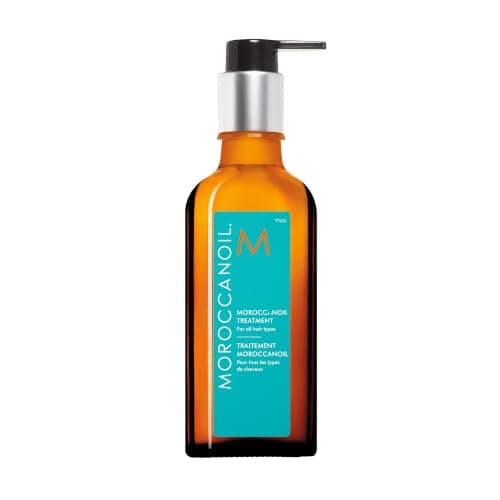
Mid-weight blends are where most commercial finishing oils sit, Moroccanoil included. These are argan or similar oils cut with a light silicone, which is why they feel dry to the touch rather than oily and why they spread so far. That silicone is the part people argue about; what it actually does is lower friction on the cuticle surface, and friction is what creates the next crop of dry ends.
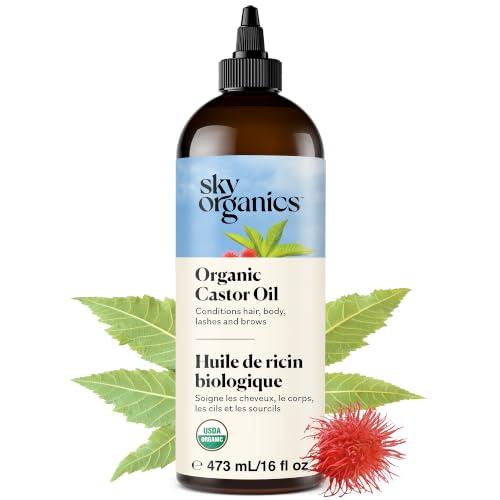
Heavy oils — castor above all — are too viscous to leave on hair. Used as a pre-wash soak on coarse, very dry ends for an hour before shampooing, they do more than anything lighter can. Used as a leave-in, they make hair look wet and stringy and take two washes to remove.
Porosity shifts all of this. High-porosity ends drink oil and need more of it more often; low-porosity ends reject it and go greasy on a fraction of the amount. If you have never checked, the porosity test takes five minutes and will save you buying the wrong one twice.
How much, and exactly where
The most common mistake with hair oil is quantity, and the second is placement. Both are easy to fix.
- Start with two drops. Not a pump, not a palmful. Two drops in your palms, rubbed together to warm them, then pressed through the bottom third of your hair. Add a third drop only if the ends still feel rough.
- Bottom third only. Draw an imaginary line level with your chin and stay below it. Oil at the roots is the fastest route to greasy-looking hair, and if your roots are already oily while your ends are dry, that combination has its own page: oily scalp, dry ends.
- Press, do not rake. Scrunching oil upward into the ends coats them. Dragging a hand down the length just moves it back to your palms.
- Leftovers go on the back. Whatever is still on your hands, press into the hair at the back of your head — the part you can least see and the part that gets the least conditioner.
Damp hair or dry hair?
Both, for different reasons, and this is the part most bottle instructions skip.
On damp hair, straight out of the shower, an oil acts as a sealant. It slows the rate at which water leaves the strand, which is the mechanism behind most of the softness people attribute to oils. It is also a useful buffer before heat styling, although it is not a heat protectant and should not be used as one — see whether you need a heat protectant.
On dry hair, an oil is cosmetic: it lowers friction, lays the cuticle flatter and makes the ends reflect light instead of scattering it. That is a real benefit, and it is the whole reason a finishing oil exists — but it is finishing, not feeding. Use roughly half as much as you would on damp hair.
Order matters if you layer products. Oil goes last on damp hair, after any leave-in and before heat. The full sequence is in what order to apply hair products.
What an oil cannot do, stated plainly
An oil is a surface product. It does not repair anything, it does not seal a split back together, and it does not add protein or structure to a strand that has lost it. The hair chemistry literature is clear that conditioning agents work by depositing on and lubricating the cuticle rather than rebuilding the cortex (hair care physicochemistry review, PMC).
What that means in practice: if your ends are dry, an oil is an excellent answer and probably the cheapest improvement available to you. If your ends are snapping off, an oil will make them look better while they continue to snap, and the actual answer is a weekly mask plus less heat, or a bond treatment if bleach was involved — bond repair treatments explained covers which of those applies to you.
And if nothing you put on your ends makes a difference for more than a day, the likely culprit is not the product but what is already on the hair. Porous ends accumulate silicone, protein and mineral deposits, and at that point nothing new can reach the strand. One clarifying wash resets it — the clarifying shortlist has the options, and hard water is worth ruling out at the same time.
We have not used these products ourselves. They are chosen from what is in the formula, what those ingredients are documented to do, and whether that matches the problem this page is about — and every product below links to the manufacturer's own page so you can check the formulation claims yourself. The full method is here.
If every oil you have tried has felt too heavy for your ends, the dry oil category is the lighter end of this same shelf, and the term is less mysterious than it sounds.