Why fine hair is a different problem, not a smaller one
Fine describes the diameter of each strand, not how many you have. A fine strand has less mass to carry anything you put on it, so the same two drops that disappear into coarse hair sit visibly on fine hair and drag it down. That is the entire difficulty, and it is a physics problem rather than a formulation one.
Porosity complicates it. A lot of fine hair is also low-porosity — the cuticle lies flat, the strand resists taking things up, and product sits on the surface where it shows. Research on hair porosity describes it as governing how readily the fiber absorbs what you apply (true porosity measurement of hair, PubMed), which is why low-porosity hair does better with less and with lighter textures. If you have never checked yours, the porosity test takes ten minutes.
So the useful question is not whether fine hair can use oil. It is how little oil, of what kind, applied where.
How we picked these four
1. Ranked by weight on the strand, lightest first. That is the axis that decides your result, so it is the one the list is ordered on. Price and prestige are incidental.
2. Fast absorption over richness. Every pick either has a naturally low viscosity or is blended to absorb quickly. The dry oil category is effectively the fine-hair category under a different name.
3. Two single-ingredient oils, two formulated. Silicone blends spread thinner and show less, which genuinely helps here; they also build up, which on fine hair becomes limpness within weeks. Both halves are on the cards.
4. No scores. Each pick carries an editorial role and a specific disqualifier instead.
We have not used these products ourselves. They are chosen from what is in the formula, what those ingredients are documented to do, and whether that matches the problem this page is about — and every product below links to the manufacturer's own page so you can check the formulation claims yourself. The full method is here.
The four, lightest first
| Pick | Type | Dose for fine hair | Best when |
|---|
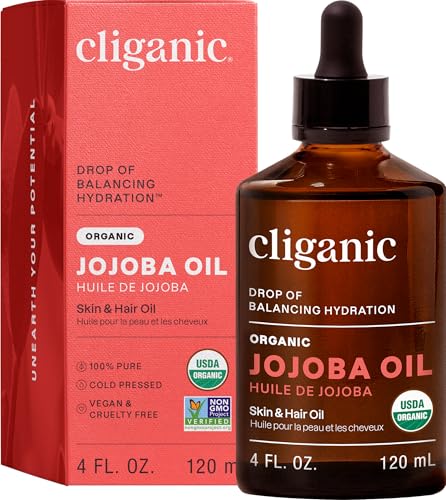
| Cliganic Organic Jojoba Oil | Single ingredient, liquid wax | One drop, ends only | Dry ends or a dry scalp, and you want one ingredient |
|---|
| John Frieda Frizz Ease Original Serum | Silicone serum | Two small drops | Fine hair that frizzes or will not lie flat |
|---|
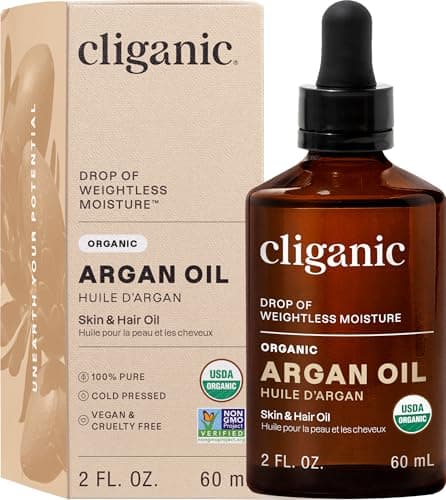
| Cliganic Organic Argan Oil | Single ingredient, plant oil | Two drops, ends only | Dullness, when shine is the goal |
|---|
| Oribe Gold Lust Hair Oil | Formulated finishing blend | Two drops, or pre-blow-dry | Heat styling is the cause of the dryness |
|---|
If your roots go greasy by day two as well, you have the oily-roots-dry-ends pattern, and the oil belongs on the bottom two inches and nowhere else.
The three oils to avoid on fine hair
Coconut oil as a leave-in. It is the one plant oil with published evidence of reducing protein loss, which makes it genuinely useful — but as a pre-wash soak you shampoo out, not as something you leave on (Rele & Mohile, J Cosmet Sci 2003). Left in, it flattens fine hair completely.
Castor oil in any role except a pre-wash. Thick, sticky and genuinely hard to remove. On fine hair it is the wrong product in every quantity.
Heavy argan blends at the usual dose. The classic silicone-and-argan treatments are formulated for medium-to-thick hair, and their own manufacturers say so. If you own one, use a single drop on the ends and nothing more — the full argan comparison covers which is which.
A fourth, less obvious one: avoid stacking. A leave-in plus a cream plus an oil is three films on a strand with no capacity for them. Pick one of the leave-in and the oil if your hair is very fine, rather than layering both.
The one-drop method
- One drop. Into the palm, rubbed between both hands first. You are spreading a film, not pouring a treatment.
- Bottom two inches, from underneath. Applying from below keeps the visible top layer free of product, which is where grease shows first.
- Damp hair, after a light conditioner. Oil on dry fine hair looks patchy and reads as unwashed.
- Never within six inches of the roots. Fine hair shows root grease faster than any other type, and dry shampoo for fine hair is the fix for the top, not an oil.
- Clarify every three or four weeks if you use a silicone pick. Buildup on fine hair reads as limp rather than as coated, so it is easy to misdiagnose — a clarifying wash resets it.
When an oil is the wrong product entirely
Three honest cases. If your fine hair is limp rather than dry, the problem is weight and an oil adds more of it — a volumizing wash is the category you want. If it is dry because it is bleached, an oil is a cosmetic patch over structural damage, and bond repair addresses the cause. And if the complaint is really frizz, an anti-frizz product for straight hair is thinner than an oil and does the job with less weight.
For most fine hair though, the routine that works is unglamorous: a light conditioner on every wash, one drop of jojoba or argan oil on damp ends, and a shampoo that does not deposit weight. That is under fifteen dollars of product and it beats any single bottle you could buy instead.