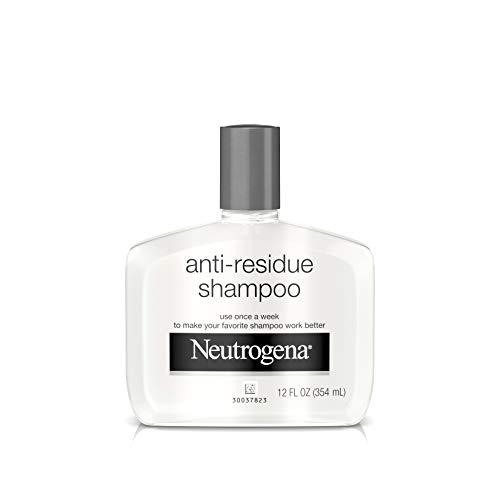
Best value clarifier
Neutrogena Anti-Residue Shampoo
The clarifying shampoo almost every stylist names, and it costs very little. Neutrogena states it removes up to 90% of dulling residue, and the instruction that matters is once a week, not daily.
Oily Roots & Scalp · Guide
Hard water deposits calcium, magnesium and iron on the outside of the strand. That film makes hair dull, stiff and hard to wet, pulls blonde hair orange, and no amount of conditioner removes it — you need something that lifts minerals, or a filter that stops them arriving.
We earn a commission if you buy through our links, at no extra cost to you. It never decides the ranking — the method is published · Affiliate disclosure
Hard water is water carrying dissolved minerals picked up from the ground it traveled through — principally calcium and magnesium, often with iron, and sometimes copper from older plumbing. It is not dirty, it is not unsafe, and in large parts of the United States it is simply what comes out of the tap.
The relevant property is that these minerals do not stay dissolved when the water evaporates. They are left behind — on your shower screen, in your kettle, and on your hair. That is the whole mechanism, and everything below follows from it.
Two distinctions worth keeping straight, because the symptoms overlap and the fixes do not. Mineral deposit is inorganic and comes from your water. Product buildup is organic — silicones, oils, polymers, dry shampoo starch — and comes from what you put on. A normal clarifying shampoo is good at the second and poor at the first.
Mineral ions bind to the hair surface, which carries a negative charge, and build up as a rough deposit on the cuticle. Four consequences follow, and they are the symptom list people usually describe as "my hair has just gone weird".
Dull, rough, stiff hair. A mineral-coated cuticle scatters light instead of reflecting it and catches against itself. Hair feels coarse in a way that moisture does not fix.
Hair that is hard to wet and hard to rinse. The deposit interferes with water taking hold, so it takes longer to saturate in the shower and products sit on top rather than absorbing. Low-porosity hair has the worst time here, because it was already resisting — the low-porosity shortlist is the companion read.
Poor lather and more shampoo used. Surfactants react with calcium and magnesium instead of cleaning, which is the same reaction that leaves soap scum in a bathtub. Using more shampoo to compensate dries the hair out without removing the mineral.
Brassiness on blonde, gray and highlighted hair. Iron in particular pulls light hair orange, and this is the version of brass that purple shampoo cannot fix, because the problem is a deposit rather than exposed warm pigment. If you tone endlessly with no result, this is very often why — the full brass prevention guide treats hard water as one of its four controllable causes.
The reason conditioner does not help is that there is nothing wrong with your hair's moisture. Conditioner adds a second layer on top of the deposit, which improves the feel for a day and adds to the film. The porosity research is clear that surface state governs how readily water moves in and out of the strand (true porosity measurement, PubMed), and a mineral layer is a surface problem that has to be removed rather than covered.
From the picks
A cheap residue-removing shampoo, a sulfate-free clarifier for colored hair, and a physical scalp scrub for the deposit a liquid wash runs straight over. These are clarifiers rather than true chelators — see the next section for when that distinction matters and what to look for on the label.
Best value clarifier
The clarifying shampoo almost every stylist names, and it costs very little. Neutrogena states it removes up to 90% of dulling residue, and the instruction that matters is once a week, not daily.
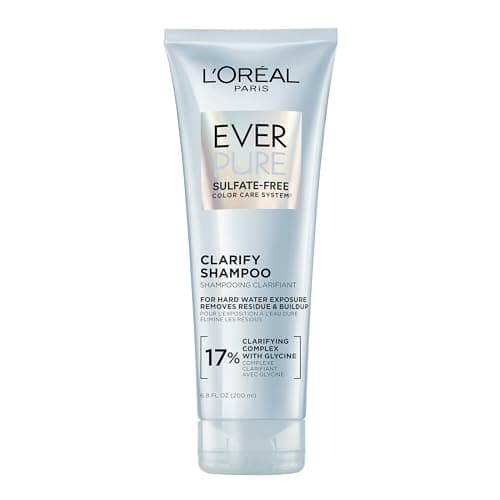
Best clarifier for colored hair
A clarifying shampoo that is also sulfate-free, which sounds contradictory and is the reason to buy it: you can remove buildup without taking the color with it.
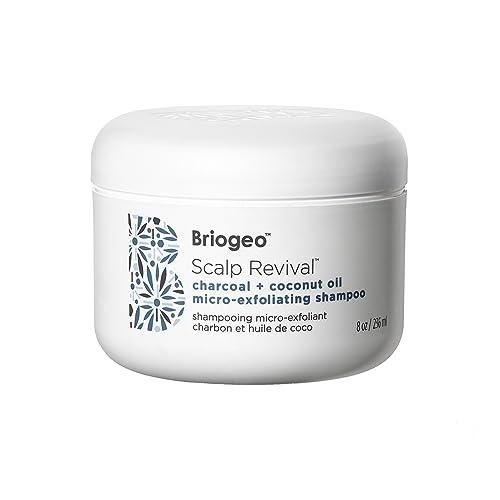
Best scalp scrub
A physical scrub built into a shampoo, so it is one step rather than two. It reaches residue that a liquid clarifier washes straight over, which is the point of a scrub.
Worth establishing before you buy anything, because every symptom above has at least one other cause.
These two words get used interchangeably on packaging and they are not the same thing.
A clarifying shampoo uses a stronger surfactant system to strip organic residue — product, oil, silicone. It is the right tool for buildup and it does help with minerals a little, mainly because it strips everything.
A chelating shampoo contains an ingredient that binds metal ions and carries them away. The ones to look for on an ingredient list are EDTA and its variants, phytic acid, sodium gluconate and sodium phytate. Chelators work by a different mechanism and are what actually removes a mineral deposit.
We are being specific about this because the picks on this page are clarifiers, not dedicated chelators. If your water is genuinely hard and clarifying has not fixed it, scan an ingredient list for one of the chelating agents above rather than buying a stronger clarifier — a stronger strip of the wrong kind just dries your hair out. The clarifying shortlist covers what clarifiers are good for, and the clarifying-versus-dry-shampoo comparison covers where they sit in a routine.
One practical warning for colored hair: both clarifying and chelating remove some color, and chelating removes more because it is lifting ions off the strand indiscriminately. Expect to tone or refresh afterwards — the honest answer on color loss goes through the trade-off.
Partly, and the honest version is more useful than either the marketing or the backlash.
A shower filter reduces chlorine well, and most will reduce some dissolved metals including iron. What a small inline filter does not do is soften water in the technical sense — calcium and magnesium removal needs ion exchange, which is what a whole-house softener does and what a cartridge in your shower arm cannot.
So: worth trying if your main complaint is brassiness, a reactive scalp or chlorine, and a reasonable purchase at the price. Not a complete answer to genuinely hard water, and the cartridge needs changing on schedule or it stops doing anything. A whole-house softener works and is a plumbing decision rather than a hair one.
The free version of a filter: a final rinse with bottled or filtered water, or a diluted acidic rinse. Both help a little. Neither is a substitute for removing the deposit you already have.
And one scalp note: if hard water has left your scalp tight, itchy or flaking, treat that as its own problem rather than a hair one. The American Academy of Dermatology's everyday scalp guidance is the sensible baseline (AAD, everyday hair care), and persistent flaking needs the dandruff-versus-dryness question answered before you buy anything else.
We have not used these products ourselves. They are chosen from what is in the formula, what those ingredients are documented to do, and whether that matches the problem this page is about — and every product below links to the manufacturer's own page so you can check the formulation claims yourself. The full method is here.
Questions
Next
Receipts
Claims about what an ingredient does are cited to dermatology bodies or published research. Claims about what a product contains are cited to the manufacturer's own page and labeled as the manufacturer's claim. Where the evidence is thin, we say so on the page rather than rounding it up. Read the full method.