These are two different categories, not two brands
Before any of this: the American Academy of Dermatology is clear that effective treatment for hair loss starts with finding the cause, and that getting an accurate diagnosis means seeing a board-certified dermatologist (AAD, hair loss diagnosis and treatment). Thyroid disease, low iron, hormonal change and medication all cause shedding, and no cosmetic product on this page addresses any of them.
The framing of this comparison is the most useful thing on the page. A cosmetic serum and an FDA-approved over-the-counter drug sit in different regulatory categories with different evidence requirements behind them. Cosmetics make claims about appearance; drugs make claims about physiological effect and have to support them.
Putting them on a shelf next to each other as two options is how a lot of marketing in this space works, and it misleads. What follows is what each one actually is, so you can take a specific question to a doctor instead of a vague one. We do not sell minoxidil and we are not qualified to advise on it.
What Vegamour GRO is
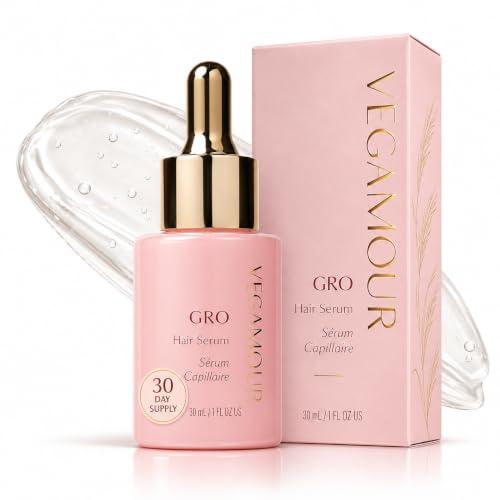
A leave-in plant-based scalp serum, applied daily, vegan and cruelty-free per the manufacturer. It is the best-known product in the non-minoxidil category and the one most people mean when they ask this question.
Its headline evidence is the part worth being precise about. Vegamour's own figures come from a 120-day study of 40 participants reporting on their own hair — a consumer perception study, where people say what they believe they see, rather than a controlled measurement of hair count by an investigator. The brand publishes the study design rather than hiding it, which is more than most of the category does, and the figures still mean what they mean.
What that supports: a product people report liking the look of after four months. What it does not support: regrowth in the sense a drug trial would use the word. Our read of the serum category as a whole goes through the difference between perception studies and clinical measurement.
What minoxidil is
Topical minoxidil is FDA-approved for hair loss in men and women. According to the AAD it has been shown to reduce hair loss, stimulate hair growth and strengthen existing strands; many people see some regrowth, it usually takes six to twelve months to judge, and it is applied to the scalp once or twice a day (AAD, hair loss diagnosis and treatment).
What that means in practice: stronger evidence than anything cosmetic, a longer timeline than serum marketing implies, a daily commitment that generally has to continue indefinitely to maintain the result, and the possibility of side effects — the 2015 rosemary oil trial recorded scalp itching as more frequent in its minoxidil group (Panahi et al., SKINmed 2015). An initial increase in shedding in the first weeks is also well known.
It is also worth saying what minoxidil is not: a diagnosis. The AAD's position is that effective treatment starts with identifying the cause of hair loss, and the causes include thyroid disease, low iron, hormonal change and medication, none of which a topical treats (AAD, hair loss causes).
Side by side
| Vegamour GRO | Topical minoxidil |
|---|
| Category | Cosmetic | FDA-approved OTC drug |
|---|
| Headline evidence | 40-person, 120-day consumer perception study | Clinical evidence summarized by the AAD |
|---|
| Claim made | About the look and feel of hair | Reduced loss, stimulated growth, stronger strands |
|---|
| Routine | Once daily, leave-in | Once or twice daily, indefinitely |
|---|
| Known downsides | Cost over months of use | Scalp irritation, initial shedding phase, lifelong use |
|---|
| Timeline to judge | Three to four months | Six to twelve months, per the AAD |
|---|
| Needs a doctor? | No | Not to buy, but you should talk to one first |
|---|
Which one suits you
Choose minoxidil — after a doctor's appointment — if you have pattern thinning, you want the option with real clinical evidence behind it, and you can commit to applying something to your scalp every day for years. That is the honest version of what it asks.
Choose a cosmetic serum if you are not sure you are losing hair yet, you have decided against a drug for your own reasons, you tried minoxidil and could not tolerate it, or you want your hair to look fuller rather than to treat a condition. All four are legitimate.
Choose neither, for now, if your shedding started suddenly, comes out in patches, or arrived alongside other symptoms. That is a medical appointment rather than a purchase — shedding versus loss tells the two patterns apart.
If you have chosen the cosmetic route, these are the three we would consider, and GRO is not automatically the best value in the group.
From the picks
The cosmetic options, if that is the route
Vegamour GRO itself, the much cheaper peptide serum that makes the same kind of appearance claim, and rosemary oil — the only ingredient in this category with a randomized trial behind it.
Best-known plant-based serum
Vegamour GRO Hair Serum
The best-known plant-based growth serum. Note what Vegamour's own headline evidence is: a consumer perception study of 40 participants, where people reported what they saw. That is self-reported perception, not measured regrowth.
Best value peptide serum
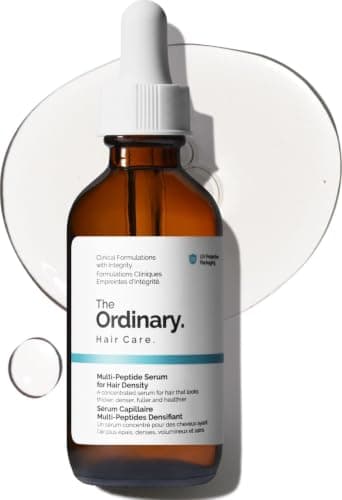
The Ordinary Multi-Peptide Serum for Hair Density
A leave-in peptide serum at a fraction of the usual price. The Ordinary describes it as improving the appearance of thickness and fullness — an appearance claim, which is the honest framing for this whole category.
Best scalp oil
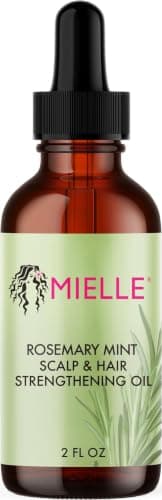
Mielle Organics Rosemary Mint Scalp & Hair Strengthening Oil
The product that made rosemary oil a mainstream hair topic. Read the name carefully: strengthening, not growth. As a scalp and split-end oil it is good, and it is cheap enough to find out.
The women's non-minoxidil shortlist and the men's version both go further on the picks; this page is about the choice behind them.
Can you use both?
People do, and we are not going to tell you it is fine or that it is dangerous, because that is a question for the doctor who recommended the minoxidil. What we can say is that stacking products makes it impossible to know which one did anything, and that applying two leave-on treatments to the same scalp raises the chance of irritation — which is the most common reason people abandon minoxidil in the first place.
If you are going to try both, the practical advice is to introduce them one at a time, months apart, and photograph your scalp in the same light monthly. That is the only way to end up with an answer rather than a shelf.
One more honest note on cost. A cosmetic serum used for a year is not cheap, and the money has a reasonable alternative: reducing the length you lose to breakage. Most people who feel their hair is thinner are losing length as well as density, and a routine built around not breaking hair costs less than any serum and has the more predictable result. Serum versus minoxidil in general covers the same comparison without the brand attached.