Growth is not your problem. Retention is.
Before any of this: the American Academy of Dermatology is clear that effective treatment for hair loss starts with finding the cause, and that getting an accurate diagnosis means seeing a board-certified dermatologist (AAD, hair loss diagnosis and treatment). Thyroid disease, low iron, hormonal change and medication all cause shedding, and no cosmetic product on this page addresses any of them.
Scalp hair grows at a fairly fixed rate — roughly half an inch a month, with modest variation between people — and it grows from the follicle, which is living tissue under the skin. Everything from the scalp outwards is dead keratin. No shampoo, serum, conditioner or oil applied to a dead fiber can make the living follicle beneath it produce hair faster.
That sounds like bad news and it is actually the opposite, because it tells you where the lever is. In a year your scalp produces about six inches of hair. If your hair has been "stuck at the same length for years," it is not because those six inches stopped arriving. It is because six inches were breaking off the bottom at the same rate they arrived at the top.
That breakage is almost entirely mechanical and chemical, which means it is almost entirely within your control. The ends of long hair are old — two or three years of washing, brushing, heat, friction against collars and pillows, and possibly several rounds of color. Hair care physicochemistry research describes the progressive degradation of the fiber and the role conditioning agents play in reducing the friction that drives it (hair care physicochemistry review, PMC). A routine aimed at growth is really a routine aimed at keeping what grows.
One important boundary before the routine. If you are shedding noticeably more than usual, if your part is widening, or if you can see scalp where you could not before, that is a different situation from slow length gain and no routine on this page addresses it. Shedding, thinning and breakage are three separate problems, and two of them belong to a dermatologist.
The four changes that cost nothing and matter most
In rough order of how much length they save, and all four are free.
1. Stop combing dry, and stop brushing wet with a brush. Hair is at its weakest when it is wet, which is exactly when most people attack it with a brush. The American Academy of Dermatology's guidance is to detangle wet hair gently with a wide-tooth comb rather than a brush, and to handle wet hair carefully in general (AAD, everyday hair care). Work from the ends upwards in sections, never from the roots down — starting at the top drags every tangle in the length into one knot at the bottom.
2. Cut the heat down, not necessarily out. Daily high-heat styling is the fastest way to turn healthy mid-lengths into split ends. If you blow-dry, use a lower setting and stop while the hair is still faintly damp. If you use irons, a lower temperature used once a week does far less damage than a high one used daily. Heat protectant helps but it is not a license.
3. Change what your hair sleeps on and is tied with. Eight hours of friction a night is real friction. A smoother pillowcase, and elastics without a metal crimp, cost almost nothing. Tight styles pulled from the same place every day are worth varying; sustained tension is a recognized cause of hair loss and it is cumulative.
4. Get the ends trimmed. This is the counterintuitive one. A split travels upwards along the strand, so an untrimmed split end does not stay the same size — it keeps dividing and taking length with it. Taking half an inch off every few months loses you less length than leaving the splits alone does.
None of those four involves buying anything. If you do all four and nothing else, you will keep more length this year than you did last year.
The weekly routine
Built around two or three washes a week, which suits most hair. Adjust the wash frequency to your scalp — how often to wash goes through that properly — and keep everything else the same.
Every wash day. Shampoo the scalp only, with your fingertips rather than your nails, and let the runoff clean the lengths. Conditioner from the ears down, left for a minute or two, then rinsed with cooler water than you washed with. Blot with a towel rather than rubbing. Comb through with a wide-tooth comb while a leave-in is on the hair, never before. Leave-in on damp mid-lengths and ends. Air-dry to 80% if you can, then finish with low heat if you need to.
Once a week. A deep conditioner or mask on the bottom two-thirds, ten minutes. The mask shortlist splits by moisture versus protein, and that choice matters more than brand. If your hair is colored, the deep conditioners for dyed hair make the same split with color in mind. This is the single highest-value weekly step for length retention.
Once or twice a week. A scalp oil or scalp treatment, massaged in before you wash, if your scalp is dry or tight. Which oil, and how much depends on your hair weight, and the honest version of this step is that it is for scalp comfort rather than for growth.
Daily, if you are using one. A serum, on a dry scalp, parted in sections. The daily part is the whole point — these are consistency products, and a serum used four days out of seven is a serum you have wasted money on.
Every three to four weeks. A clarifying wash. Leave-ins, oils and silicones accumulate, and after a couple of months hair stops responding to anything. One clarifying wash resets that. Follow it with the weekly mask the same day, because clarifying is drying.
Every eight to twelve weeks. A trim.
That is the entire routine. It is deliberately short, because a routine with eleven steps is a routine you will abandon in March, and consistency is the only variable here that reliably does anything.
What to buy, in order of value
Four products, ranked by how much they do per dollar. If you only buy one, buy the second.
A gentler shampoo if yours strips. The wash is the step you repeat most often, so it compounds. Thickening shampoos are a cosmetic effect — they coat the strand to make it feel denser, and that effect washes out — but a well-made one also cleans without stripping, which is the part that matters here. The thickening shampoo shortlist is honest about which half of that you are paying for.
A leave-in conditioner. The highest-value purchase on this page and the step most people skip. It gives the slip that makes wet detangling safe, which is where most breakage happens. The AAD has specific guidance on using leave-in conditioner (AAD, leave-in conditioner tips), and the leave-in shortlist splits sprays from creams by strand thickness.
A scalp oil, if and only if your scalp is dry, tight or itchy. This one is for comfort. The rosemary oil literature has a single small randomized comparative trial behind it (Panahi et al., SKINmed 2015), which is more than any other oil in the category can say and still not much — we go through that trial in detail.
A serum, last, and optional. This is the category with the most marketing and the weakest evidence, and buying it first is the most common mistake in this whole area. How to read the evidence behind growth claims is worth reading before you spend anything here. If you do buy one, pick it for a traceable claim, use it daily for six months, and photograph the starting point.
From the picks
The four products this routine uses
One per slot, chosen so the whole routine stays affordable — a cosmetic thickening shampoo, the leave-in that does the real work, a scalp oil for comfort, and a serum for anyone who wants to try one.
The drugstore thickening option
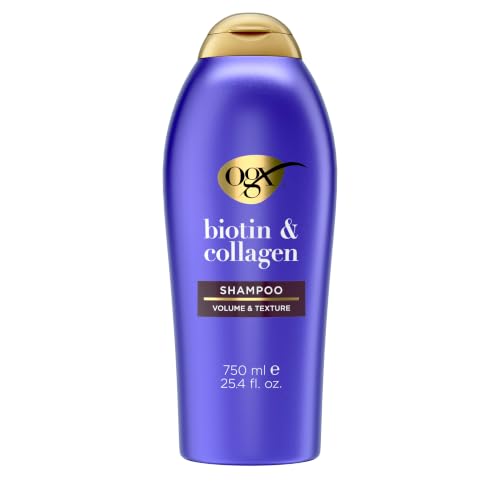
OGX Thick & Full Biotin & Collagen Shampoo
A volumizing shampoo, and worth being precise about what that means: it coats the strand so hair reads thicker. It does not add hair. For fine hair that is still a real, visible result.
Best leave-in for fragile hair
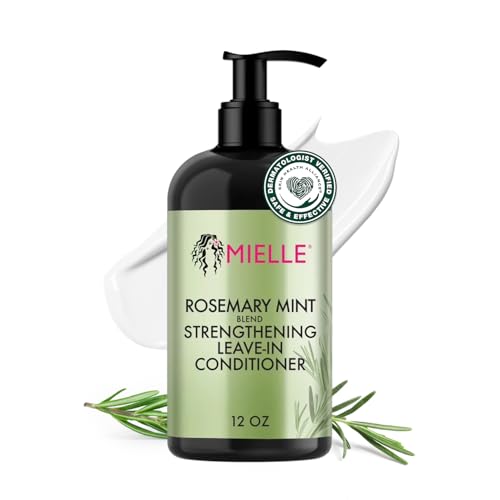
Mielle Organics Rosemary Mint Strengthening Leave-In Conditioner
The leave-in companion to the rosemary oil, and the more useful of the two for most people: length is usually lost to breakage rather than to slow growth, and a leave-in reduces breakage.
Best scalp oil
Mielle Organics Rosemary Mint Scalp & Hair Strengthening Oil
The product that made rosemary oil a mainstream hair topic. Read the name carefully: strengthening, not growth. As a scalp and split-end oil it is good, and it is cheap enough to find out.
Best value peptide serum
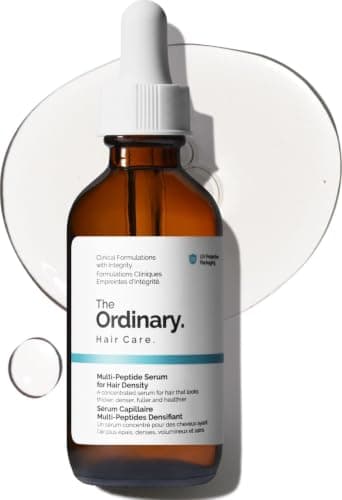
The Ordinary Multi-Peptide Serum for Hair Density
A leave-in peptide serum at a fraction of the usual price. The Ordinary describes it as improving the appearance of thickness and fullness — an appearance claim, which is the honest framing for this whole category.
We have not used these products ourselves. They are chosen from what is in the formula, what those ingredients are documented to do, and whether that matches the problem this page is about — and every product below links to the manufacturer's own page so you can check the formulation claims yourself. The full method is here.
What to expect, and when
Weeks one to four. Less tangling, fewer broken hairs in the comb, and ends that look less frayed. Nothing about length yet. This is the window where most people conclude a routine is not working, and it is far too early to tell.
Months two and three. About an inch and a half of new growth has arrived. If you have stopped losing it off the bottom, this is where you first see it as length. Hair generally feels better in the hand before it looks different in the mirror.
Months four to six. Three inches of growth. If you are using a serum, this is the earliest honest point at which to judge it, because the hair growth cycle simply does not resolve faster than that. Compare photographs in the same light, at the same angle, with hair in the same state — anything else is self-deception.
Twelve months. Six inches of new growth, and the real test: are you longer than you were? If yes, keep going. If you are exactly where you started despite doing all of this, the answer is not a better serum. It is a dermatologist, because something else is going on.
What to skip
- Scalp massage "for circulation." It feels good and it is harmless, which is not the same as effective. Do it because you enjoy it.
- Inversion, rice water rinses and the rest of the social-media canon. No evidence, and some of the rice water protocols leave enough protein on the hair to make it brittle.
- Biotin supplements, unless you are deficient. Biotin deficiency is rare, and supplementing past what your body uses does nothing for hair. It can also interfere with certain lab tests, which is a reason to mention it to a doctor rather than assume it is inert.
- Anything promising regrowth in weeks. The growth cycle makes that physically impossible, so the claim tells you what kind of seller you are dealing with.
- Trimming "to make hair grow." Trimming preserves length by removing splits before they travel. It does not speed growth, and nobody should tell you it does.
The uncomfortable summary: the parts of this routine that work are cheap and boring, and the parts that are exciting and expensive are the parts with the least behind them. We would rather say that than sell you the other way round.