Strand&Suds

Thinning & Growth · Head to head

Hair Serum vs Hair Oil

They do unrelated jobs. A scalp serum is a water-based treatment applied to the scalp to act on the follicle, and it is what you want if density is the concern. A hair oil is a leave-on conditioner for the strand, and it is what you want if dryness, dullness or frizz is the concern.

By Janet H.Updated How we pick
#ad

We earn a commission if you buy through our links, at no extra cost to you. It never decides the ranking — the method is published · Affiliate disclosure

Side by side

The two options

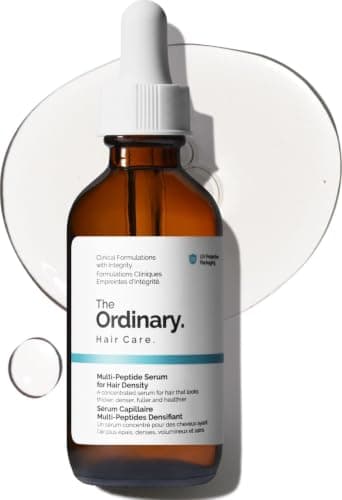
The Ordinary Multi-Peptide Serum for Hair Density

Best value peptide serum

The Ordinary Multi-Peptide Serum for Hair Density

A leave-in peptide serum at a fraction of the usual price. The Ordinary describes it as improving the appearance of thickness and fullness — an appearance claim, which is the honest framing for this whole category.

Choose it if: Anyone wanting to try a peptide scalp serum without a three-figure outlay

$24.00Amazon

#ad · Price as of November 11, 2026 · Affiliate disclosure for the link to Multi-Peptide Serum for Hair Density

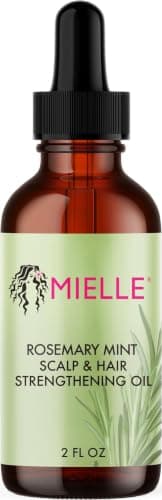
Mielle Organics Rosemary Mint Scalp & Hair Strengthening Oil

The oil

Mielle Organics Rosemary Mint Scalp & Hair Strengthening Oil

A lightweight oil for a dry scalp and dry ends. Cheap, useful, and not a growth treatment.

Choose it if: Dry scalps and dry ends, and anyone who wants to try the rosemary idea cheaply

$8.84Amazon

#ad · Price as of November 11, 2026 · Affiliate disclosure for the link to Rosemary Mint Scalp & Hair Strengthening Oil

Before any of this: the American Academy of Dermatology is clear that effective treatment for hair loss starts with finding the cause, and that getting an accurate diagnosis means seeing a board-certified dermatologist (AAD, hair loss diagnosis and treatment). Thyroid disease, low iron, hormonal change and medication all cause shedding, and no cosmetic product on this page addresses any of them.

The actual difference, which is the target not the texture

The useful distinction is not oil versus not-oil. It is what the product is aimed at.

A scalp serum is a thin, usually water-based or alcohol-based formula applied to the scalp and left there. Its actives — peptides, caffeine, niacinamide, plant extracts, or in drug form minoxidil — are intended to act on the follicle and the skin around it. Nothing about it is meant to condition your hair, and most of them make the hair feel slightly rough if you get them on the lengths.

A hair oil is a lipid applied to the strand, usually the mid-lengths and ends. It lowers friction, lays the cuticle flat and slows water leaving the hair. It does nothing to a follicle, and it cannot: a follicle is below the skin surface and an oil on the outside of a hair shaft is nowhere near it.

So the question answers itself once you name the problem. Density, shedding and a visible part are follicle questions. Dryness, dullness, frizz and rough ends are strand questions. Buying the wrong category is the most common reason people conclude that neither worked.

Side by side

 Scalp serumHair oil
Applied toThe scalp, on the part linesThe mid-lengths and ends
TargetThe follicle and the skin around itThe hair shaft
BaseWater or alcohol, thin and fast-dryingLipid, stays on the surface
Typical activesPeptides, caffeine, niacinamide, rosemary extractArgan, jojoba, coconut, castor, light silicones
What improvesPossibly density and shed rate, over monthsSoftness, shine, frizz — the same day
Time to judge itThree to six monthsOne application
How oftenDaily, as directedWhen the ends feel rough
Evidence baseThin for cosmetics; strong only for minoxidil, a drugWell established for conditioning, nothing for growth
Our pickThe Ordinary Multi-Peptide SerumMielle Rosemary Mint Oil

Why the labels make this confusing

Neither word is defined or regulated, and both get used for the other thing. Three overlaps account for most of the confusion.

Silicone shine products sold as serums. A frizz serum is a silicone-based finishing product for the strand. It is an oil in function, despite the name, and it has nothing to do with the scalp — the anti-frizz shortlist is where those belong.

Scalp oils sold as growth treatments. An oil marketed for growth is still an oil. Rosemary oil is the clearest case: there is a single 2015 randomized trial comparing rosemary oil with 2% minoxidil (Panahi et al., SKINmed 2015), and one small trial with real limitations is not the same evidence base as a drug. The honest version is in does rosemary oil help hair growth and rosemary oil vs growth serum.

Hair serums that are leave-in conditioners. Plenty of products called hair serum are simply light leave-ins. Read the directions: if it says apply to damp mid-lengths and ends, it is a conditioner. If it says apply to a dry scalp and massage in, it is a scalp treatment.

The one-line test that cuts through all of it: where do the instructions tell you to put it? That is what the product is, whatever the front of the bottle says.

Buy the serum if

  • Your part looks wider than it did, or you can see more scalp in bright light. That is a density question and an oil cannot address it.
  • You are shedding more than usual and have already ruled out the medical causes with a doctor.
  • You want to try the cosmetic category before anything stronger, and you are prepared to use it daily for three to six months before judging it. That timeline is not a sales device; it is the hair growth cycle, and anything promising results in weeks is describing something else — do hair growth serums work is honest about the limits.
  • Your scalp is otherwise healthy. A serum on a flaking, inflamed scalp is treating the wrong layer — fix the scalp first.

And read hair serum vs minoxidil before you buy, because the comparison that matters most is not serum against oil.

Buy the oil if

  • Your ends are dry, rough or dull. Direct, cheap, works the same day — best hair oil for dry ends.
  • Your scalp is dry and tight rather than thinning. An oil or a scalp treatment is the right answer — best hair oil for dry scalp.
  • Frizz is the complaint. A hydrophobic layer is the most effective thing against humidity.
  • You want a pre-wash treatment. Oiling before shampoo is a real and useful practice, and the shampoo then removes it.
  • Breakage is making your hair look thinner. This is the case where an oil genuinely helps apparent density, by reducing the friction that snaps strands — see hair oil for growth and thickness for what that does and does not mean.

Using both, which most people with thinning hair should

They are compatible, and the only real rule is not to put one where the other is meant to go. An oil on the scalp over a serum is an occlusive layer on top of a water-based treatment, which is not how either was tested.

Morning: serum on a dry scalp, along the part lines, massaged in with fingertips. Nothing else on the scalp afterwards.

After washing: two drops of oil pressed through the bottom third of damp hair. Scalp untouched.

If you want a pre-wash scalp oil as well — which is reasonable for a dry scalp — do it on a day you are washing, and apply the serum after the hair is dry rather than on top of the oil.

The sequence for a whole routine, if you layer several products, is in what order to apply hair products, and the growth routine puts both of these in context.

We have not used these products ourselves. They are chosen from what is in the formula, what those ingredients are documented to do, and whether that matches the problem this page is about — and every product below links to the manufacturer's own page so you can check the formulation claims yourself. The full method is here.
In detail

Both, in full

Best value peptide serum

The Ordinary Multi-Peptide Serum for Hair Density

A leave-in peptide serum at a fraction of the usual price. The Ordinary describes it as improving the appearance of thickness and fullness — an appearance claim, which is the honest framing for this whole category.

Who it suits: Anyone wanting to try a peptide scalp serum without a three-figure outlay

What is doing the work

  • A combination of peptide technologies the manufacturer states are intended to support hair density
  • Plant-based extracts in a leave-in base that absorbs without greasy residue, per the brand

What works

  • Far cheaper than comparable peptide serums
  • Absorbs without leaving the scalp greasy
  • Daily use fits into an existing routine easily

What to note

  • The claim is about the appearance of density, not regrowth — read it as written
  • Consistent daily use for months before you could judge it

Skip it if your hair is shedding suddenly or in patches — that pattern needs a doctor's diagnosis, not a cosmetic serum.

The Ordinary Multi-Peptide Serum for Hair Density
$24.00View on Amazon

#ad · Price as of November 11, 2026 · Affiliate disclosure for the link to Multi-Peptide Serum for Hair Density

The oil

Mielle Organics Rosemary Mint Scalp & Hair Strengthening Oil

A lightweight oil for a dry scalp and dry ends. Cheap, useful, and not a growth treatment.

Who it suits: Dry scalps and dry ends, and anyone who wants to try the rosemary idea cheaply

What is doing the work

  • Rosemary oil — the subject of one small 2015 randomized trial against 2% minoxidil, cited on our rosemary guide
  • Biotin, which Mielle states helps nourish the scalp and condition dry hair

What works

  • Inexpensive compared with a peptide serum
  • Genuinely useful on dry scalp and split ends regardless of the growth question
  • Safe for chemically treated hair and protective styles, per the manufacturer

What to note

  • The growth evidence is one small trial that gets cited far beyond what it supports
  • Oily on fine hair if you use too much or too near the lengths

Skip it if you have an oily scalp already — adding oil to it will not help, whatever the marketing suggests.

Mielle Organics Rosemary Mint Scalp & Hair Strengthening Oil
$8.84View on Amazon

#ad · Price as of November 11, 2026 · Affiliate disclosure for the link to Rosemary Mint Scalp & Hair Strengthening Oil

How we picked

Products we have personally tested: none

Most hair care roundups are written in a "we tested these" voice. We have not, and saying so is the point. These picks are chosen the way an informed shopper would choose them: read what is actually in the formula, check what those ingredients are documented to do, match that against the specific problem the page is about, and confirm the product is still being sold.

Each pick gets a role — the drugstore option, the one for high porosity, the gentlest of the set — rather than a score out of ten, because a score would imply a measurement nobody took. Nobody pays for inclusion or placement, and when the cheap product is the right answer we say that too. The full method is on one page.

Questions

Frequently asked

What is the difference between a hair serum and a hair oil?
A scalp serum is a thin water-based treatment applied to the scalp to act on the follicle. A hair oil is a lipid applied to the strand to condition it. Different target, different problem — and the instructions tell you which is which.
Which is better for hair growth, serum or oil?
A scalp serum, because it is the only one of the two aimed at the follicle. Even then the evidence for cosmetic serums is thin, and the only over-the-counter drug approved for hair loss is minoxidil.
Can I use hair serum and hair oil together?
Yes, in different places. Serum on the dry scalp, oil on the damp mid-lengths and ends. Do not put oil on the scalp over a serum — an occlusive layer on top of a water-based treatment is not how either was tested.
Is rosemary oil a serum or an oil?
An oil, whatever the marketing says. There is one small 2015 randomized trial behind the growth claim, which is not the evidence base a drug has — so treat it as a low-cost scalp oil rather than a treatment.
Does hair oil help with thinning hair?
Only indirectly. It reduces the friction that snaps strands, and breakage looks like thinning — so less breakage means more apparent density. It does nothing to a follicle.

Next

Receipts

Sources

  1. 1.Panahi Y et al. — Rosemary oil vs minoxidil 2% for the treatment of androgenetic alopecia: a randomized comparative trial (SKINmed, 2015)
  2. 2.American Academy of Dermatology — Hair loss: diagnosis and treatment
  3. 3.On hair care physicochemistry: from structure and degradation to novel biobased conditioning agents (PMC)
  4. 4.American Academy of Dermatology — Hair loss resource center

Claims about what an ingredient does are cited to dermatology bodies or published research. Claims about what a product contains are cited to the manufacturer's own page and labeled as the manufacturer's claim. Where the evidence is thin, we say so on the page rather than rounding it up. Read the full method.