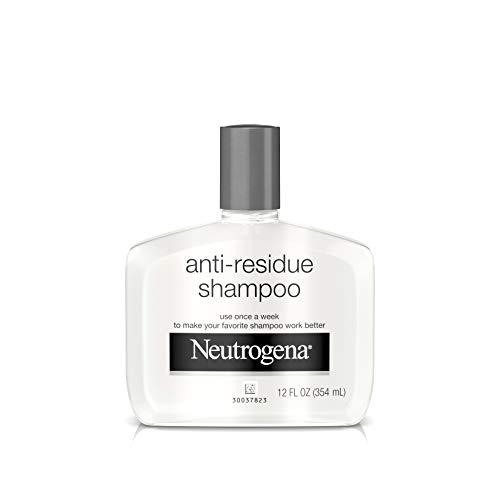
Best value clarifier
Neutrogena Anti-Residue Shampoo
The clarifying shampoo almost every stylist names, and it costs very little. Neutrogena states it removes up to 90% of dulling residue, and the instruction that matters is once a week, not daily.
Oily Roots & Scalp · Guide
Usually one of three things: you are washing in a way that does not clean the scalp, you have product or mineral build-up that looks like oil, or your conditioner is going somewhere it should not. Genuine over-production of sebum is real but much rarer than the other three combined.
We earn a commission if you buy through our links, at no extra cost to you. It never decides the ranking — the method is published · Affiliate disclosure
Sebaceous glands attached to each follicle produce sebum, a mixture of lipids that protects the scalp barrier and conditions hair as it travels down the strand. Everyone produces it continuously, and you want it: the dry ends people complain about are literally the part of the hair sebum never reaches.
The amount varies with genetics, hormones, age and androgen levels, and it is simply higher in some people than others. It also travels differently depending on hair type — straight, fine hair conducts sebum down the length efficiently, which is why fine straight hair looks greasy fastest, while coily hair barely moves it at all.
Here is the useful part. When people say their hair is greasy, the cause is often not how much sebum they produce. It is one of six other things that either leave sebum in place or look exactly like it. Working through them in order of likelihood is faster than buying a stronger shampoo, which is the usual first move and frequently the wrong one.
The most common cause by a wide margin, and it has three versions.
You are washing the hair instead of the scalp. Sebum comes from the scalp, so that is where shampoo belongs. The AAD's guidance is to concentrate shampoo on the scalp rather than down the length — the lengths get cleaned by the runoff (AAD, everyday hair care). Piling lather on mid-lengths while fingertips never properly reach the roots leaves the oil exactly where it was.
You are washing once when you need twice. On an oily scalp the first shampoo largely removes product and surface oil, and the second one actually cleans. Two short washes beat one long one, and the second lathers far more readily — which is itself the signal that the first one was doing something.
Your shampoo is too gentle for your scalp. This is the sulfate-free trap. A sulfate-free shampoo cleans less thoroughly by design, which suits dry and color-treated hair and actively does not suit an oily scalp. If you switched to a gentle shampoo and your roots got worse, that is cause and effect, not coincidence — the sulfate-free guide covers the trade-off, and best shampoo for oily hair is the shortlist for the other direction.
Silicones, styling polymers, dry shampoo powder and hard-water minerals all accumulate at the root and produce hair that is limp, dull, coated and faintly greasy to the touch. It is a different problem with an identical appearance, and no amount of shampoo removes it because ordinary shampoo is not designed to.
The test takes one wash. Use a clarifying shampoo once. If your hair afterwards feels squeaky, light and genuinely clean in a way it has not for months, it was build-up. If it feels the same as always by the next morning, it is oil.
Hard water deserves a specific mention, because it is invisible and extremely common. Calcium and magnesium deposit on the hair and scalp, and the film they leave is heavy and dulling — hard water and your hair covers what actually removes it. For the clarifying step itself, see best clarifying shampoos and dry shampoo vs clarifying shampoo.
From the picks
A cheap clarifier to rule out build-up first, a clinical oil-control shampoo if the scalp is flaking as well as greasy, a sulfate-free clarifier for colored hair, and a lightweight everyday wash for fine hair that goes greasy fast. Start with the clarifier — it is the diagnostic as well as a fix.
Best value clarifier
The clarifying shampoo almost every stylist names, and it costs very little. Neutrogena states it removes up to 90% of dulling residue, and the instruction that matters is once a week, not daily.
Best for an oily, flaking scalp
Oil control and an anti-dandruff active in one bottle. If your flakes are oily rather than dry, this combination is the one that addresses both halves at once.
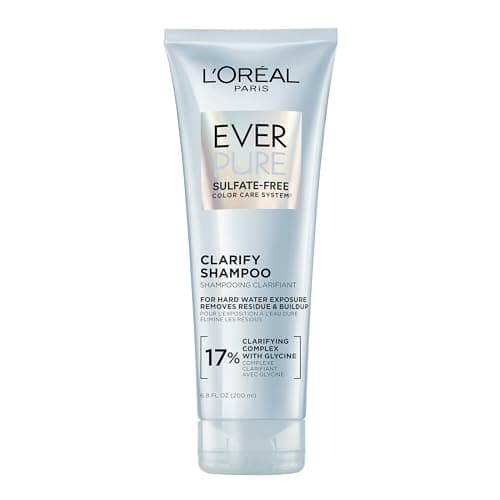
Best clarifier for colored hair
A clarifying shampoo that is also sulfate-free, which sounds contradictory and is the reason to buy it: you can remove buildup without taking the color with it.
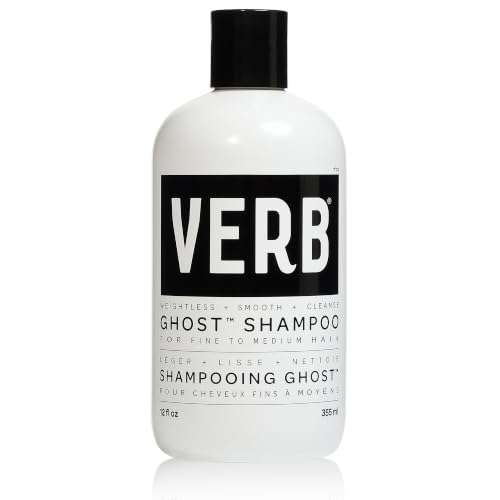
Best for fine hair
A weightless cleanser built for fine hair rather than adapted to it. Verb states the full Ghost line is clinically proven to reduce frizz by 79% when used together, which is a claim about the range, not this bottle alone.
Conditioner is designed to deposit on the strand and stay there. Applied at the roots, or rinsed carelessly, it does exactly that — and conditioned roots look greasy within hours of a wash.
The signal is distinctive: hair that looks greasy almost immediately after showering, rather than on day two. If that is you, the fix is free. Conditioner on the mid-lengths and ends only, from the chin down, and rinse for longer than feels necessary — bending forward so the water runs away from your scalp rather than over it helps more than it sounds.
A heavy conditioner or a rich leave-in can also be the culprit on fine hair even when correctly applied, simply because of weight. If your roots are oily while your ends are dry, that combination needs two different products in two places: oily scalp, dry ends.
Touching it. Running your fingers through your hair moves sebum from the scalp down the length and adds oil from your hands. People who fidget with their hair have greasier hair, and it is one of the few causes here you can fix in a day by noticing it. The same applies to brushing: brushing from scalp to ends is an excellent way to distribute oil, which is useful on dry hair and counterproductive on greasy hair.
Tools, pillows and hats. A brush that has not been cleaned in six months is carrying old sebum and product and putting it straight back. Pillowcases collect oil and press it back into the roots for eight hours a night. Hats and helmets hold sebum against the scalp and add occlusion and warmth, both of which increase it. None of this is dramatic on its own; together it accounts for a surprising amount of day-two grease.
Greasy hair that comes with flaking, itching or redness is usually not a simple oil problem. Seborrheic dermatitis and dandruff both involve an interaction with Malassezia yeast, which lives on sebum, and the result is greasy-looking roots with yellowish flakes rather than the dry white ones people expect. The AAD's dandruff guidance sets out how it is treated (AAD, how to treat dandruff).
The practical point: an oil-control shampoo alone will not resolve this, because the active ingredient is what matters. A shampoo with a named antifungal or keratolytic active, used consistently, is the step that works — best shampoo for dandruff, by named active sorts them that way. Persistent redness, soreness or hair loss alongside it is worth taking to a board-certified dermatologist rather than a shelf.
Last on the list because it is the least common explanation for the complaint, not because it is not real. Some people simply have more active sebaceous glands, and androgen levels, puberty, hormonal changes and some medications all push production up.
Two myths are worth retiring here. Washing frequently does not train your scalp to produce more oil — the glands are hormonally driven, not reactive to shampoo, and if your hair looks better washed daily then washing daily is the correct answer. And washing less does not durably reduce production either; it reduces how often you remove what is produced, which is a different thing. There is a real adjustment period when you change frequency, and it is mostly your perception adapting. The full version of that argument is in how often to wash your hair.
Work down this list rather than buying a stronger shampoo first.
We have not used these products ourselves. They are chosen from what is in the formula, what those ingredients are documented to do, and whether that matches the problem this page is about — and every product below links to the manufacturer's own page so you can check the formulation claims yourself. The full method is here.
Questions
Next
Receipts
Claims about what an ingredient does are cited to dermatology bodies or published research. Claims about what a product contains are cited to the manufacturer's own page and labeled as the manufacturer's claim. Where the evidence is thin, we say so on the page rather than rounding it up. Read the full method.