Is men's shampoo actually different?
Mostly no. Hair is hair; the chemistry does not know who it is on. What differs in practice is the brief: men's hair is more often short, washed more frequently, and attached to a scalp that gets more sun, more sweat and more hat. So the products that suit are generally simpler, gentler and used more often — and a shampoo marketed to men is usually a standard formula with a different fragrance.
Two places the difference is real. Androgenetic hair loss is far more common and starts earlier in men, which changes what a thinning-hair product is being asked to do. Seborrheic dermatitis and dandruff are also more common, and that is the complaint most worth matching a product to rather than guessing.
Which is why this list is organized by complaint rather than by gender. The American Academy of Dermatology's everyday hair care guidance comes down to washing according to how oily your scalp actually gets, conditioning the lengths, and going easy on heat and tension (AAD, everyday hair care) — advice that is identical regardless of the label on the bottle.
How we picked these five
1. One pick per complaint. Short hair, everyday hair, a flaking scalp, thinning hair, coarse hair. If none of those is your situation, the second pick is the default.
2. Named actives where there is a medical complaint. For flaking we require a stated anti-dandruff active rather than a botanical blend, because that is the difference between a treatment and a scent.
3. Honest about the thickening pick. A volumizing shampoo coats the strand so hair reads fuller. It does not grow hair, and we would rather say that on the card than let the category imply otherwise.
4. Cost per wash, because men wash often. Four of the five are drugstore or supermarket priced. A gentle shampoo you use daily beats an expensive one you ration.
We have not used these products ourselves. They are chosen from what is in the formula, what those ingredients are documented to do, and whether that matches the problem this page is about — and every product below links to the manufacturer's own page so you can check the formulation claims yourself. The full method is here.
Matched to your hair and your complaint
| Your situation | Shampoo | Conditioner |
|---|
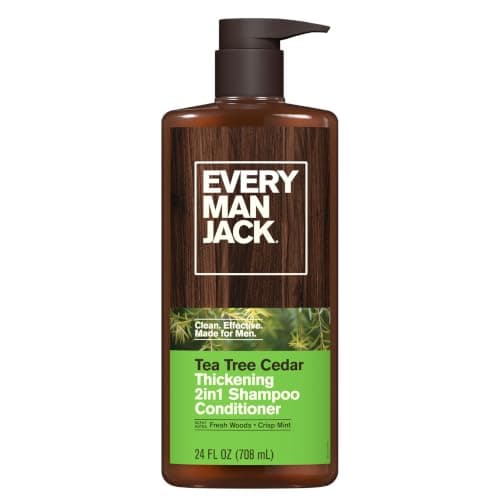
| Short hair, no complaints | Every Man Jack 2-in-1, Tea Tree | Built in — nothing else needed |
|---|
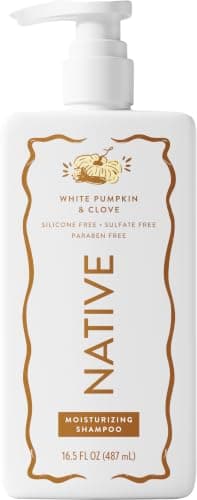
| Hair past the ears, washed often | Native Moisturizing | A basic conditioner on the lengths, every wash |
|---|
| Flaking, itching scalp | Head & Shoulders Clinical Strength Sensitive Scalp | Separate conditioner, mid-lengths to ends only |
|---|
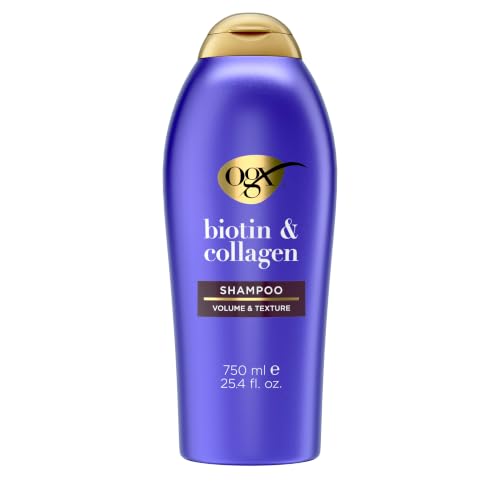
| Fine or thinning on top | OGX Thick & Full Biotin & Collagen | Light conditioner, ends only, to avoid flattening it |
|---|
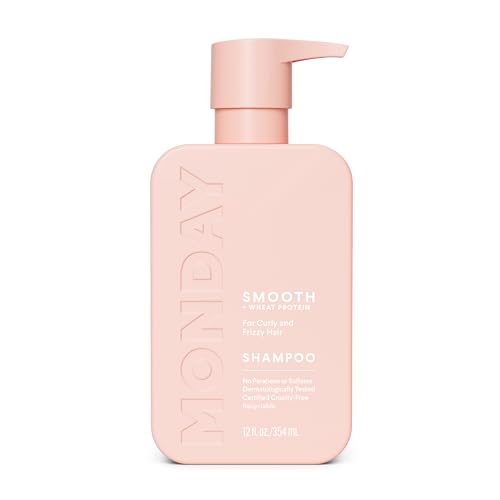
| Coarse, curly or frizz-prone | MONDAY Haircare Smooth | A rich conditioner or a weekly mask |
|---|
If your hair is curly, that is a bigger variable than anything else here, and the curly routine for men is the page to read instead of this one.
The conditioner question, answered plainly
Under two inches: skip it, or use a 2-in-1. There is not enough length for mechanical damage to accumulate, and conditioner at the roots does nothing useful.
Two inches to collar length: use one, on the lengths only. This is the point where combing, towel-drying and sun exposure start to show as roughness at the ends.
Longer than that: use one every wash, no exceptions. Hair is at its most fragile wet, and slip is what lets a comb through without snapping strands. The every-day conditioner question has the longer version of this.
The one case for a leave-in rather than a rinse-out: longer hair that tangles, or hair that gets a daily blow-dry. The leave-in shortlist covers it.
Scalp first, hair second
With short hair, almost every complaint is a scalp complaint, and the product that fixes it is chosen by what the flakes look like.
Small, dry, white flakes with tightness: that is dryness. A gentler shampoo and less frequent washing, plus a dry-scalp shampoo if it persists.
Larger, greasy, yellowish flakes with itch: that pattern points at dandruff or seborrheic dermatitis, and the AAD is clear that it needs an active ingredient rather than a better wash (AAD, how to treat dandruff). The dandruff shortlist is sorted by named active.
Greasy roots within a day: an oily-scalp shampoo, and resist the instinct to wash twice a day, which tends to make it worse.
Buildup, dullness, a coated feeling: the scalp buildup guide covers what causes it and how to clear it.
The four-step routine that covers most men
- A gentle shampoo, used as often as your scalp needs it. Daily is fine if the shampoo is mild; it is harshness rather than frequency that causes problems.
- A conditioner on the lengths if your hair is longer than two inches.
- Something with SPF or a hat if you are thinning on top. Scalp sun exposure is the most-ignored item in men's hair care.
- One targeted product, if you have one specific complaint. Not five.
If thinning is the reason you are reading this, the honest sequence is medical first, cosmetic second: the AAD's position is that effective treatment starts with diagnosing the cause (AAD, hair loss diagnosis and treatment), and the serum options for men are cosmetic products with cosmetic claims. The wider men's product list covers styling, which this page deliberately does not.