The drugstore mask
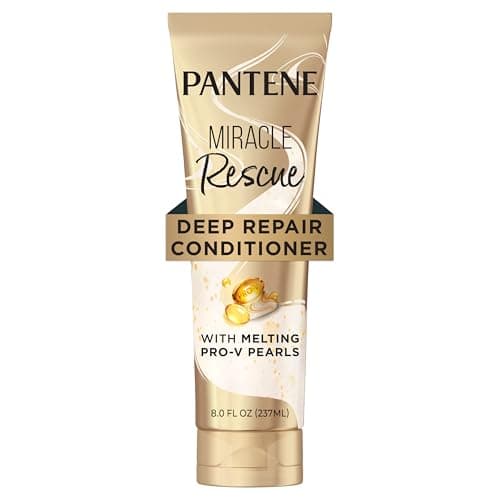
Pantene Miracle Rescue Deep Repair Conditioner
A one-to-three minute deep conditioner from the drugstore shelf. It is a moisture treatment rather than a repair treatment, and at this price that is a perfectly good trade.
Hair Types & Porosity · Guide
The rule is simpler than the question: condition every time you shampoo. If you wash daily, that means daily. What you should not do is condition the roots, use a rich mask as your daily product, or skip it because your hair feels greasy.
We earn a commission if you buy through our links, at no extra cost to you. It never decides the ranking — the method is published · Affiliate disclosure
Condition every time you shampoo. Not most times. Every time.
The reason is mechanical rather than cosmetic. Shampoo works by removing oil, and the oil it removes includes the thin lipid film that lets strands slide past each other. Freshly washed hair is rougher, higher-friction and at its most vulnerable while wet — which is exactly when you comb it. A conditioner replaces slip, and slip is what stops a comb breaking strands. The American Academy of Dermatology's own healthy-hair guidance pairs shampooing the scalp with conditioning the lengths for that reason (AAD, tips for healthy hair).
So if you wash daily, you condition daily, and there is nothing wrong with that. Daily washing is a question about your scalp — settled in how often to wash your hair — and it does not change the answer about conditioner.
This is the version of the question people usually mean, and here the answer depends on your hair.
Coarse, curly, high-porosity or bleached hair: yes, it helps. Rinsing with water and applying conditioner — a "conditioner-only wash" or co-wash — refreshes curls and adds moisture without stripping anything. For many curly routines it replaces shampoo on most days.
Fine or oily-rooted hair: no. Conditioner on unwashed hair sits on top of the oil you already have. You will read it as greasy by that afternoon.
Anyone, if the product is a leave-in rather than a rinse-out: usually yes. A leave-in is designed for exactly this — a light daily conditioning layer that does not need a shower.
It is a real thing, and it is not caused by conditioning on every wash day. It is caused by too much product, too rich a product, or product in the wrong place.
Every one of those is fixed by using less, keeping it off the roots, or switching from a rich mask to a light daily conditioner — not by conditioning less often.
| Your hair | Rinse-out conditioner | Daily leave-in? |
|---|---|---|
| Fine, oily roots | Every wash, ends only, light formula | Rarely — and only on the ends |
| Medium, normal scalp | Every wash, mid-lengths to ends | Optional, useful if you heat style |
| Coarse or high porosity | Every wash, generously | Yes, daily |
| Curly or coily | Every wash, plus co-wash days | Yes, daily or on refresh days |
| Color-treated | Every wash, color-safe formula | Yes, to slow moisture loss |
Curly hair is the clearest case for conditioning more rather than less, and the beginner curly routine builds the schedule around it.
Three products, three different frequencies, and mixing them up is the most common mistake in this whole area.
From the picks
A rinse-out deep conditioner for the weekly treatment, a cheap ceramide leave-in for daily use, and a spray leave-in if you want detangling and thermal protection in the same bottle.
The drugstore mask
A one-to-three minute deep conditioner from the drugstore shelf. It is a moisture treatment rather than a repair treatment, and at this price that is a perfectly good trade.
The drugstore leave-in
A cheap, widely stocked leave-in built around ceramides. It does the everyday job of keeping dry ends manageable, which is most of what a leave-in is for.
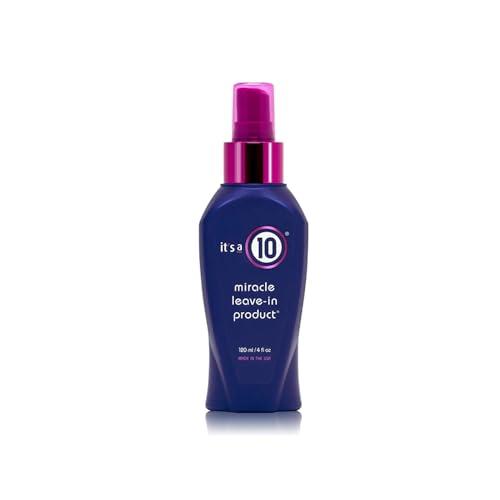
Best all-rounder leave-in
A spray leave-in that covers several jobs at once. The brand lists ten claimed benefits including detangling, frizz control and thermal protection, and the practical value is that it replaces two or three bottles.
Rinse-out conditioner: every wash. The non-negotiable one. A light formula if your hair is fine, a richer one if it is coarse.
Leave-in: daily, if your hair is dry, coarse, curly or color-treated. Damp hair, mid-lengths and ends. It is a different job from an oil, and it is the one that delivers water rather than sealing it.
Deep conditioner or mask: weekly, not daily. Using a mask as your everyday conditioner is the single fastest route to limp, coated hair — conditioner versus mask sets out what each is for.
The short version: conditioning every day is only a problem if every day means every day at the roots, or if the product you are using daily is a weekly treatment. Fix the placement and the product and the frequency takes care of itself. The routine by hair type slots all three products into a week.
Questions
Next
Receipts
Claims about what an ingredient does are cited to dermatology bodies or published research. Claims about what a product contains are cited to the manufacturer's own page and labeled as the manufacturer's claim. Where the evidence is thin, we say so on the page rather than rounding it up. Read the full method.