What a perm actually did to your hair
This is the part that decides which bottle you should buy, and almost every "best leave-in for perms" list skips it.
A permanent wave is not a styling product that lasted. It is a chemical service that works in two stages: a reducing lotion breaks the disulfide bonds holding keratin in its existing shape, the hair is wrapped around rods, and a neutralizer then re-forms those bonds with the strand locked in the new curve. Disulfide bonds are the structural link that gives the hair fiber its shape and strength, and chemical processing degrades the fiber as it rearranges them (hair care physicochemistry: structure and degradation, PMC). Work on chemically restructured hair describes measurable alterations to the cuticle and cortex afterward (alterations from acid straightening and bleaching, PMC).
So permed hair sits in an awkward middle. It behaves like curly hair — it tangles, it frizzes, it wants moisture and definition — but underneath it is damaged hair, with a cuticle more porous than it was and bonds that were cut and rebuilt rather than grown that way. That combination is why two different kinds of leave-in both partially work and neither fully does:
- A curl leave-in gives you slip, definition and humidity behavior, and does nothing about the structural damage.
- A repair leave-in addresses the bonds and the porosity, and does nothing for detangling or curl shape.
Which one you need depends on how your perm went, not on what kind of curl you ended up with. If your hair feels gummy, stretchy or snaps when you comb it, the perm over-processed and the damage is the problem. If it feels healthy but tangles into a bird's nest on wash day, the curl is the problem. Buy for the one you actually have.
How we picked these five
1. Chemically treated hair first, curl second. Every pick here has to be sensible on a porous, recently processed cuticle. That ruled out the heaviest curl creams and gels, which are built for naturally curly hair with an intact cuticle and tend to sit on permed hair rather than absorb into it.
2. Slip, because combing is when permed hair breaks. The American Academy of Dermatology's guidance on leave-in conditioner is specifically about reducing the force needed to comb wet hair (AAD, tips for using leave-in conditioner). On a fresh perm that is the single most useful thing a product can do, and it is why a dedicated detangler earns a place above several richer products.
3. Protein stated, never assumed. Permed hair is the hair type most likely to be tipped into protein overload, and the cards below say which picks lean protein-heavy so you can avoid stacking three of them.
4. One silicone-free option that genuinely is one. Silicones make permed hair feel immediately better and, used without clarifying, gradually seal a porous cuticle so nothing else gets in. There is one pick with no silicones at all, and the rest say plainly that they have them.
5. No scores, and nothing we claim to have tested. Each pick carries an editorial role and a specific disqualifier instead of a number.
We have not used these products ourselves. They are chosen from what is in the formula, what those ingredients are documented to do, and whether that matches the problem this page is about — and every product below links to the manufacturer's own page so you can check the formulation claims yourself. The full method is here.
The protein mistake that makes a perm feel like straw
Here is the sequence that catches people about three weeks after a perm, and it is worth recognizing before you spend money on a fourth bottle.
A perm leaves hair feeling softer and looser than expected, so you read that permed hair needs protein and buy a protein leave-in. It works — for a few days. Then the hair starts feeling rough and dry, so you reason that it needs more protein and add a keratin treatment or a second protein cream. Now it feels stiff, straw-like and brittle, and it snaps instead of stretching.
That is protein overload, and chemically processed hair gets there faster than anything else because the products marketed at it are nearly all protein-forward. The fix is counterintuitive: stop the protein and do a week of moisture only. Our guide to protein overload has the strand test that tells you which side of the line you are on, and it takes about ten seconds.
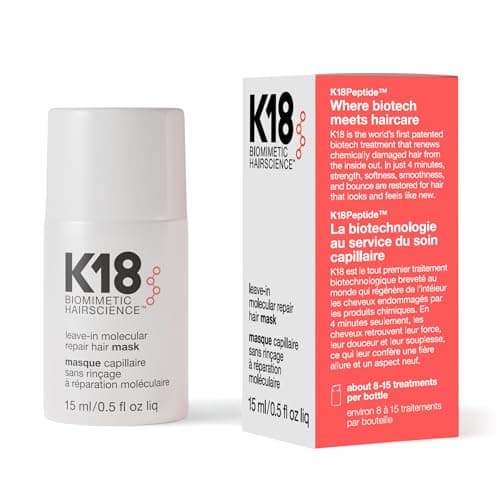
The practical rule for a perm: one protein-containing product in the routine, not three. If the K18 leave-in mask is your repair step, the leave-in you use on the other days should be a moisture one. Pick from the lower half of this list for those days, not the top.
The five, side by side
| Leave-in | Targets damage? | Silicone? | Protein-forward? | Best at |
|---|
| K18 Leave-In Molecular Repair Hair Mask | Yes — the brand's peptide | No | Peptide, not a protein coat | An over-processed perm |
|---|
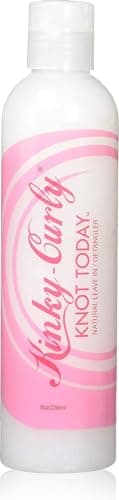
| Kinky-Curly Knot Today | No | No | No | Detangling, curl-safe routines |
|---|
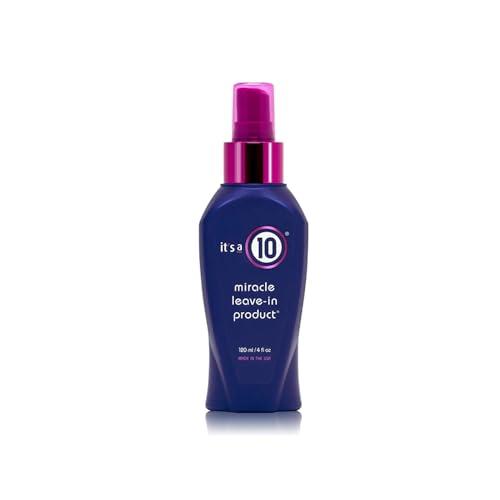
| It's a 10 Miracle Leave-In | No | Yes | Not stated as the focus | Heat styling, one-bottle routines |
|---|
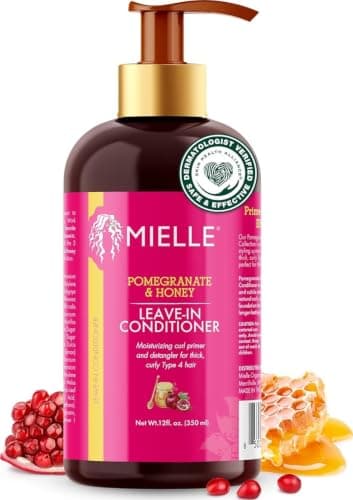
| Mielle Pomegranate & Honey Leave-In | No | No | No | Coarse, thick permed hair |
|---|
| L'Oréal Elvive Ceramide Leave-In | No | Yes | No | Daily use at drugstore price |
|---|
Read the first column and the list sorts itself. If the honest answer to "did my perm damage my hair?" is yes, the list is one item long and the other four are what you use on the days in between. If the answer is no, skip the expensive one entirely — you would be paying for chemistry with nothing to work on, which is the same argument we make about premium hair oils.
Humidity, droop and the humectant trade
Two of these picks are humectant-led, meaning they work by pulling water into the strand. Honey in the Mielle leave-in and the slippery elm and marshmallow root in Knot Today both behave that way, and it is genuinely why they give so much slip.
The trade is that a humectant pulls water from wherever there is more of it. In dry indoor air that is your hair, which is the wrong direction. In very humid air it is the atmosphere, and a fresh perm responds by swelling, frizzing and losing the wave pattern you paid for — the droop people describe about four weeks in is often a humectant problem rather than the perm relaxing.
So: humectant leave-ins in a temperate or mildly humid climate, where they are excellent. In a Gulf-coast summer, use a lighter leave-in and seal with a small amount of oil instead, which is the same strategy we recommend for frizz in humidity. The ceramide leave-in and the spray are the two picks here that behave most predictably in damp air.
How much to use, and when
Permed hair is where under-application and over-application are both common, often in the same person on different days.
- Damp, not wet, and not dry. Squeeze the water out with a towel or t-shirt first. A leave-in applied to dripping hair is diluted to nothing; applied to dry hair it lands in patches and makes the wave look crunchy in those spots.
- Lengths and ends only. Nothing in this list belongs on your scalp. The new growth at the root is virgin hair and does not need any of it, and a leave-in at the root is a straight route to greasy roots with dry ends — which is its own problem to unpick.
- Rake, then scrunch, then leave it alone. Distribute with your fingers while the hair is wet, scrunch upward once to encourage the wave, and stop touching it. Permed waves set as they dry and every pass of a hand after that is frizz.
- One pump more for the back than the front. The hair at the nape was wound on the same rods and takes the most friction from collars and pillows. It is almost always the driest section and almost always gets the least product.
- Clarify monthly if you use the silicone picks. A clarifying wash stops a silicone film from gradually sealing a porous perm shut, and the silicone-free guide sets out what you gain and give up either way. If it is your scalp rather than your lengths that feels coated, scalp scrub against clarifying shampoo is the decision to make first.
The first 48 hours after the perm
Your stylist almost certainly told you not to wash it for a day or two, and that instruction is not about the leave-in you bought — it is about the neutralizing stage. The bonds re-formed in the salon continue settling after you leave, and washing too early is the most reliable way to lose wave definition in week one.
What that means practically: do not start a new product routine on day one. Wait until after the first wash, then add one leave-in and use it for two weeks before judging it or adding anything else. Permed hair changes behavior over the first month as the cuticle settles and the salon's own products wash out, and a routine assembled on day two is a routine built around hair you no longer have by week three.
The AAD's general hair-care guidance is the right baseline through that period: be gentle with wet hair, go easy on heat, and treat chemically processed hair as the fragile thing it is (AAD, everyday hair care). If you are also coloring, space the two services out rather than stacking them — color on freshly permed hair compounds the porosity, and color-safe shampoos become the more important purchase at that point.
When a leave-in is not the answer
Three situations where buying from this page is the wrong move, and they are common enough to name.
Your hair stretches like chewing gum and does not spring back. That is over-processing, and no leave-in fixes it. A bond or protein treatment with real contact time is the category you want — bond repair treatments explained covers how the two main approaches differ, and the mask shortlist has options at every price. A leave-in is the maintenance step after that, not instead of it.
Your perm is growing out and the roots are straight. A leave-in cannot blend a demarcation line. What helps is a curl cream or a light gel through the mid-lengths to make the transition less obvious, and curl cream against gel is the comparison to read before buying either.
Your scalp is itching or flaking after the service. That is not a hair problem and a leave-in on the lengths will not touch it. Perming lotions are alkaline and can leave a scalp sensitized; give it a week of gentle washing, and if it persists, see a dermatologist rather than layering products over it. Our dry-scalp shampoo picks are the gentlest route back in the meantime.