What The Ordinary is
The Ordinary is a skincare brand built on a single idea: name the active ingredient and its concentration on the front of the bottle, charge close to what the formula costs to make, and leave the marketing out. "Niacinamide 10% + Zinc 1%" is a product name, not a description. That approach made the brand enormous in skincare, and the hair products are the same approach pointed at the scalp.
Which means this review is not really about whether the products are good. It is about whether a brand that refuses to formulate around a problem can serve a reader who arrived with one. Mostly it cannot — and in two specific cases it does better than anything else at the price.
The range is smaller than it looks
The brand's Hair & Scalp Solutions category lists seven products plus a collection bundle. Read the product URLs, though, and three of those seven are the brand's general-purpose face oils cross-listed into the hair category: 100% Plant-Derived Squalane, 100% Organic Cold-Pressed Moroccan Argan Oil and 100% Cold-Pressed Virgin Marula Oil are all filed on the brand's own site as face oils (The Ordinary, Hair & Scalp Solutions category). They do work on hair, in the way any single plant oil works on hair, but they were not designed for it and nothing on their pages claims they were.
Strip those out and the hair range is four products:
- Sulphate 4% Cleanser for Body and Hair — a shampoo and body wash in one bottle, built on sodium laureth sulfate at a stated 4%. The brand says it removes oil and dirt without drying hair out, and lists the formula as fragrance-free, silicone-free and oil-free (maker's product page).
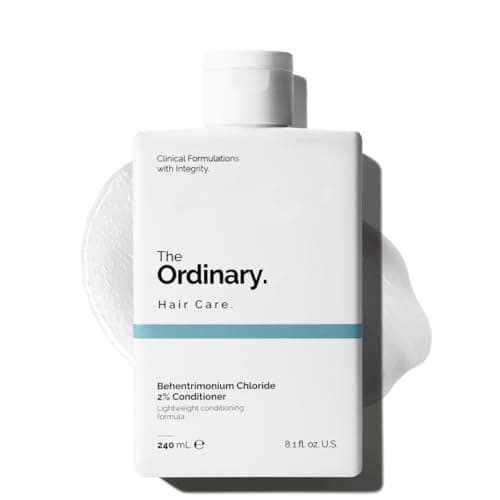
- Behentrimonium Chloride 2% Conditioner — seven ingredients, one conditioning agent at a stated 2%, no silicones, no added oils, no fragrance. The brand describes it as smoothing hair root to end without weighing it down (maker's product page).
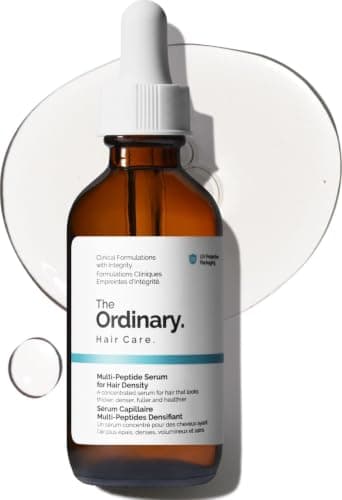
- Multi-Peptide Serum for Hair Density — the product most people are searching for when they look this brand up. A leave-in scalp serum built on peptide technologies, positioned around the appearance of thickness and fullness.
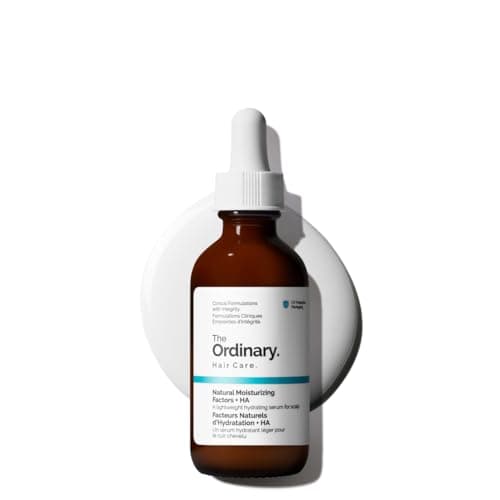
- Natural Moisturizing Factors + HA for Scalp — a light, milky leave-in scalp serum with sodium hyaluronate, arginine, sodium PCA, lactates and lactic acid. The brand positions it as supporting scalp hydration and the scalp barrier without weighing hair down, massaged into a clean dry scalp once daily (maker's product page).
There is also a Hair & Scalp Collection, which bundles range products at a small saving. So four products: a wash, a conditioner and two scalp leave-ins. The honest framing is that The Ordinary sells a basic wash routine plus two scalp treatments, and nothing at all for styling, frizz, curl definition, brass or structural damage.
One practical note on buying it. The conditioner and the hydrating scalp serum are both stocked on Amazon under the brand's own listings, and the Multi-Peptide Serum is the easiest of the lot to find. The Sulphate 4% cleanser is not reliably listed there — we checked the live catalog and every candidate that came back was a different product in the range — so the brand's own site is where to get that bottle.
We have not used these products ourselves. They are chosen from what is in the formula, what those ingredients are documented to do, and whether that matches the problem this page is about — and every product below links to the manufacturer's own page so you can check the formulation claims yourself. The full method is here.
Why the strange names are the best thing about the brand
"Behentrimonium Chloride 2% Conditioner" tells you more than any other product name in your bathroom. Behentrimonium chloride is a cationic conditioning agent: hair carries a slight negative charge, especially once the cuticle has been roughed up, and a positively charged molecule binds to it and leaves slip behind. Two percent is a normal working concentration. You now know what the product does, how it does it and roughly how strong it is, before you have read a single review.
The same is true of the cleanser. Most cheap shampoos lean on sodium lauryl sulfate; this one names sodium laureth sulfate, a milder relative, and gives the percentage. That is a genuinely useful disclosure, and it also tells you the thing the marketing does not: this is a sulfate shampoo. The brand's claim that it does not affect colored hair should be read against the general case, which is that the surfactant is the part of a shampoo that takes dye down the drain — the sulfate-free guide sets out when that matters and when it does not.
The flip side of ingredient-first naming is that nothing in the range is formulated around a problem. There is no dandruff active, no toning pigment, no bond chemistry, no humectant-and-hold system for curls. A brand that names ingredients instead of problems is almost by definition not the brand to buy when you have a problem — which is the single most useful thing to know before you shop it.
What is actually worth buying
The two scalp serums are the range, and they are worth buying for different people.
The Multi-Peptide Serum for Hair Density is the cheapest way into the peptide scalp serum category by a wide margin — the salon and direct-to-consumer serums it sits against cost several times as much for the same kind of claim. That claim is about the appearance of density, and it should be read exactly as the brand writes it. No cosmetic serum treats hair loss, and the American Academy of Dermatology is clear that effective treatment starts with diagnosing the cause (AAD, hair loss diagnosis and treatment). If you want to try the category, this is the sensible place to do it; the non-minoxidil serum shortlist sets it against the alternatives, and whether growth serums work at all is the page to read before you spend anything.
Natural Moisturizing Factors + HA for Scalp is the quieter product and arguably the more useful one. Nearly every dry-scalp routine reaches for an oil, which seals moisture in but does not add any, and on fine hair an oil at the roots is a non-starter. A watery humectant serum you massage into a dry scalp at bedtime fills that gap properly. The honest limit: a humectant with no occlusive over it can struggle in very dry winter air, and it does nothing whatsoever for dandruff, which needs a real active — the dandruff shampoos are here, and the dry-scalp shortlist starts with the test that tells the two apart.
The conditioner earns one specific recommendation: fine hair. Seven ingredients, 2% of a conditioning agent and no silicones is about as light as a conditioner gets, and fine hair is the case that every rich conditioner flattens. It is the wrong product for coarse, bleached or high-porosity lengths, which need far more slip than this delivers — high-porosity hair wants the opposite.
Who it suits
- Anyone who wants to try a peptide scalp serum cheaply. This is the clearest case in the whole range.
- Dry scalps on fine hair. The hydrating scalp serum does a job an oil cannot do on hair this fine.
- Fine or low-porosity hair that everything weighs down. The conditioner is unusually light — low-porosity picks follow the same logic.
- Reactive scalps and anyone avoiding fragrance. The cleanser and conditioner are both fragrance-free per the manufacturer, with short, fully published ingredient lists. That combination is rare and genuinely valuable.
- People who want to know what they are putting on their head. No other brand at this price names and quantifies its actives this plainly.
Who should buy something else
- Color-treated hair. The only cleanser in the range is a sulfate cleanser. Choose a sulfate-free wash instead — shortlist here.
- Curly and coily hair. There is no leave-in, no curl cream and no gel, and a curly routine needs all three — curly picks here.
- Bleached or bond-damaged hair. Nothing in the line addresses structure — bond repair treatments is the category you want.
- Brassy blonde or yellowing gray. No toning pigment anywhere — purple shampoos here.
- True dandruff. A humectant serum is not an antifungal — dandruff shampoos.
- Coarse, thick, very dry hair. A 2% conditioner with no oils behind it leaves you fighting a comb — a weekly mask is the better spend.
- Anyone who wants one bottle to fix everything. This range deliberately does not work that way.
Verdict
A skincare brand's approach applied to hair, with exactly the strengths and limits that implies. The two scalp serums are the range: the peptide serum is the cheapest honest entry into a category that is otherwise priced absurdly, and the hydrating scalp serum solves a real problem that most routines solve badly. The cleanser and conditioner are competent, plain and unusually transparent, and the right answer only for fine hair or a fragrance-sensitive scalp.
What you are buying here is disclosure rather than formulation. If you can name your hair problem, a brand that formulated around that problem will beat this one, usually for similar money — what price actually buys you in a shampoo works that through. If what you want is a short ingredient list you can read and a scalp serum that does not cost three figures, this is one of very few brands that delivers it.
For how The Ordinary sits against the brands that do specialize, the best hair care brands gives a verdict on six of them and says where each one stops being the right answer.