Strand&Suds

Color-Treated & Blonde · Our picks

The Best Deep Conditioner for Color-Treated Hair

A deep conditioner will not lock your color in — that work happens at the shampoo step. What it does do is replace the moisture color loses, seal a cuticle that dyeing left open, and cut the friction that strips pigment every time you brush.

By Janet H.Updated How we pick
#ad

We earn a commission if you buy through our links, at no extra cost to you. It never decides the ranking — the method is published · Affiliate disclosure

The short answer

Quick picks

#ProductBest forKey ingredientPrice
1
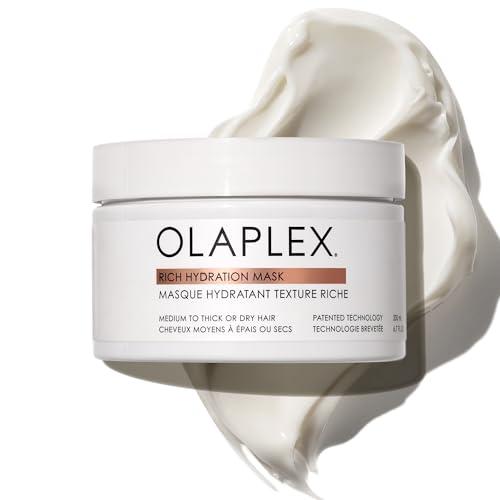
Olaplex Rich Hydration Mask

Heavy moisture plus bond chemistry, and deliberately protein-free — which is what most colored hair needs by its third salon visit.

Best overallBis-aminopropyl diglycol dimaleate — Olaplex's patented bond-building active, which the company states works inside the strand rather than coating it$44.00Amazon
2
amika Hydro Rush Intense Moisture Hair Mask with Hyaluronic Acid

Humectants rather than butters. The one to try if rich masks sit on your hair instead of going into it.

Low-porosity hairHyaluronic acid and polyglutamic acid — humectants that attract and hold water in the strand$31.00Amazon
3
Briogeo Don't Despair, Repair! Deep Conditioning Mask

Oils and B-vitamins, nothing to build up. The straightforward weekly option for colored hair that is simply dry.

No siliconesRosehip and argan oils — emollients that soften the strand and reduce the friction that causes mechanical breakage$39.00Amazon
4
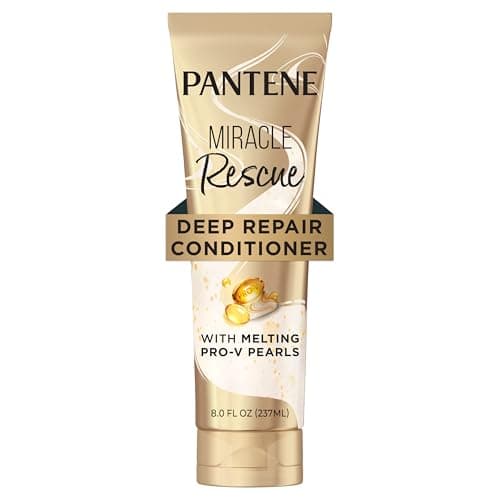
Pantene Miracle Rescue Deep Repair Conditioner

One to three minutes and a few dollars. Cheap enough that you will actually do it weekly, which beats an expensive mask you skip.

The drugstore pickPro-V pearls, which Pantene states dissolve on application to deliver a nutrient-rich conditioning formula$12.97Amazon
5
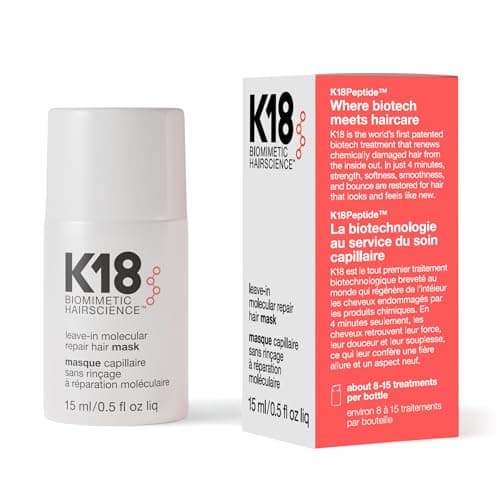
K18 Leave-In Molecular Repair Hair Mask

Four minutes, no rinse, nothing left sitting on the strand. The only pick here that will not flatten fine hair.

Fine colored hairK18Peptide — a biotech peptide the manufacturer states reconnects broken polypeptide chains and disulfide bonds$29.00Amazon
6
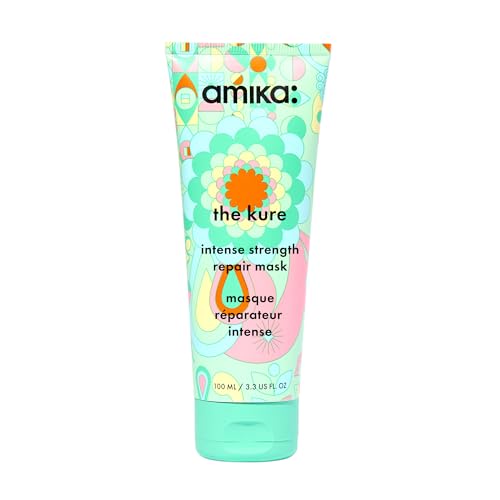
amika The Kure Intense Strength Repair Mask

The protein-and-bond option, for colored hair that has also been lifted. Not a weekly product.

Colored and bleachedA bond-repair complex the brand states is clinically proven safe for color-treated hair$24.00Amazon

#ad · Prices come live from the retailer, last checked November 11, 2026; where we have no verified live price we show none. These picks are chosen from formulation research, not from testing them ourselves. Tap a row for the full write-up.

What a deep conditioner actually does for colored hair

Start with the claim on the jar, because almost every deep conditioner sold for dyed hair promises to protect, lock in or extend your color. One of those is nearly true and the other two are not, and knowing which is which changes what you buy.

Permanent color works by opening the cuticle — the overlapping scale layer on the outside of each strand — swelling the fiber, and depositing dye inside it. The cuticle does not fully close again afterwards. Research on porosity and hair dyeing describes how pore structure at different levels of the fiber governs the way dye moves into and back out of the hair (porosity and hair dyeing, PMC). Colored hair is porous hair, and porous hair leaks water and pigment in both directions.

So here is the honest division of labor. Color washes out through the surfactant in your shampoo — that is the single biggest cause of fade, and the fix is a gentler cleanser, not a richer mask. That is the color-safe shampoo question, and it is where most of the color-saving money should go. Color also oxidizes warm, which is a toning problem that purple shampoo handles and a conditioner cannot touch.

What a deep conditioner does, genuinely, is three things. It puts water and emollients back into a strand that is losing both faster than virgin hair does. It flattens and seals the lifted cuticle, which makes the hair reflect light rather than scatter it — most of what people read as "my color looks faded" a fortnight after the salon is dullness rather than pigment loss. And it adds slip, which cuts the mechanical abrasion of combing and towel-drying, and abrasion is how dye physically leaves the outer layers of the strand.

That third one is the under-rated benefit. You are not sealing pigment in behind a chemical barrier. You are making the hair slippery enough that you stop sanding it off.

The question that picks your mask: protein or moisture?

Every mask on this page sits somewhere on a line between pure moisture and structural protein, and colored hair can need either. Buy the wrong end of it and the result is not neutral — it actively makes hair worse.

Moisture — oils, butters, humectants, fatty alcohols — softens the strand and improves elasticity. Too much of it and hair goes limp, mushy and over-soft, and loses the spring that holds a style.

Protein — hydrolyzed keratin, wheat or soy proteins, peptides — fills gaps in a damaged cuticle and temporarily stiffens the fiber. Too much and hair goes straw-stiff and snaps, which is the state usually called protein overload.

Here is the part specific to color. Permanent dye on virgin hair, no lift involved, is a moisture problem. The fiber is open and thirsty but structurally largely intact. Anything that involved bleach or high lift is a structural problem, and bleach does measurable damage: electron microscopy of heavily bleached hair shows cuticle cells separating and the layer breaking away to expose the cortex beneath (bleaching microstructure study, PMC). That needs protein or bond work, and the bleached-hair mask shortlist is the more specific page if that is you.

Most people reading this are somewhere in between, having colored repeatedly over years with the odd set of highlights. The useful test takes ten seconds: pull a shed strand between two fingers. If it stretches a long way and does not spring back, it is over-moisturized and wants protein. If it snaps immediately with almost no stretch, it is protein-heavy and wants moisture. If you are not sure, the porosity test is the longer version of the same diagnosis.

This is why our top pick is protein-free, and why we count that in its favor rather than list it as a caveat. Anyone coloring regularly has usually been fed protein by three different products — a bond shampoo, a repair mask, a leave-in — without ever deciding to. Moisture with bond chemistry and no protein is the shortage most colored heads actually have.

How we picked these six

The picks come from what is in the formula, what those ingredients are documented to do, and whether that matches a specific kind of colored hair. Four criteria did the filtering.

1. It has to be a deep conditioner, not a conditioner with a long name. A deep conditioner is distinguished by concentration and contact time — a heavier emulsion left on for minutes rather than seconds. Conditioner versus hair mask sets out where that line falls. Everyday rinse-out conditioners are a different purchase and live on the color-safe conditioner page.

2. Sulfate-free is not the relevant test here. Silicone load is. A mask is not your cleanser, so its surfactants barely matter. What matters is whether the softness you feel afterwards is the strand or a coating. Silicones are not villains — they genuinely reduce combing friction, which protects color — but they accumulate on porous hair, and the moment you clarify to remove them you discover how much of the improvement was never real. Whether clarifying strips color covers that trade-off. Half our picks are silicone-free by formulation, and we say which.

3. The protein position has to be stated, not guessed. Every pick below is explicit about whether it brings protein, bond chemistry, both or neither, because that is the one piece of information that decides whether it helps you.

4. Every formulation claim has to be checkable. Each product links to the manufacturer's own page, and where a number comes from a brand's internal testing — Olaplex's hydration multiples, amika's combing figures — we attribute it to the brand rather than repeat it as a finding. None of these are independent results, and a mask page that presents them as such is selling rather than advising.

What we did not use: star ratings, review counts or a scored ranking. There is no first-party testing behind this site, so there is nothing honest to put in those fields. Each pick carries an editorial role instead, and a specific reason to skip it.

We have not used these products ourselves. They are chosen from what is in the formula, what those ingredients are documented to do, and whether that matches the problem this page is about — and every product below links to the manufacturer's own page so you can check the formulation claims yourself. The full method is here.

How often, and for how long

Once a week is the right default for colored hair, moving to twice a week only if your hair is both colored and coarse. More than that on fine or moisture-loaded hair produces exactly the limp, greasy-rooted result people blame on the product.

Contact time matters less than the jar implies. Conditioning is fast — most of what a mask is going to do, it has done in the first few minutes. The exceptions are treatments with specific actives and specific instructions, and for those, follow the label. Leaving a moisture mask on for forty minutes instead of ten is not a stronger treatment; it is a longer shower.

Mid-lengths and ends, never the scalp. Your regrowth is the least porous and least damaged hair on your head, and it does not need a mask. Your ends have been colored several times more often than your roots have. Start the application at the point where your natural color stops.

Rinse with cool water if you can stand it. Hot water swells the fiber and opens the cuticle you just spent ten minutes flattening. The American Academy of Dermatology's everyday hair-care guidance makes the related point about handling wet hair gently, and about detangling with a wide-tooth comb rather than a brush (AAD, everyday hair care) — wet hair is at its weakest, which is exactly when most colored hair gets broken.

Sequence. Bond or protein treatment, then shampoo, then the deep conditioner, then a leave-in on damp hair, then oil on the ends last. The full order of application explains why sealing before you have moisturized is the most common way to waste a good mask.

Four mistakes that waste the step

  • Masking on a sulfate wash. If an aggressive shampoo is pulling your color down the drain every few days, a weekly mask is bailing out a boat with a hole in it. Change the cleanser first — it is the higher-leverage purchase, and sulfate-free is not the same as color-safe.
  • Stacking protein without counting it. A bond shampoo, a repair mask and a protein leave-in is three doses of the same thing. Pick the step where you want the protein and keep the others moisturizing.
  • Masking immediately before a toning session. A freshly conditioned, sealed cuticle takes toner unevenly. Tone first, condition after, and keep the toning cadence separate.
  • Expecting a mask to fix brass. It cannot. Warmth is pigment chemistry and needs pigment — the brassiness guide covers prevention as well as correction.

One last thing worth saying plainly: if your color looks dull rather than faded, a deep conditioner is the single most effective thing you can buy for it, and the cheapest pick on this page will deliver most of that benefit. The expensive ones earn their price on hair that has been lifted, not on hair that has simply been dyed.
In detail

The picks, in full

1Best overall

Olaplex Rich Hydration Mask

Heavy moisture plus bond chemistry, and deliberately protein-free — which is what most colored hair needs by its third salon visit.

Who it suits: Dry, medium-to-thick colored hair that needs moisture without added protein

What is doing the work

  • Bis-aminopropyl diglycol dimaleate — Olaplex's patented bond-building active, which the company states works inside the strand rather than coating it
  • Biomimetic Cuticle Technology, which Olaplex states seals the cuticle to hold hydration for up to five washes
  • Formulated without sulfates, silicones, phthalates, phosphates, parabens and protein, per the manufacturer

What works

  • Protein-free, so it cannot tip already protein-loaded colored hair into brittleness
  • Silicone-free, so the softness is not a coating that washes off and leaves hair worse
  • Bond chemistry and deep moisture in one rinse-out step rather than two

What to note

  • Olaplex states its headline figures — 16x hydration, 71% less breakage, 119% more shine — against bleached hair in its own testing; treat them as the brand's numbers, not independent ones
  • Rich enough to flatten fine hair; Olaplex sells a separate lighter mask for that
  • Salon pricing for a weekly step

Skip it if your hair is fine or limp — this is the thick-hair half of a two-mask range, and it will read as greasy roots within a day.

Olaplex Rich Hydration Mask
$44.00View on Amazon

#ad · Price as of November 11, 2026 · Affiliate disclosure for the link to Rich Hydration Mask

2Low-porosity hair

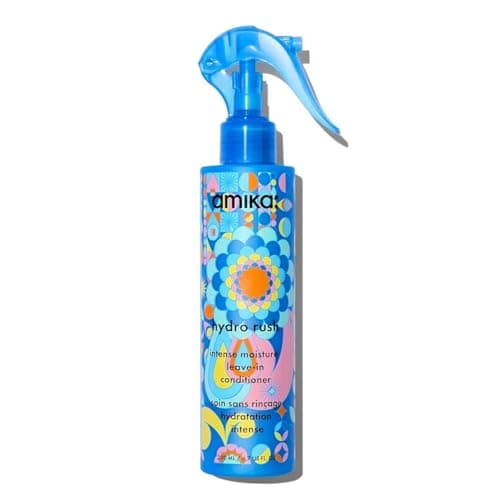
amika Hydro Rush Intense Moisture Hair Mask with Hyaluronic Acid

Humectants rather than butters. The one to try if rich masks sit on your hair instead of going into it.

Who it suits: Colored hair that feels dry but rejects rich oil-based masks and goes limp

What is doing the work

  • Hyaluronic acid and polyglutamic acid — humectants that attract and hold water in the strand
  • Squalane, which amika states limits moisture loss after the mask is rinsed
  • Sea buckthorn oil, blue-green algae and shea butter
  • Silicone-free, sulfate-free, color-safe and keratin-safe, per the manufacturer

What works

  • Silicone-free, so nothing builds up on low-porosity hair that struggles to take product in the first place
  • Explicitly color-safe and keratin-safe per amika
  • Lighter on the strand than a butter-heavy mask while still a genuine deep-conditioning step

What to note

  • amika's 5x hydration and 5x combing figures are the brand's own clinical claims, measured by amika
  • Humectants can behave unpredictably in very dry air, where they have little moisture to draw on
  • Not a repair treatment — there is no bond or protein chemistry here

Skip it if your hair is high-porosity and bleached — it will drink this in and still feel structurally weak, because nothing in it addresses broken bonds.

amika Hydro Rush Intense Moisture Hair Mask with Hyaluronic Acid
$31.00View on Amazon

#ad · Price as of November 11, 2026 · Affiliate disclosure for the link to Hydro Rush Intense Moisture Hair Mask with Hyaluronic Acid

3No silicones

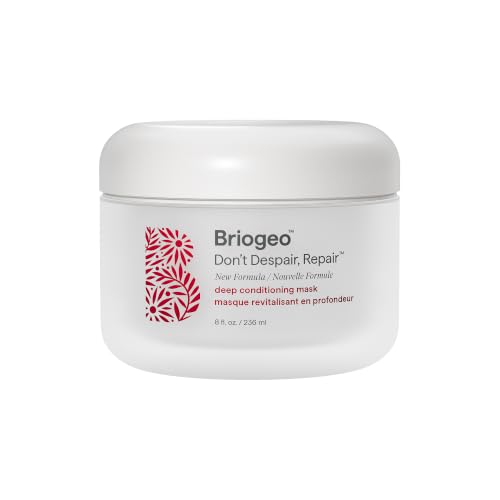
Briogeo Don't Despair, Repair! Deep Conditioning Mask

Oils and B-vitamins, nothing to build up. The straightforward weekly option for colored hair that is simply dry.

Who it suits: Dry, brittle or over-processed hair that needs moisture more than structural repair

What is doing the work

  • Rosehip and argan oils — emollients that soften the strand and reduce the friction that causes mechanical breakage
  • B-vitamins, algae extract and biotin in the brand's NOVA Complex, per Briogeo
  • Formulated without sulfates, silicones, phthalates, parabens, DEA or artificial dyes, per the manufacturer

What works

  • Noticeably softer hair after a single use on genuinely dry lengths
  • No silicones, so it does not build up over weeks of use
  • Works as a normal weekly step rather than a separate ritual

What to note

  • Rich enough to weigh down fine hair if you take it near the roots
  • Moisture, not bond repair — it will not fix bleach damage

Skip it if your hair is fine and goes limp easily, or your damage came from bleach — a lighter conditioner or a bond treatment is the better call.

Briogeo Don't Despair, Repair! Deep Conditioning Mask
$39.00View on Amazon

#ad · Price as of November 11, 2026 · Affiliate disclosure for the link to Don't Despair, Repair! Deep Conditioning Mask

4The drugstore pick

Pantene Miracle Rescue Deep Repair Conditioner

One to three minutes and a few dollars. Cheap enough that you will actually do it weekly, which beats an expensive mask you skip.

Who it suits: Dry, rough lengths when a salon mask is not in the budget

What is doing the work

  • Pro-V pearls, which Pantene states dissolve on application to deliver a nutrient-rich conditioning formula
  • Conditioning agents that smooth the cuticle and reduce combing friction

What works

  • Works in one to three minutes rather than fifteen
  • Cheap enough to use weekly without thinking about it
  • Widely stocked, so it is easy to replace

What to note

  • Moisture only — nothing here addresses bleach damage
  • Rich enough to weigh fine hair down if used root to tip

Skip it if you have fine hair that goes flat easily, or your damage came from bleach rather than dryness.

Pantene Miracle Rescue Deep Repair Conditioner
$12.97View on Amazon

#ad · Price as of November 11, 2026 · Affiliate disclosure for the link to Miracle Rescue Deep Repair Conditioner

5Fine colored hair

K18 Leave-In Molecular Repair Hair Mask

Four minutes, no rinse, nothing left sitting on the strand. The only pick here that will not flatten fine hair.

Who it suits: Badly over-processed hair where you want the shortest possible treatment step

What is doing the work

  • K18Peptide — a biotech peptide the manufacturer states reconnects broken polypeptide chains and disulfide bonds
  • pH-optimized to 5.0-6.0, which the maker says limits cuticle swelling during the treatment

What works

  • Four minutes, no rinse, so it fits a normal morning
  • Light enough for fine hair that a rinse-out mask would flatten
  • Color-safe and vegan per the manufacturer

What to note

  • Expensive per use compared with a rinse-out mask
  • Needs clean, towel-dried hair with no other product on it, which is fussier than it sounds

Skip it if you layer several products straight out of the shower — this one needs bare, towel-dried hair to work as directed, and working around that is more trouble than a rinse-out mask.

K18 Leave-In Molecular Repair Hair Mask
$29.00View on Amazon

#ad · Price as of November 11, 2026 · Affiliate disclosure for the link to Leave-In Molecular Repair Hair Mask

6Colored and bleached

amika The Kure Intense Strength Repair Mask

The protein-and-bond option, for colored hair that has also been lifted. Not a weekly product.

Who it suits: Colored or bleached hair that needs strength and slip in the same step

What is doing the work

  • A bond-repair complex the brand states is clinically proven safe for color-treated hair
  • Conditioning agents that give the slip a pure protein treatment lacks

What works

  • Strength and detangling in one step, so no separate conditioner
  • Explicitly formulated as color-safe by the manufacturer
  • Pleasant to use, which matters for something you do weekly

What to note

  • Salon-tier price for a rinse-out mask
  • Protein-leaning, so it can stiffen hair if you already use a bond treatment

Skip it if you are already using a separate bond treatment weekly — stacking two protein-leaning products is how hair ends up brittle rather than strong.

amika The Kure Intense Strength Repair Mask
$24.00View on Amazon

#ad · Price as of November 11, 2026 · Affiliate disclosure for the link to The Kure Intense Strength Repair Mask

How we picked

Products we have personally tested: none

Most hair care roundups are written in a "we tested these" voice. We have not, and saying so is the point. These picks are chosen the way an informed shopper would choose them: read what is actually in the formula, check what those ingredients are documented to do, match that against the specific problem the page is about, and confirm the product is still being sold.

Each pick gets a role — the drugstore option, the one for high porosity, the gentlest of the set — rather than a score out of ten, because a score would imply a measurement nobody took. Nobody pays for inclusion or placement, and when the cheap product is the right answer we say that too. The full method is on one page.

Questions

Frequently asked

Does deep conditioning strip hair color?
No. Deep conditioners are not cleansers — they contain little or no surfactant, which is the thing that removes dye. Rinsing with very hot water does more to lift color than the mask itself.
How soon after coloring can I deep condition?
Most colorists suggest waiting until your first wash, roughly 48 to 72 hours after the service, so the cuticle has settled and the color has fully set. After that, weekly is fine.
Is a deep conditioner the same as a hair mask?
In practice, yes — the terms are used interchangeably on the shelf. What distinguishes both from an everyday conditioner is concentration and contact time, which conditioner vs hair mask sets out.
Should a deep conditioner for colored hair contain protein?
Only if your hair has been bleached or high-lifted. Hair that has been dyed without lift is usually short of moisture rather than structure, and adding protein to it makes it stiff and more prone to snapping.
Can I use a deep conditioner on my roots?
You can, but there is little reason to. Regrowth is the least porous hair on your head. Start at the point where your natural color ends and work to the tips.

Next

Receipts

Sources

  1. 1.Porosity at different structural levels in human hair and its effect on hair dyeing (PMC)
  2. 2.Effects of excessive bleaching on hair: comparative analysis of external morphology and internal microstructure (PMC)
  3. 3.American Academy of Dermatology — Everyday hair care
  4. 4.On hair care physicochemistry: from structure and degradation to novel biobased conditioning agents (PMC)

Claims about what an ingredient does are cited to dermatology bodies or published research. Claims about what a product contains are cited to the manufacturer's own page and labeled as the manufacturer's claim. Where the evidence is thin, we say so on the page rather than rounding it up. Read the full method.