Before any of this: the American Academy of Dermatology is clear that effective treatment for hair loss starts with finding the cause, and that getting an accurate diagnosis means seeing a board-certified dermatologist (AAD, hair loss diagnosis and treatment). Thyroid disease, low iron, hormonal change and medication all cause shedding, and no cosmetic product on this page addresses any of them.
What biotin is, and why it got attached to hair
Biotin is vitamin B7, a water-soluble vitamin that acts as a coenzyme in fatty acid, amino acid and glucose metabolism. Keratin production is one of the many processes that depend on those pathways, which is the real and entirely legitimate link between biotin and hair.
The link got turned into a marketing claim by a familiar piece of reasoning. Biotin deficiency causes hair loss — that part is true and well documented. Therefore biotin prevents or reverses hair loss — which does not follow. Iron deficiency causes fatigue, and iron does not make a well-nourished person energetic. A nutrient that is required is not the same as a nutrient that helps when you already have enough.
That is the whole of it, and everything below is detail on the two questions it leaves: how much evidence there is for supplementing a non-deficient person, and whether biotin in a shampoo does anything at all.
What the evidence actually shows
The honest summary is that the research supports biotin for people who are deficient and does not support it for people who are not. There are case reports and small studies of biotin improving hair and nail problems in deficient individuals and in specific inherited metabolic conditions — and very little in the way of robust evidence that supplementing a healthy, non-deficient adult changes hair growth, density or thickness.
The AAD's own hair loss resources do not present biotin as a treatment for hair loss; their guidance on diagnosis and treatment is built around identifying the cause and treating it, with minoxidil named as the over-the-counter drug option (AAD, hair loss diagnosis and treatment). If biotin worked for ordinary thinning, it would appear there.
Two things make the anecdotal evidence look stronger than it is. The first is the growth cycle: a heavy shed after illness or stress recovers on its own over six to nine months, which is exactly the window in which someone who started a supplement will credit the supplement. The second is that hair supplements are rarely just biotin — they usually contain iron, zinc, vitamin D and protein, any of which can make a real difference if you were short of it. The bottle gets the credit regardless of which ingredient did the work.
Who is actually deficient
Biotin is present in eggs, nuts, seeds, legumes, liver, salmon, sweet potato and whole grains, and gut bacteria produce some as well. Deficiency in someone eating a varied diet is uncommon. It does happen, and the recognized situations are specific:
- Pregnancy and breastfeeding, where requirements rise.
- Long-term use of some anticonvulsant medications, which can interfere with biotin status.
- Chronic heavy alcohol use.
- Inflammatory bowel disease, prior bowel surgery or other malabsorption, including after bariatric surgery.
- Inherited biotinidase deficiency, which is rare and usually identified in childhood.
- Eating large quantities of raw egg white over a long period — the avidin in it binds biotin. This is a genuine mechanism and a very unusual diet.
Deficiency also has signs beyond hair: a scaly red rash around the eyes, nose and mouth, brittle nails, conjunctivitis, and neurological symptoms including numbness and low mood. Hair thinning on its own, with none of that, is unlikely to be a biotin problem.
If you think you might be in one of those groups, the answer is a blood test and a doctor, not a bottle — and the same applies to the deficiencies that genuinely do cause hair loss and are far more common, iron and thyroid function above all. Why is my hair thinning goes through that list.
From the picks
If you want to buy something anyway
Two biotin-containing shampoos that are worth buying for what they genuinely do — thicker-feeling, fuller-looking hair from the conditioning polymers rather than from the biotin — and a peptide scalp serum, which at least stays on the scalp. All three are cosmetic. None of them is a growth treatment.
The drugstore thickening option
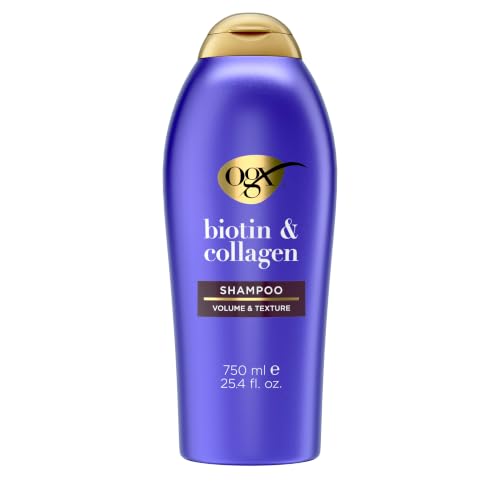
OGX Thick & Full Biotin & Collagen Shampoo
A volumizing shampoo, and worth being precise about what that means: it coats the strand so hair reads thicker. It does not add hair. For fine hair that is still a real, visible result.
Best thinning-hair shampoo
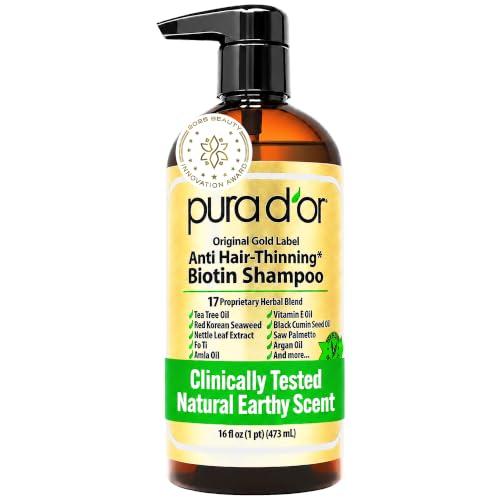
Pura d'or Original Gold Label Anti-Thinning Biotin Shampoo
A sulfate-free shampoo built around biotin and botanicals, positioned for the appearance of thinning caused by breakage. That framing is narrower than the category usually claims, and more defensible for it.
Best value peptide serum
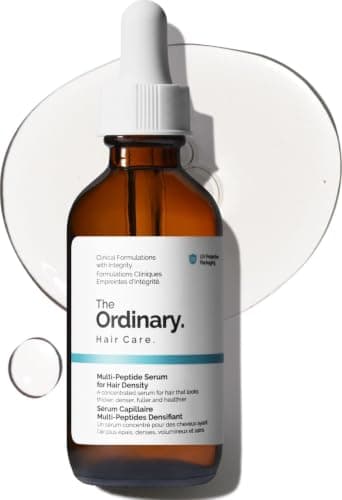
The Ordinary Multi-Peptide Serum for Hair Density
A leave-in peptide serum at a fraction of the usual price. The Ordinary describes it as improving the appearance of thickness and fullness — an appearance claim, which is the honest framing for this whole category.
Biotin in a shampoo, which is where most people encounter it
Biotin appears on the label of an enormous number of shampoos, conditioners and thickening sprays, and there are two reasons to be skeptical about what it is doing there.
Contact time. A shampoo is on your head for sixty to ninety seconds and is then rinsed down the drain. Whatever the active, that is not a dose.
Route. The follicle that builds your hair sits below the skin surface and is fed by your bloodstream. A water-soluble vitamin applied to the outside of a hair shaft — a structure that is already dead keratin — has no route to the place where keratin is being made. This is not a formulation problem that a better product could solve; it is a structural one.
So does a biotin shampoo do nothing? Not quite, and this is where honesty cuts both ways. Biotin shampoos commonly do make hair look fuller, and the reason is the rest of the formula: conditioning polymers, hydrolyzed proteins and film-formers that coat the strand and add apparent diameter. That is a real cosmetic effect, it is worth paying for if fuller-looking hair is what you want, and it has nothing to do with biotin. The shortlists are thickening shampoo for fine hair and best shampoo for thinning hair, and both are ranked on what the formula does rather than what the front of the bottle claims.
The one real risk, which almost nobody mentions
High-dose biotin interferes with a number of common laboratory tests. Many immunoassays use a biotin-streptavidin binding step, and excess biotin in a blood sample can distort the result — in some assays upward, in others downward.
The tests affected include thyroid function and troponin, which is used to assess chest pain and suspected heart attack. The FDA has issued safety communications about this, and there have been reported cases of misleading results in patients taking high-dose biotin. Hair supplements frequently contain doses far above the ordinary daily requirement.
The practical version: if you take a biotin supplement, tell whoever orders your blood tests, and stop it for a few days beforehand if they advise it. This is also quietly ironic, because thyroid function is one of the most common genuine causes of hair thinning — so a biotin supplement taken for hair loss can obscure the test that would have explained it.
Biotin itself is water-soluble and not toxic at the doses sold, so this is an interference problem rather than a safety-of-the-vitamin problem. It is still the most concrete downside on this page.
What to do instead
In order of how much difference it is likely to make:
- Get the common deficiencies tested — iron and ferritin, thyroid, vitamin D. These genuinely cause hair thinning, they are far more common than biotin deficiency, and they are correctable. This is a doctor conversation.
- Work out which problem you actually have. Shedding, loss and breakage have different answers, and shedding vs hair loss separates them in five minutes.
- Eat enough protein. Hair is made of it, and restrictive dieting is a well-recognized trigger for a heavy shed a few months later.
- Reduce breakage, which is where cosmetic products genuinely work: a light conditioner, a weekly mask, less heat, looser styles — best conditioner for thinning hair.
- If you want a topical, use one that stays on the scalp. A serum at least remains where the follicle is, and the honest expectations are in do hair growth serums work.
- Know what the evidence-based option is. Minoxidil is the only over-the-counter drug approved for hair loss, with commitments attached — hair serum vs minoxidil.
None of which is a reason to be angry about biotin. It is a cheap, safe vitamin that genuinely matters if you are short of it. It is simply not a treatment for hair loss in people who are not.
We have not used these products ourselves. They are chosen from what is in the formula, what those ingredients are documented to do, and whether that matches the problem this page is about — and every product below links to the manufacturer's own page so you can check the formulation claims yourself. The full method is here.