Strand&Suds

Thinning & Growth · Our picks

The Best Conditioner for Thinning Hair

amika Hydro Rush is the pick: thinning hair needs conditioning without weight, and a humectant-led formula hydrates without the oil load that collapses fine hair. Skipping conditioner entirely is the more common mistake — unconditioned hair breaks, and breakage looks exactly like thinning.

By Janet H.Updated How we pick
#ad

We earn a commission if you buy through our links, at no extra cost to you. It never decides the ranking — the method is published · Affiliate disclosure

The short answer

Quick picks

#ProductBest forKey ingredientPrice
1
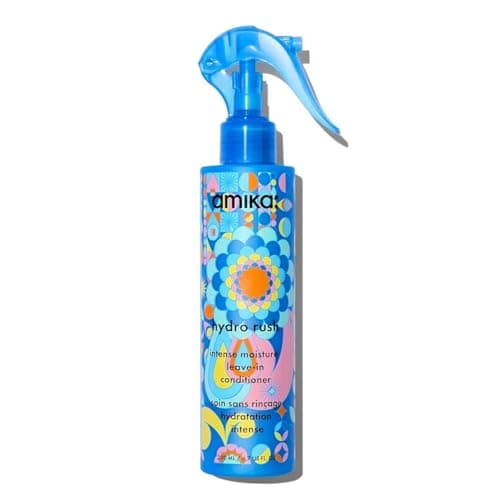
amika Hydro Rush Intense Moisture Hair Mask with Hyaluronic Acid

Humectant-led rather than oil-led, so it conditions without the weight that flattens thinning hair.

Best overallHyaluronic acid and polyglutamic acid — humectants that attract and hold water in the strand$31.00Amazon
2
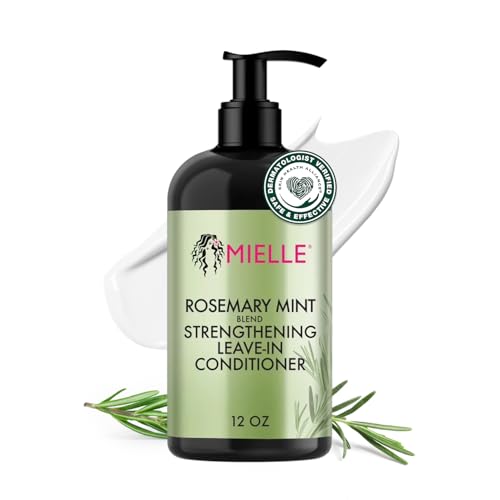
Mielle Organics Rosemary Mint Strengthening Leave-In Conditioner

A leave-in aimed at hair snapping mid-length, which is the breakage half of apparent thinning.

Best for breakageRosemary and mint, with the range positioned by Mielle as strengthening rather than growth-inducing$8.94Amazon
3
L'Oréal Paris Elvive Total Repair 5 Ceramide Recharge Leave-In Conditioner

Daily conditioning on the lengths for very little money. Light enough for fine hair.

The drugstore pickCeramides, which L'Oréal states help seal moisture into the hair fiberCheck price · Amazon
4
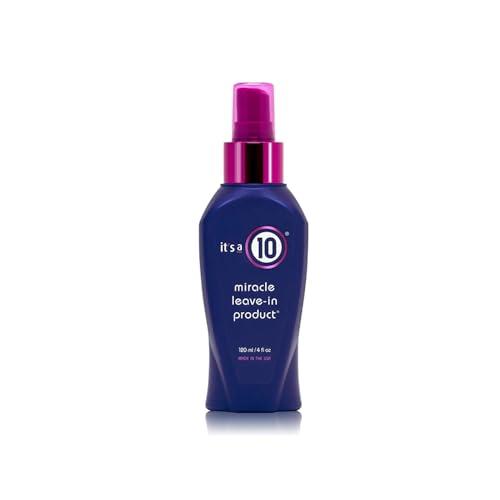
It's a 10 Miracle Leave-In Product

A spray leave-in that covers several jobs at once. The brand lists ten claimed benefits including detangling, frizz control and thermal protection, and the practical value is that it replaces two or three bottles.

Anyone who wants one leave-in spray to detangle, smooth and act as a heat protectantConditioning agents and silicones that give slip for detangling and reduce combing breakage$13.39Amazon
5
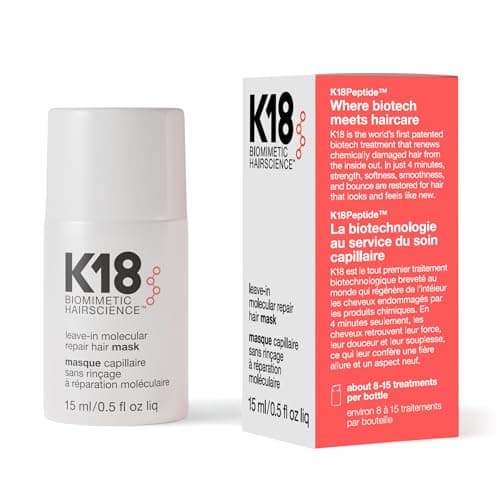
K18 Leave-In Molecular Repair Hair Mask

Four minutes, no rinse, light enough for fine hair. Expensive per use and the only real treatment here.

Best weekly treatmentK18Peptide — a biotech peptide the manufacturer states reconnects broken polypeptide chains and disulfide bonds$29.00Amazon

#ad · Prices come live from the retailer, last checked November 11, 2026; where we have no verified live price we show none. These picks are chosen from formulation research, not from testing them ourselves. Tap a row for the full write-up.

Before any of this: the American Academy of Dermatology is clear that effective treatment for hair loss starts with finding the cause, and that getting an accurate diagnosis means seeing a board-certified dermatologist (AAD, hair loss diagnosis and treatment). Thyroid disease, low iron, hormonal change and medication all cause shedding, and no cosmetic product on this page addresses any of them.

Weight is the whole problem, and it cuts both ways

Thinning hair has a conditioning problem that no other hair type has. It needs conditioning — thinner, finer strands break more easily and breakage is what turns a thinning crown into a visibly thinning crown — but almost every conditioner sold makes thin hair look thinner, because weight groups strands together and more scalp shows between the groups.

That is the entire ranking logic above. Every product on the list conditions. They are ordered by how little weight they add while doing it, and the first three are the genuinely light ones.

The mechanism is worth being precise about, because it explains why a product that performs brilliantly on dry hair can look like a failure here. Conditioning agents deposit on the cuticle and lower friction, which is exactly what you want for breakage. Heavy emollients — butters, dense oils, high-molecular-weight silicones — deposit a great deal of material, so adjacent strands clump and lie flat. On thick hair that reads as sleek. On thinning hair it reads as sparse.

The practical rule: look for humectants (glycerin, hyaluronic acid, panthenol) near the top of the list and butters near the bottom, or absent. That is what separates a conditioner that helps thinning hair from one that defeats it.

The more common mistake is skipping conditioner altogether

People with thinning hair very often stop conditioning, because every conditioner they have tried flattened their hair. It is an understandable response and it makes the problem worse within weeks.

Unconditioned hair has a rougher surface, so strands catch on each other, tangle and snap — and hair is at its most fragile when wet, which is exactly when most detangling happens. The AAD's healthy hair guidance treats conditioner as a routine step rather than an optional extra for this reason (AAD, tips for healthy hair).

And here is the part that matters for anyone watching their density: breakage is indistinguishable from thinning in the mirror. Short broken hairs along the part and around the hairline, a ponytail that feels thinner at the end, length that stops increasing — those are breakage signatures, and they are mechanical rather than follicular. The difference matters because breakage is fixable by handling and conditioning, while follicular thinning is not. Shedding vs hair loss separates the three, and why is my hair thinning goes through the causes.

Format matters more than formula here

For thinning hair, how a conditioner is delivered changes the outcome more than what is in it, and the list above is deliberately mixed.

Spray leave-ins are the lightest thing available. A fine mist deposits a very small amount very evenly, which is almost impossible to over-apply. If you have tried three conditioners and all three flattened your hair, a spray is the format to try next.

Cream leave-ins give more conditioning per application and more control over placement, which suits hair that is thinning but coarse rather than fine. Use a pea-sized amount and keep it well away from the roots.

Rinse-out conditioners and light masks do the most for the strand because they have contact time and are then removed, so very little stays behind. For thinning hair this is often the best of both: real conditioning, minimal residual weight. Once a week is plenty.

Rich rinse-out masks and butter-based creams are the ones to avoid unless your hair is also coarse and dry. If you want one anyway, keep it to the last two inches.

Where to put it, which is most of the result

Three rules, and the first is the one people get wrong.

  • Nothing within two inches of the scalp. Not for follicle reasons — the idea that conditioner clogs follicles and causes hair loss is not supported — but because conditioned roots lie flat, and flat roots on thinning hair show scalp. Root lift is free volume and weight is what removes it.
  • Concentrate on the oldest third. The ends have been growing for years and have taken all the damage. That is where conditioning changes breakage rates.
  • Two full minutes before you rinse. Free, and it is the difference between a conditioner working and a conditioner being on your hair. Most people rinse in under thirty seconds.

Detangling technique belongs here too, because it is where most breakage actually happens. Wide-tooth comb, in the shower, while the conditioner is still in, starting at the ends and working up. Never a brush through wet knots.

Claims to ignore on a conditioner bottle

The thinning-hair aisle is where the most overstated language on the shelf lives, and a conditioner is the product class where it is least defensible — because contact time is short and most of it rinses away.

Thickening, volumizing, densifying. A conditioner can make hair feel thicker by depositing material on the strand, and some do this well. It cannot change the diameter the follicle produces or the number of follicles growing. The effect is real, cosmetic and gone at the next wash.

Biotin, collagen and keratin on a rinse-out label. These are present, and in a product you rinse off after two minutes they contribute conditioning like any other protein fragment. None of them reaches a follicle, and biotin applied to the outside of a hair does nothing for growth — the biotin page goes through what the evidence actually shows.

Anti-hair-loss and regrowth. A conditioner is a cosmetic. In the US, a product that claims to treat hair loss is making a drug claim, and the only over-the-counter drug with that approval for this purpose is minoxidil — which is not a conditioner. Hair serum vs minoxidil sets out the difference plainly.

What none of this does, and what to do instead

A conditioner protects the hair you have. It keeps strands from snapping, which preserves length and density that you would otherwise lose, and that is genuinely worth doing. It does not grow hair, thicken a strand or address the reason your hair is thinning.

If the thinning is progressive — a widening part, a receding hairline, visible scalp where there was none — the AAD is clear that effective treatment depends on identifying the cause first, and that means a board-certified dermatologist rather than a shelf (AAD, hair loss diagnosis and treatment). Thyroid disease, iron deficiency, hormonal change and medication all cause hair loss, and nothing on this page touches any of them.

What is worth buying alongside a conditioner, in order of how much it changes: a shampoo suited to your scalp rather than your hair — best shampoo for thinning hair — and, if you want to try the topical category at all, a serum with realistic expectations attached: do hair growth serums work is honest about the timeline, and the serum shortlist is the field.

We have not used these products ourselves. They are chosen from what is in the formula, what those ingredients are documented to do, and whether that matches the problem this page is about — and every product below links to the manufacturer's own page so you can check the formulation claims yourself. The full method is here.
In detail

The picks, in full

1Best overall

amika Hydro Rush Intense Moisture Hair Mask with Hyaluronic Acid

Humectant-led rather than oil-led, so it conditions without the weight that flattens thinning hair.

Who it suits: Colored hair that feels dry but rejects rich oil-based masks and goes limp

What is doing the work

  • Hyaluronic acid and polyglutamic acid — humectants that attract and hold water in the strand
  • Squalane, which amika states limits moisture loss after the mask is rinsed
  • Sea buckthorn oil, blue-green algae and shea butter
  • Silicone-free, sulfate-free, color-safe and keratin-safe, per the manufacturer

What works

  • Silicone-free, so nothing builds up on low-porosity hair that struggles to take product in the first place
  • Explicitly color-safe and keratin-safe per amika
  • Lighter on the strand than a butter-heavy mask while still a genuine deep-conditioning step

What to note

  • amika's 5x hydration and 5x combing figures are the brand's own clinical claims, measured by amika
  • Humectants can behave unpredictably in very dry air, where they have little moisture to draw on
  • Not a repair treatment — there is no bond or protein chemistry here

Skip it if your hair is high-porosity and bleached — it will drink this in and still feel structurally weak, because nothing in it addresses broken bonds.

amika Hydro Rush Intense Moisture Hair Mask with Hyaluronic Acid
$31.00View on Amazon

#ad · Price as of November 11, 2026 · Affiliate disclosure for the link to Hydro Rush Intense Moisture Hair Mask with Hyaluronic Acid

2Best for breakage

Mielle Organics Rosemary Mint Strengthening Leave-In Conditioner

A leave-in aimed at hair snapping mid-length, which is the breakage half of apparent thinning.

Who it suits: Hair that is breaking mid-length and losing length because of it

What is doing the work

  • Rosemary and mint, with the range positioned by Mielle as strengthening rather than growth-inducing
  • Conditioning agents that give the slip which prevents combing breakage

What works

  • Addresses the real reason most people fail to gain length — breakage
  • Light enough for daily use
  • Inexpensive

What to note

  • Mint tingle is not for everyone, particularly on a sensitive scalp
  • Strengthening is a conditioning claim, not a growth claim

Skip it if your scalp is sensitive or reactive — the mint in this range is noticeable and can sting.

Mielle Organics Rosemary Mint Strengthening Leave-In Conditioner
$8.94View on Amazon

#ad · Price as of November 11, 2026 · Affiliate disclosure for the link to Rosemary Mint Strengthening Leave-In Conditioner

3The drugstore pick

L'Oréal Paris Elvive Total Repair 5 Ceramide Recharge Leave-In Conditioner

Daily conditioning on the lengths for very little money. Light enough for fine hair.

Who it suits: Dry lengths that need daily conditioning without a salon price

What is doing the work

  • Ceramides, which L'Oréal states help seal moisture into the hair fiber
  • Lightweight conditioning base intended for daily use

What works

  • One of the cheapest ways to add a leave-in step
  • Light enough for daily use on most hair types
  • Easy to find in any drugstore

What to note

  • Not rich enough for coarse or high-porosity hair
  • Fragranced, like the rest of the Elvive range

Skip it if your hair is coarse or high porosity — it will drink this and still feel dry, and a cream leave-in will serve you better.

L'Oréal ParisNo product photograph available for the L'Oréal Paris Elvive Total Repair 5 Ceramide Recharge Leave-In Conditioner
Check price on Amazon

#ad · Price shown on Amazon · Affiliate disclosure for the link to Elvive Total Repair 5 Ceramide Recharge Leave-In Conditioner

4Best all-rounder leave-in

It's a 10 Miracle Leave-In Product

A spray leave-in that covers several jobs at once. The brand lists ten claimed benefits including detangling, frizz control and thermal protection, and the practical value is that it replaces two or three bottles.

Who it suits: Anyone who wants one leave-in spray to detangle, smooth and act as a heat protectant

What is doing the work

  • Conditioning agents and silicones that give slip for detangling and reduce combing breakage
  • Positioned by the manufacturer as a thermal protectant as well as a leave-in

What works

  • Spray format means it goes on evenly without over-application
  • Genuinely useful for detangling wet hair, which is when it breaks
  • Works across straight, wavy and curly hair

What to note

  • Master-of-none — a dedicated heat protectant does that job better
  • Contains silicones, so periodic clarifying is sensible

Skip it if you already own a dedicated leave-in and a heat protectant — this replaces them rather than adding anything.

It's a 10 Miracle Leave-In Product
$13.39View on Amazon

#ad · Price as of November 11, 2026 · Affiliate disclosure for the link to Miracle Leave-In Product

5Best weekly treatment

K18 Leave-In Molecular Repair Hair Mask

Four minutes, no rinse, light enough for fine hair. Expensive per use and the only real treatment here.

Who it suits: Badly over-processed hair where you want the shortest possible treatment step

What is doing the work

  • K18Peptide — a biotech peptide the manufacturer states reconnects broken polypeptide chains and disulfide bonds
  • pH-optimized to 5.0-6.0, which the maker says limits cuticle swelling during the treatment

What works

  • Four minutes, no rinse, so it fits a normal morning
  • Light enough for fine hair that a rinse-out mask would flatten
  • Color-safe and vegan per the manufacturer

What to note

  • Expensive per use compared with a rinse-out mask
  • Needs clean, towel-dried hair with no other product on it, which is fussier than it sounds

Skip it if you layer several products straight out of the shower — this one needs bare, towel-dried hair to work as directed, and working around that is more trouble than a rinse-out mask.

K18 Leave-In Molecular Repair Hair Mask
$29.00View on Amazon

#ad · Price as of November 11, 2026 · Affiliate disclosure for the link to Leave-In Molecular Repair Hair Mask

How we picked

Products we have personally tested: none

Most hair care roundups are written in a "we tested these" voice. We have not, and saying so is the point. These picks are chosen the way an informed shopper would choose them: read what is actually in the formula, check what those ingredients are documented to do, match that against the specific problem the page is about, and confirm the product is still being sold.

Each pick gets a role — the drugstore option, the one for high porosity, the gentlest of the set — rather than a score out of ten, because a score would imply a measurement nobody took. Nobody pays for inclusion or placement, and when the cheap product is the right answer we say that too. The full method is on one page.

Questions

Frequently asked

What is the best conditioner for thinning hair?
A light, humectant-led conditioner rather than a rich one — amika Hydro Rush is the pick here. The goal is conditioning without weight, because weight makes adjacent strands clump and shows more scalp between them.
Should I use conditioner if my hair is thinning?
Yes. Unconditioned hair tangles and snaps, and breakage looks exactly like thinning in the mirror. Skipping conditioner is a more common mistake than using the wrong one — keep it off the roots and on the oldest third of the length.
Does conditioner cause hair loss?
No. The idea that conditioner clogs follicles and causes shedding is not supported. What it can do is lie the roots flat, which makes thinning hair look thinner — a cosmetic effect, not a cause.
Do thickening conditioners work?
They make hair feel thicker by depositing material on the strand, and the effect is real until the next wash. No conditioner changes the diameter your follicle produces or the number of hairs growing.
Is a leave-in or a rinse-out conditioner better for thinning hair?
A spray leave-in is the lightest option and the easiest not to overdo. A rinse-out conditioner gives more conditioning with less residual weight because most of it is removed. Many people do best with both: rinse-out every wash, spray on the ends between.

Next

Receipts

Sources

  1. 1.American Academy of Dermatology — Tips for healthy hair
  2. 2.American Academy of Dermatology — Hair loss: diagnosis and treatment
  3. 3.On hair care physicochemistry: from structure and degradation to novel biobased conditioning agents (PMC)
  4. 4.American Academy of Dermatology — Everyday hair care

Claims about what an ingredient does are cited to dermatology bodies or published research. Claims about what a product contains are cited to the manufacturer's own page and labeled as the manufacturer's claim. Where the evidence is thin, we say so on the page rather than rounding it up. Read the full method.