The short version: on a shampoo, the word is unregulated
A shampoo, conditioner or mask can print organic on the front of the bottle in the United States without meeting any particular standard, because cosmetics are not required to. There is no federal definition of an organic cosmetic, no mandatory minimum percentage, and no pre-market approval of the claim.
That does not make every organic claim dishonest. It makes the claim, on its own, uninformative — the same word covers a product that is 95% certified organic plant material and a product that contains one certified botanical extract at a fraction of a percent. Both are allowed to say it, and neither has to say which it is.
So the useful question is never "is this organic?" It is what, specifically, is organic about it, and can I check that?
What the USDA organic seal does and does not cover
The one claim on a personal care product that has teeth is USDA certified organic under the National Organic Program. That program was written for food and agricultural products, and a cosmetic can be certified under it only if its ingredients and handling genuinely qualify — which in practice means an overwhelmingly agricultural product.
This is why you see the seal on jars of coconut oil, bottles of jojoba oil and cold- pressed castor oil, and almost never on a shampoo. A single-ingredient plant oil is an agricultural product with a lid on it. A shampoo is not.
Two other things worth separating out, because they get bundled with organic and mean different things:
- Cruelty-free certification (for example Leaping Bunny) is about animal testing. It says nothing about ingredients, farming or formulation.
- Non-GMO and third-party ingredient screening are about what is and is not in the product. Also real, also unrelated to organic farming.
All three are verifiable, which is the only property that matters. A claim you can check beats a claim that sounds better.
From the picks
Where the claim is actually checkable
Two single-ingredient oils whose makers state USDA organic certification, and two short-formula products that are honest about being short-formula rather than organic. Buy the one that matches the job, not the one with the most botanical names on the front.
The cheapest thing that works
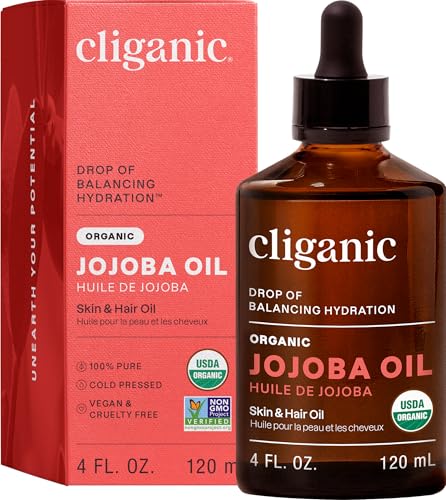
Cliganic Organic Jojoba Oil
One ingredient, cold-pressed, USDA-certified organic. Jojoba is a liquid wax rather than a triglyceride oil, which is why it sits lighter on a scalp than coconut or castor and rinses out without a fight.
Best pre-wash oiling treatment
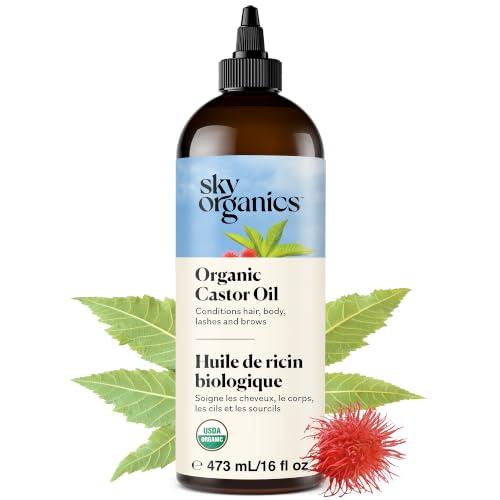
Sky Organics Organic Castor Oil
Thick, sticky and single-ingredient. Castor oil is the traditional pre-wash scalp soak, and that is the only way to use it sensibly — an hour under a towel before shampoo, never a leave-in.
Best short ingredient list
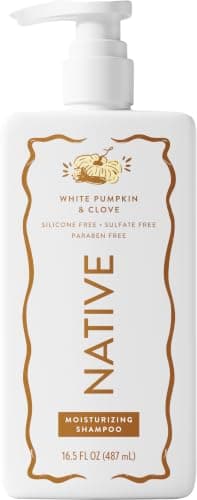
Native Moisturizing Shampoo
A deliberately short formula — Native states around ten ingredients — and sulfate-free at a supermarket price. Nothing here targets a specific problem, and for a lot of people that is exactly right.
Best for type 4 hair
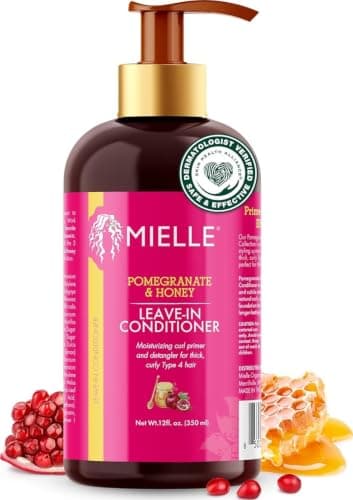
Mielle Organics Pomegranate & Honey Leave-In Conditioner
Formulated specifically for type 4 hair as a moisturizing primer and detangler. It is the step before styling rather than the style itself, and it is good at exactly that.
Why a shampoo cannot be entirely organic, and that is fine
A shampoo works because of surfactants — molecules with a water-loving end and an oil-loving end, which is how they lift sebum off your scalp and carry it down the drain. Surfactants are manufactured. Even the gentle ones that start life as coconut or palm oil are chemically transformed into something that does not exist in the plant.
That is not a scandal, it is the product working. The relevant review literature on hair care chemistry treats conditioning and cleansing agents as engineered molecules chosen for how they interact with the cuticle (hair care physicochemistry review, PMC), and a cleanser made entirely of unprocessed plant material would simply not clean hair.
The same applies to preservatives. Any product containing water needs one, or it grows bacteria and mold in your shower. A preservative-free water-based shampoo is a worse product, not a purer one. The honest version of this category is therefore mostly-plant-derived, well-preserved, short formulas — and brands that say that are being straight with you.
Natural does not mean gentler, and sometimes means the opposite
The single most common misreading in this category is treating plant-derived as synonymous with low-irritation.
Essential oils are the clearest example. Tea tree, peppermint, lavender, citrus and ylang-ylang are all plant extracts, all popular in natural hair ranges, and all well-documented contact allergens. A fragrance-free synthetic formula is frequently the gentler choice for a reactive scalp. If your scalp stings or reddens after a wash, scanning the label for essential oils is a better first move than buying something more natural.
Three more honest limits:
- Organic does not mean sulfate-free. They are unrelated claims, and sulfate-free is the one that matters if you color your hair — the case is here.
- Organic does not mean it will fix anything. Dandruff needs a named active. Bleach damage needs bond chemistry. Brass needs pigment. No farming standard substitutes for the right active ingredient.
- Organic plant oils still behave like oils. Certified organic coconut oil weighs down fine hair exactly as much as the uncertified kind.
Where organic genuinely earns its price
There is a real answer here, and it is narrower than the aisle suggests.
Single-ingredient oils. This is the one place the certification is both available and meaningful. You are buying an agricultural product, the seal verifies how it was grown and processed, and cold-pressed versus refined genuinely affects what is left in the oil. Jojoba for fine hair and a dry scalp, castor as a pre-wash soak for coarse hair — both are covered in the scalp oil shortlist.
Short-formula products for reactive scalps. Not because organic is gentler, but because fewer ingredients means fewer candidates when something irritates you. That is a troubleshooting advantage and a real one.
When you simply prefer to buy it. Supporting organic agriculture is a legitimate reason to choose a product and needs no performance justification. It is worth separating that from an expectation that your hair will behave differently.
Where it does not earn its price: as a substitute for a targeted product. The American Academy of Dermatology's everyday hair guidance is almost entirely about handling and matching products to hair type rather than ingredient philosophy (AAD, everyday hair care), and that remains the better place to spend attention.
How to read one of these labels in thirty seconds
- Look for a certifier, not an adjective. USDA organic, Leaping Bunny, EWG Verified and NSF are checkable. "Naturally derived" and "clean" are not.
- Check whether the brand name is doing the work. Plenty of good brands have the word Organics in their name. A brand name is not a certification, and the two are easy to conflate on a shelf.
- Read the first five ingredients. They are most of the bottle. Botanicals listed after the fragrance are present in trace amounts.
- Decide what you actually need the product to do before you decide how you want it farmed. If you have a named problem, the five basic categories will get you further than the front of any label.
- Treat percentage claims as marketing unless a number is given. "Made with organic ingredients" with no figure attached tells you nothing about how much.
None of this means avoid the category. It means buy a certified single-ingredient oil when you want the certification to mean something, buy a short honest formula when you want fewer things to react to, and buy the targeted product when you have a problem to solve. Those three purchases cover everything the word organic is usually being asked to promise.
We have not used these products ourselves. They are chosen from what is in the formula, what those ingredients are documented to do, and whether that matches the problem this page is about — and every product below links to the manufacturer's own page so you can check the formulation claims yourself. The full method is here.